


Encourage Compact Rosettes
Rotate containers a quarter turn every 1–2 weeks during the growing season so rosettes stay symmetrical and do not lean or stretch toward a single light source.

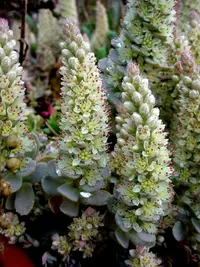
Orostachys malacophylla is a small, cold-hardy succulent forming low rosettes of fleshy, often bluish-green leaves. It belongs to the stonecrop group and stores water in its leaves. In nature it grows on rocky slopes and gravelly soils in East Asia, where conditions are sunny, dry, and well drained. The plant often forms tight clumps and may produce short flower spikes from the center of mature rosettes. Its compact size and drought tolerance make it suitable for rock gardens, troughs, and containers. It is generally considered easy to grow if kept in bright light, minimal moisture, and gritty, fast-draining soil, which also defines how to care for Orostachys malacophylla.

Care Difficulty
Easy Care

Light Preference
Full Sun

Water Requirements
Low Water

Temperature Preference
Cold Hardy

Hardiness Zone
3–8

Soil Texture
Sandy, Loamy, Rocky

Soil pH
Slightly acidic (6.5–7.0), Neutral (7.0)

Soil Drainage
Well-drained

Fertilization
Minimal (feed rarely)
Scan your plant to receive care tips personalized for your specific plant
Available on iOS and Android
This hardy succulent prefers bright, open conditions similar to rocky, sunny slopes in its native habitat.
Watering should mimic dry, rocky habitats with brief soakings and long drying periods.
This species handles a wide temperature range but grows best in moderate, dry conditions.
This species is drought-adapted and performs best in dry to moderately dry air.
This succulent requires very fast-draining, mineral-rich soil to prevent root rot.
This species is very suitable for container growing, including shallow dishes and troughs.
This drought-tolerant succulent needs only light feeding to stay compact and healthy.
Pruning is minimal and mainly keeps rosettes tidy and disease-free.
This species is usually grown in rock gardens or shallow dishes and dislikes frequent disturbance.
This plant is commonly multiplied from offsets, with seed used mainly for larger-scale growing.
This cold-hardy succulent tolerates freezing temperatures when planted in well-drained soil.

Plant Health Check
Not sure what's wrong with your plant? Check your plant's health inside the app.
This species typically forms a low, tight rosette in the first year and sends up a single flowering stalk in the second year, after which the original rosette usually dies, a life cycle pattern known as monocarpic biennial growth.
It is native to cold, dry steppe and rocky slopes in parts of northern Asia, where it endures strong temperature fluctuations and intense sun by staying low to the ground and storing water in its fleshy leaves.
The leaves are arranged in a tight spiral rosette that can resemble a small artichoke, an arrangement that helps shade the stem and reduce water loss in exposed habitats.
This species performs best outdoors in rock gardens, troughs, or shallow containers exposed to sun, good airflow, and cool winters. Orostachys malacophylla indoor care is possible under bright light, but plants often stay smaller and may flower less.
Keep your plants happy and healthy with plant identification, disease detection, and easy care guidance.

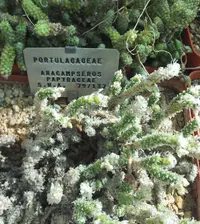
Anacampseros papyracea
Anacampseros papyracea
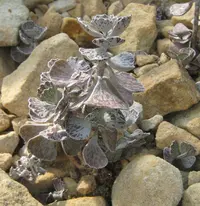
Pies from Heaven
Kalanchoe rhombopilosa
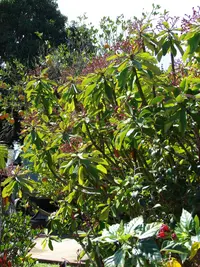
Euphorbia bicompacta
Euphorbia bicompacta
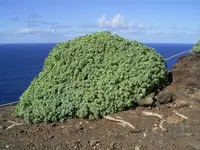
balsam spurge
Euphorbia balsamifera
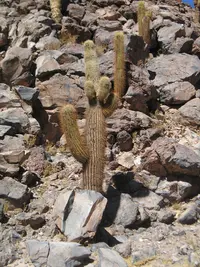
Leucostele atacamensis
Leucostele atacamensis
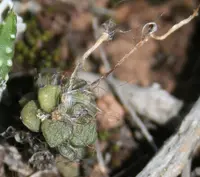
Anacampseros retusa
Anacampseros retusa
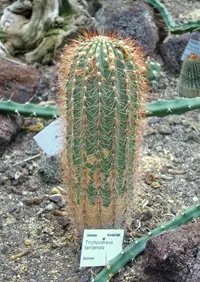
Soehrensia tarijensis
Soehrensia tarijensis
Heartleaf Lanternvine
Ceropegia linearis