Anacampseros papyracea Care

Anacampseros papyracea

About Anacampseros papyracea

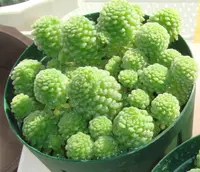
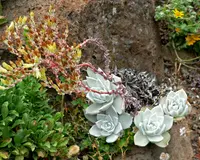
Anacampseros papyracea is a compact succulent from arid regions of South Africa and Namibia. It forms low cushions of small, fleshy leaves that store water efficiently. Leaf colors range from green to reddish tones, often with a papery, peeling surface that gives the species its name.

The plant grows slowly and stays small, making it suitable for containers and windowsills. White to pale pink flowers appear on slender stems in warm seasons, usually opening in bright light.

This species prefers strong light, very sharp drainage, and minimal watering, which makes it relatively easy for patient growers. Understanding how to care for Anacampseros papyracea mainly involves avoiding overwatering and providing enough light and airflow.

Main Plant Requirements

Care Difficulty

Moderate Care

Light Preference

Full Sun

Water Requirements

Low Water

Temperature Preference

Tropical / Frost Sensitive

Hardiness Zone

10–11

Soil Texture

Sandy, Loamy, Rocky

Soil pH

Slightly acidic (6.5–7.0), Neutral (7.0)

Soil Drainage

Well-drained

Fertilization

Minimal (feed rarely)

Get Personalized Care Plan

Scan your plant to receive care tips personalized for your specific plant

Available on iOS and Android

How to Care for the Anacampseros papyracea

This compact South African succulent thrives with bright, mostly direct sun and low humidity.

  • Provide 4–6 hours of direct morning sun plus bright light the rest of the day; in very hot climates, give light afternoon shade to prevent leaf scorch.
  • Outdoors, a spot with eastern or southeast exposure works well; indoors, place near a south- or west-facing window with minimal obstruction for reliable light intensity.
  • If rosettes stretch, lose color, or lean strongly to one side, light is too low; increase light gradually over 7–10 days to avoid sunburn on pale tissue.

Watering should mimic a dry, rocky habitat with brief soakings and long dry periods.

  • Water only when the top 3–5 cm of soil is completely dry; in active growth, this may be every 7–14 days, but always confirm dryness by touch rather than following a fixed schedule.
  • Use a very fast-draining gritty mix; water deeply, then let all excess drain away so roots do not stand in water, which quickly leads to rot in Anacampseros papyracea.
  • In winter or cool, low-light periods, reduce watering to light sips every few weeks; wrinkling leaves suggest mild thirst, while mushy, translucent leaves indicate overwatering.

Temperature needs reflect a desert-adapted succulent that prefers warmth but dislikes hard frost.

  • Aim for 65–80°F (18–27°C) for steady growth, with slightly cooler nights; this range supports compact rosettes and healthy root activity.
  • Protect from cold below 40°F (4°C); short dips to 32°F (0°C) may be survived if tissue is dry, but repeated or hard freezes can kill the plant.
  • In hot spells above 90°F (32°C), provide airflow and some afternoon shade; avoid placing close to heat-reflecting walls or metal surfaces that can overheat the roots.

This compact succulent tolerates a wide humidity range and usually needs no special humidity control indoors.

  • Performs reliably at 30–50% humidity, typical of heated or air-conditioned homes.
  • Tolerates very dry air if soil moisture is managed carefully and watering is not excessive.
  • Humidity stress appears as soft, translucent leaves from overwatering in humid rooms rather than from dry air.
  • In very humid spaces, increase air movement and use a grittier mix to prevent prolonged leaf wetness and rot.

This species needs a fast-draining, mineral-heavy mix that dries quickly between waterings.

  • Use a cactus/succulent base mix amended with extra coarse sand, pumice, or perlite for sharp drainage.
  • Aim for a sandy, gritty texture with at least 50% inorganic particles to keep roots aerated and prevent compaction.
  • Keep pH slightly acidic to neutral (pH 6.0–7.0), which suits Anacampseros papyracea and most companion succulents.
  • Avoid peat-heavy, water-retentive potting mixes and garden soil that stay wet, as this greatly increases root rot risk.

This small, shallow-rooted succulent is well suited to container growing.

  • Choose a wide, shallow pot so the mat-forming rosettes can spread while the root zone stays shallow and well aired.
  • Select unglazed terracotta if extra evaporation is needed to offset naturally high household humidity or a heavy watering hand.
  • Place the container where runoff water can drain freely away from the base so the drainage holes never sit in a saucer of water.

This compact succulent grows well in lean soil and needs only light feeding to stay healthy.

  • Use a diluted balanced liquid fertilizer (around 10-10-10) at 1/4–1/2 strength during the active growing season in spring and summer.
  • Apply every 4–6 weeks, only on moist soil, to avoid root burn in Anacampseros papyracea.
  • Skip feeding in autumn and winter when growth slows and the plant is semi-dormant.
  • Avoid rich compost or heavy slow-release pellets that keep the soil too moist or salty.

Pruning needs for this small succulent are minimal and mainly cosmetic.

  • Best time for minor pruning is in spring or early summer when growth is active.
  • Pinch or cut away dead, shriveled, or damaged leaves with clean fine scissors or fingertips.
  • Remove crowded, elongated stems to keep the rosette compact and encourage denser growth.
  • Discard any diseased material and avoid cutting into healthy, firm stem bases.

This slow-growing succulent prefers tight quarters and only needs infrequent repotting.

  • Repot every 2–3 years or when roots circle the pot, drainage slows, or growth stalls.
  • Choose late spring as the best time, using a shallow container and gritty cactus mix for Anacampseros papyracea.
  • Gently tease roots apart, trim any rotten sections, and let the plant dry a few hours before replanting.
  • Water lightly after 3–5 days, then resume normal care once new growth appears and the plant stabilizes.

Propagation is straightforward and usually done from offsets or leaf cuttings.

  • Take offsets or firm leaves in late spring or early summer when growth is strongest.
  • Allow cut surfaces to callus for 2–3 days in dry shade to reduce rot risk.
  • Set cuttings on or just into a barely moist, gritty cactus mix with bright, indirect light.
  • Keep temperatures around 70–80°F and water lightly once roots form and new growth starts.

This species dislikes prolonged frost and benefits from simple winter precautions.

  • Move container plants indoors or into a bright, frost-free spot once temperatures near 35°F.
  • Maintain cool, bright conditions and reduce watering so the soil stays mostly dry.
  • Avoid cold drafts and excessive humidity, which increase rot risk in Anacampseros papyracea.
  • Do not fertilize in winter, resuming feeding only when active spring growth returns.

Care Tips

Shallow pan culture

Use a wide, shallow clay pan and space rosettes with small gaps between them to encourage a tight mat while maintaining airflow that helps prevent rot in compact clumps.

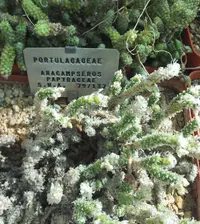
Top-dressing with grit

Apply a 0.5–1 cm layer of fine quartz grit or pumice on the soil surface to keep leaf bases dry, reduce algae and moss, and stabilize small rosettes as they expand.

Controlled offset removal

Gently twist off a few well-rooted offsets in late spring, allow the bases to dry for 1–2 days, then replant in a separate tray to rejuvenate the mother plant and quickly expand your colony.

Cool, bright wintering

In winter, keep plants in the brightest possible position at 45–55°F with very light watering, which encourages compact, colorful growth and reduces etiolation when growing Anacampseros papyracea.

Targeted mealybug checks

Inspect the tight leaf bases and the underside of rosettes monthly with a hand lens, and at the first sign of mealybugs isolate the plant and treat with a systemic insecticide labeled for succulents to avoid colony-wide infestations.

Common Pests and Diseases

Mealybugs

This pest appears as white, cottony clusters tucked between leaf bases and along stems, often causing stunted growth and leaf wrinkling.

Solution

Isolate the plant, then dab visible insects with cotton swabs dipped in 70% isopropyl alcohol and repeat weekly until no new clusters appear; for larger infestations, use a systemic insecticide labeled for succulents and reduce excess nitrogen fertilization that encourages soft growth.

Root mealybugs

These insects live in the potting mix and on roots, causing poor growth, leaf shriveling, and plants that stay loose in the soil despite adequate watering.

Solution

Unpot the plant, discard all old soil, rinse roots under a gentle stream of water, and remove all visible insects; then soak roots briefly in an appropriate systemic insecticide or dilute alcohol solution, repot in fresh, fast‑draining cactus mix, and monitor with yellow sticky traps for any remaining winged adults.

Aloe mite (eriophyid mites)

This pest can cause distorted, clubbed, or thickened leaves and unsightly galls or rough, corky patches, especially near the crown of the rosette.

Solution

Remove and discard all visibly deformed leaves and heavily affected rosettes, avoid overhead misting, and improve spacing and airflow; in collections where this mite is established, use a miticide specifically labeled for eriophyid mites and maintain strict quarantine of new succulents to prevent spread when growing Anacampseros papyracea in mixed trays.

Fungal leaf spots

This disease shows as small brown or black specks on leaves that may enlarge into dry, sunken lesions, often after periods of prolonged humidity or overhead watering.

Solution

Remove affected leaves, keep foliage dry by watering only at the soil level, and increase airflow around the plant; if spotting continues, apply a copper‑based or sulfur fungicide labeled for succulents, and avoid crowding plants in dense trays or terrariums.

Interesting Facts

South African micro endemic

This species is native to arid regions of South Africa and Namibia, where it grows in rocky, quartz-rich habitats and often blends so well with the substrate that plants are easily overlooked in the wild.

Camouflage through papery leaves

The small, white, papery leaf scales reflect intense sun and mimic surrounding grit, helping the plant avoid overheating and reducing visibility to herbivores.

Nocturnal flower opening

Its star-shaped flowers typically open in the late afternoon or evening and close again by the next day, an adaptation that likely aligns with cooler temperatures and available pollinators in its native habitat.

FAQs about Anacampseros papyracea

Growth is slow. In several years, this succulent often forms compact cushions roughly 3–6 cm tall and 5–10 cm across. Clumping enlarges the overall patch, but individual rosettes remain small and close to the ground.

Grow Healthy Plants with Botan Care

Keep your plants happy and healthy with plant identification, disease detection, and easy care guidance.

Botan plant care app — identify plants on mobile

Explore More Plants