powdery liveforever Care (Dudleya farinosa)

Also known as: Bluff Lettuce
powdery liveforever

About powdery liveforever

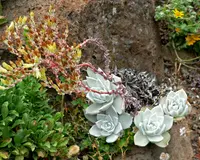
Powdery liveforever (Dudleya farinosa) is a small, rosette-forming succulent native to coastal cliffs of California and southern Oregon. It often grows on rocky bluffs exposed to sea winds. The plant has fleshy, spoon-shaped leaves coated with a pale, powdery bloom that helps reduce water loss and sun stress. In late spring to early summer it sends up slender stalks with small, star-shaped yellow flowers that attract pollinators. Its slow growth and sensitivity to overwatering mean it suits careful, patient growers. Those who care for powdery liveforever should provide bright light, excellent drainage, and relatively dry conditions to keep it healthy.

Main Plant Requirements

Care Difficulty

Hard Care

Light Preference

Full Sun

Water Requirements

Low Water

Temperature Preference

Warm Climate

Hardiness Zone

9–11

Soil Texture

Sandy, Rocky, Loamy

Soil pH

Slightly acidic (6.5–7.0), Neutral (7.0)

Soil Drainage

Well-drained

Fertilization

Minimal (feed rarely)

Get Personalized Care Plan

Scan your plant to receive care tips personalized for your specific plant

Available on iOS and Android

How to Care for the powdery liveforever

This coastal succulent prefers bright, direct light but needs gradual acclimation away from mild seaside conditions.

  • Provide 6–8 hours of direct sun daily in mild coastal climates; inland, aim for 4–6 hours of morning sun plus bright, open shade in the afternoon.
  • Powdery liveforever tolerates light partial shade, but prolonged low light causes leggy growth, faded leaf color, and weaker rosettes.
  • In summer heat waves above 90°F (32°C), protect from harsh midafternoon sun with a shade cloth or high, filtered light to prevent leaf scorch.

This species is highly drought-tolerant and is harmed more by excess water than by short dry spells.

  • Allow soil to dry completely; in gritty, fast-draining ground, wait until at least the top 5 cm are bone dry before watering again.
  • During active growth in cool seasons, use a deep soak, then let excess drain fully; reduce or stop watering in hot, dormant summer periods for Dudleya farinosa.
  • Watch for overwatering signs such as mushy, translucent leaves and a sulfur smell from the roots, while severe underwatering shows as shriveled, folding leaves that still feel firm.

This coastal succulent prefers cool to mild conditions and handles heat or brief cold only within clear limits.

  • Optimal growth occurs around 55–70°F (13–21°C), especially with cool nights and good air movement.
  • Mature plants tolerate short dips to about 25°F (-4°C) if soil is very well drained, but repeated freezes or wet cold greatly increase rot risk.
  • Inland heat above 90°F (32°C) can trigger semi-dormancy; provide afternoon shade and avoid watering with warm soil to reduce stress and root damage.

This species prefers dry air and does not need added humidity indoors.

  • Aim for 20–40% relative humidity, similar to most heated indoor homes.
  • Excess humidity can encourage fungal spotting on leaves and rot at the crown.
  • If air is very humid, increase airflow with a small fan and avoid misting powdery liveforever.

Use a very fast-draining, mineral-based mix that mimics rocky coastal slopes.

  • Choose a sandy or gritty mix with large particles so water runs through in seconds, not minutes.
  • Combine roughly 60–70% pumice, coarse perlite, or 3–5 mm gravel with 30–40% washed coarse sand or lean cactus mix.
  • Keep organic matter low; too much peat or compost holds moisture and raises rot risk for Dudleya farinosa.
  • Aim for slightly acidic to neutral pH around 6.0–7.0 and avoid any mix that stays dark and wet for more than 1 day.

This species is suitable for container growing when drainage and mineral substrate are prioritized.

  • Use a heavy, low clay or cement pot outdoors to keep shallow, spreading rosettes stable in wind.
  • Choose a wide, shallow container that matches the shallow root system and prevents deep, wet zones in the mix.
  • Slightly raise the pot on feet or tiles so drainage holes stay clear and water cannot pool under the base.

This coastal succulent needs very light feeding, as powdery liveforever is adapted to lean, rocky soils.

  • Use a low-dose, balanced liquid fertilizer (around 1/4-strength 10-10-10) only for container-grown plants in spring–early summer.
  • Apply at most once every 4–6 weeks during active growth, skipping feedings if growth already looks firm and compact.
  • Avoid compost-rich mixes and slow-release pellets, which can cause weak, lush tissue and root problems.
  • Stop feeding in late summer and through winter dormancy to prevent soft, frost-prone growth.

Dudleya farinosa needs minimal pruning, focused on cleanliness rather than shaping.

  • In late winter or early spring, remove dry, dead lower leaves by gently snapping them off at the base.
  • Clip spent flower stalks with clean, sharp scissors or pruners once seed has dispersed or browned fully.
  • Limit pruning to dead, damaged, or diseased tissue to avoid scarring healthy rosettes and slowing growth.
  • Disinfect tools before and after use to lower the risk of fungal or bacterial infection in succulent tissues.

Container-grown plants prefer infrequent repotting, while garden-grown plants are best transplanted only when necessary.

  • Check for roots circling the pot drainage holes, mix drying extremely fast, or noticeably slowed growth as cues to repot.
  • Plan repotting or transplanting for late winter–early spring, just before strong new growth, about every 3–4 years at most.
  • Use a shallow, wide container or well-drained rocky site, disturbing roots as little as possible and keeping the crown above soil level.
  • Water lightly after moving Dudleya farinosa, then allow the mix to dry well to limit rot and help roots re-establish.

This species is best propagated thoughtfully, as many wild populations are conservation-sensitive.

  • Divide offsets from established, legally obtained plants in late winter–spring, keeping several healthy roots attached to each rosette.
  • Allow any cut surfaces to callus in a dry, shaded place for 3–5 days before planting in a gritty, fast-draining mix.
  • Provide bright light, excellent airflow, and very light watering until new roots and firm anchoring develop.
  • Seed propagation is possible but slow; sow on the surface of a sterile, sandy mix and keep barely moist in bright, cool conditions.

This coastal succulent prefers mild, dry winters and is only moderately frost tolerant.

  • In regions colder than about 25°F, grow in containers so plants can be moved to a bright, cool, frost-free area for winter.
  • Keep soil on the dry side; wet, cold conditions greatly increase rot risk in rosettes and roots.
  • In the ground, use a very gritty, sloped site so winter rain drains quickly away from the crown.

Care Tips

Protect Leaf Farina

Handle rosettes only by the pot or very base of the stem so the natural white waxy coating stays intact, since rubbing it off reduces sun protection and increases stress on the plant.

Summer Dormancy Adjustments

During hot, dry summer dormancy, keep the plant in bright, dry conditions and sharply reduce or stop watering instead of trying to force active growth, which helps prevent root rot and premature decline.

Use Mineral Topdressing

Apply a 1–2 cm layer of coarse gravel or pumice around the base to keep leaves off wet soil, improve air flow at the crown, and discourage fungal issues.

Tilt For Rain Shedding

If grown outdoors in rainy climates, slightly tilt the container or mount it in a crevice so water naturally runs away from the rosette center and does not sit in the leaf funnel.

Cool-Season Repotting

Repot or divide only in the cool active season (late fall to early spring), disturbing roots as little as possible and allowing several days of dry soil afterward so damaged roots can callus before the next watering, which supports long-term Dudleya farinosa plant care.

Common Pests and Diseases

Leaf mealybugs

This pest feeds on leaf bases and between tight rosettes, leaving white cottony clusters and sticky honeydew that can lead to sooty mold growth. Symptoms include stunted growth, deformed rosettes, and stressed, dull foliage.

Solution

Isolate the plant, then use a strong but controlled stream of water or a soft brush with diluted alcohol (about 50–70% isopropyl, dabbed directly) to remove visible insects from the rosette and leaf bases. Allow the plant to dry quickly, keep it in bright, airy conditions, and repeat spot treatment weekly until no new insects appear; systemic treatments are generally avoided on wild-collected Dudleya farinosa due to conservation concerns.

Soft scale

These insects appear as small, dome-shaped bumps on stems and leaf undersides, often near the crown, and can cause gradual yellowing, reduced vigor, and sticky honeydew deposits. This pest is more likely on plants grown in containers or nursery conditions with reduced air movement.

Solution

Gently scrape or wipe off individual scales with a cotton swab dipped in diluted alcohol, taking care not to damage the waxy leaf coating that protects the plant. Improve light and airflow, avoid overfertilizing, and monitor closely for several weeks, repeating manual removal at the first sign of new crawlers.

Aphids

These insects cluster on young growth and flower stalks, sucking sap and leaving curling, misshapen tissue and shiny honeydew that can attract ants. This pest is particularly common on flowering Dudleya in garden or nursery settings.

Solution

Rinse colonies off with a firm stream of water, keeping the rosette tilted so water drains away from the crown, then allow the plant to dry rapidly. For repeated infestations, use insecticidal soap at low concentration on a cool, shaded day, rinsing it off after a short contact time to avoid damaging the plant’s protective leaf bloom.

Fungal crown rot

This disease develops at the crown when excess moisture accumulates in the rosette or soil, especially in warm conditions, causing blackened tissue, leaf collapse, and eventual plant death. Symptoms include a soft, discolored growing point and leaves that detach easily from a mushy base.

Solution

At the earliest sign, sharply reduce watering, tilt or reposition the plant to prevent water pooling, and remove any dead or collapsing leaves to improve airflow. If some tissue remains firm, let the plant dry thoroughly and maintain it in very bright, cool, low-humidity conditions; severely affected crowns usually cannot be saved, so prevention through fast-draining mineral soil, careful watering, and rain protection is the most reliable Dudleya farinosa care strategy.

Interesting Facts

Coastal fog specialist

This species often grows on exposed coastal cliffs in northern and central California, where it relies heavily on fog drip as a moisture source during the dry summer months.

White wax armor

Its leaves are coated with a thick, powdery wax (farina) that reflects sunlight and reduces water loss, an adaptation to intense sun and wind on rocky sea bluffs.

Cliff-face anchor roots

The plant typically roots in shallow rock crevices and thin soils over bedrock, stabilizing itself in habitats that experience salt spray, high winds, and very limited organic matter.

Botan icon

Did you know?

Wild populations of this species along the California coast have been threatened by illegal poaching for the succulent trade, prompting conservation actions and legal protection efforts to prevent removal from natural cliff habitats.

FAQs about powdery liveforever

This species performs best outdoors in mild, coastal or Mediterranean-type climates where it receives abundant light, airflow, and cool nights. Indoors it often weakens over time, so powdery liveforever indoor care is generally considered challenging and short-term only.

Grow Healthy Plants with Botan Care

Keep your plants happy and healthy with plant identification, disease detection, and easy care guidance.


Botan plant care app — identify plants on mobile

Explore More Plants