


Rotate for symmetry
Turn the pot 90° every 2–3 weeks so the mound develops evenly and does not lean or flatten on the side that faces the light source.

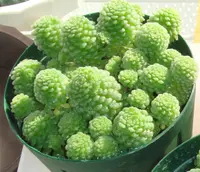
Monanthes polyphylla is a small succulent from the Canary Islands, forming compact mounds of many tiny, bead-like leaves. Its foliage often appears green to gray-green and may blush under strong light. In season, it sends up slender stems with small star-shaped flowers that rise delicately above the foliage. The plant stays low and branching, which makes it suitable for small pots, rock gardens, and dish gardens. It prefers bright light, low to moderate water, and very well-drained, gritty soil. These traits make it appealing but slightly sensitive to overwatering, so understanding how to care for Monanthes polyphylla is important for long-term success.

Care Difficulty
Moderate Care

Light Preference
Partial Sun

Water Requirements
Low Water

Temperature Preference
Tropical / Frost Sensitive

Hardiness Zone
10–11

Soil Texture
Sandy, Loamy, Rocky

Soil pH
Slightly acidic (6.5–7.0), Neutral (7.0)

Soil Drainage
Well-drained

Fertilization
Minimal (feed rarely)
Scan your plant to receive care tips personalized for your specific plant
Available on iOS and Android
This compact succulent needs bright but gentle light to keep its tight foliage and compact shape.
This plant stores moisture in its leaves and prefers thorough but infrequent watering.
This species prefers mild, stable temperatures and is sensitive to frost and extreme heat.
This compact succulent prefers dry indoor air and does not need elevated humidity.
Use a very fast-draining, mineral-based mix that keeps roots dry between waterings.
This species is well suited to container growing due to its small, shallow root system.
This small succulent has modest nutrient needs, so keep feeding light and focused on the active growing season.
Pruning needs are minimal and mainly focused on keeping the plant compact and healthy.
This species prefers a small, stable pot and only occasional repotting due to its shallow root system.
This plant is most often multiplied from stem or rosette pieces rather than from seed in home collections.
Cold and excess moisture are the main winter risks, especially for container-grown plants.

Plant Health Check
Not sure what's wrong with your plant? Check your plant's health inside the app.
This species is naturally restricted to the Canary Islands, where it grows in rocky crevices and thin volcanic soils that drain very quickly.
It forms dense, cushion-like mats made of many tiny rosettes, an adaptation that helps reduce water loss and protect growing points from intense sun and drying winds.
Like many succulents, it uses crassulacean acid metabolism (CAM), opening stomata mainly at night to take in carbon dioxide and reducing water loss during hot, dry days.

In its native habitat, this species often occupies almost soil-free volcanic rock faces, anchoring itself in hairline cracks, which makes it one of the few vascular plants able to complete its life cycle in such extremely shallow and nutrient-poor substrates.
This species stays compact and adapts well to containers, so it usually performs best in bright indoor spots or protected patios. Outdoors, it needs a frost-free, very dry, well-drained microclimate to avoid rot and cold damage.
Keep your plants happy and healthy with plant identification, disease detection, and easy care guidance.


Pelargonium crassicaule
Pelargonium crassicaule
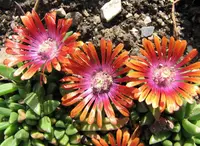
Ice Plant
Delosperma Fire Spinner
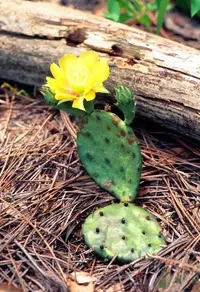
Eastern Prickly Pear
Opuntia humifusa
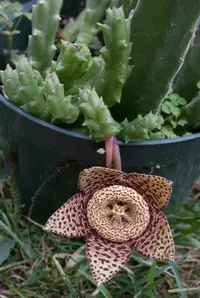
Carrion-flower
Orbea variegata
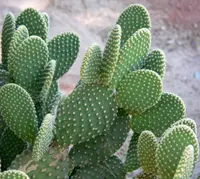
Bunny Ear Cactus
Opuntia microdasys
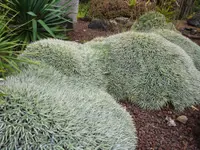
Deuterocohnia brevifolia
Deuterocohnia brevifolia
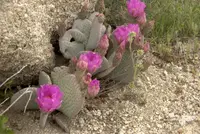
beavertail pricklypear
Opuntia basilaris
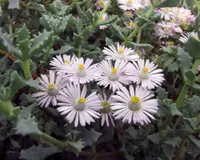
Deltoid-leaved Dewplant
Oscularia deltoides