

Encourage Compact Growth
Pinch back soft shoot tips in late winter or early spring to keep plants low and branching, which helps support the swollen, gnarled stems and creates a fuller outline.

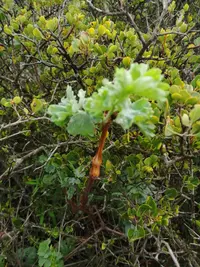
Gouty storksbill, Pelargonium gibbosum, is a small succulent shrub from coastal areas of South Africa and Namibia. It grows from a knobbly, swollen stem that stores water. The plant produces finely divided, often sticky leaves and night-scented pale yellow to greenish flowers that attract moths. Its compact size and slow, tidy growth habit make it suitable for pots and small spaces. This species prefers bright light, very well-drained, gritty soil, and careful watering with dry pauses between. Its drought tolerance and modest growth rate generally make it easier to care for than many leafy houseplants, once you understand how to care for Gouty Storksbill.

Care Difficulty
Moderate Care

Light Preference
Full Sun

Water Requirements
Low Water

Temperature Preference
Tropical / Frost Sensitive

Hardiness Zone
10–11

Soil Texture
Sandy, Loamy, Rocky

Soil pH
Slightly acidic (6.5–7.0), Neutral (7.0)

Soil Drainage
Well-drained

Fertilization
Minimal (feed rarely)
Scan your plant to receive care tips personalized for your specific plant
Available on iOS and Android
This succulent geranium prefers bright, sun‑exposed conditions that mimic its native coastal habitat.
Watering should reflect its drought-tolerant, tuberous root system and seasonal growth rhythm.
This species prefers mild, frost-free conditions with cool nights and good air movement.
This semi-succulent species handles indoor air well but prefers moderately dry conditions.
This species needs very fast-draining, airy soil to avoid root and stem rot.
This compact, semi-succulent species is well suited to container growing.
This drought-adapted succulent shrub needs modest feeding to support container growth and seasonal flowering.
Thoughtful pruning keeps Pelargonium gibbosum compact, branching well, and flowering on healthy wood.
This species prefers slightly tight quarters and infrequent disturbance, so repot only when necessary.
Pelargonium gibbosum is most commonly propagated from stem cuttings, which root reliably in suitable conditions.
This plant is frost-tender and needs protection in regions with cold winters or hard freezes.

Plant Health Check
Not sure what's wrong with your plant? Check your plant's health inside the app.
This species releases a strong, resinous scent mainly after dark, an adaptation that helps attract nocturnal moth pollinators in its native South African coastal habitats.
It forms thick, knobbly, water-storing stem swellings (caudices) that give it a gouty appearance and allow the plant to endure long dry periods typical of winter-rainfall regions.
In the wild it often grows on rocky sea cliffs and sandy slopes along the South African west coast, tolerating salty winds and very limited soil.

The species was among the early South African pelargoniums introduced to European botanic collections in the 18th–19th centuries, where its unusual swollen stems and night fragrance made it a popular subject for collectors of caudiciform plants.
This species performs best outdoors in mild, dry climates where it receives good light and airflow. Indoors, it can survive under bright conditions but is more prone to rot and stretching, so containers are usually overwintering solutions only.
Keep your plants happy and healthy with plant identification, disease detection, and easy care guidance.

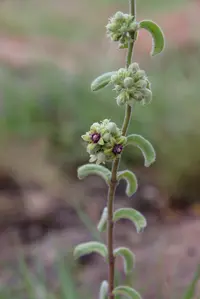
Raphionacme procumbens
Raphionacme procumbens
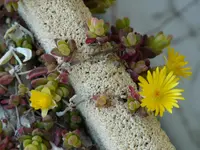
Fine Sheepfig
Delosperma lineare
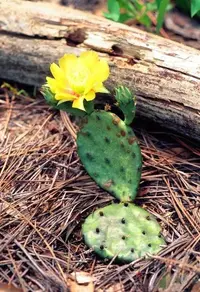
Eastern Prickly Pear
Opuntia humifusa
Deuterocohnia brevifolia
Deuterocohnia brevifolia
Delosperma neethlingiae
Delosperma neethlingiae
Rebutia canigueralii
Rebutia canigueralii
Deltoid-leaved Dewplant
Oscularia deltoides
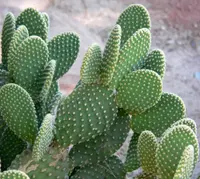
Bunny Ear Cactus
Opuntia microdasys