lanceleaf liveforever Care (Dudleya lanceolata)

Also known as: lance-leaved dudleya
lanceleaf liveforever

About lanceleaf liveforever

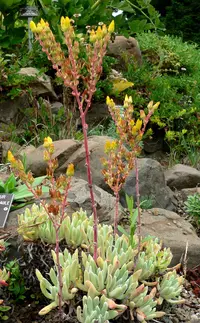
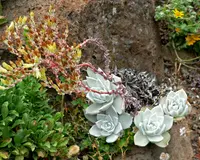
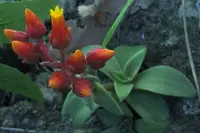
Lanceleaf liveforever, Dudleya lanceolata, is a small, rosette-forming succulent native to rocky slopes and coastal bluffs of California and northern Baja California. It usually grows in tight clusters, with narrow, lance-shaped leaves that can range from green to bluish or grayish tones. In spring to early summer, it sends up slender flower stalks topped with small, starry yellow to orange flowers that attract pollinators. This species is adapted to dry, sunny habitats and is sensitive to excess water and rich, organic soils. It suits patient growers who want to learn how to care for lanceleaf liveforever in conditions that mimic its natural, well-drained, low-rainfall environment.

Main Plant Requirements

Care Difficulty

Hard Care

Light Preference

Full Sun

Water Requirements

Low Water

Temperature Preference

Warm Climate

Hardiness Zone

8–11

Soil Texture

Sandy, Rocky, Loamy

Soil pH

Slightly acidic (6.5–7.0), Neutral (7.0)

Soil Drainage

Well-drained

Fertilization

Minimal (feed rarely)

Get Personalized Care Plan

Scan your plant to receive care tips personalized for your specific plant

Available on iOS and Android

How to Care for the lanceleaf liveforever

This coastal succulent thrives in bright, direct light but needs protection from intense midsummer heat inland.

  • Provide 6–8 hours of direct sun, ideally with strong morning sun and lighter or filtered afternoon light, especially away from the coast.
  • Tolerates light partial shade (3–4 hours sun) but rosettes of lanceleaf liveforever may stretch and lose color if kept too shaded.
  • In hot inland summers, give afternoon shade or high, open dappled light to prevent leaf scorch and pale, stressed foliage.

This species is drought-adapted and prefers infrequent, deep watering in fast-draining soil.

  • Water only when the soil is completely dry, at least the top 3–5 cm; in many climates this means every few weeks during active growth.
  • Use very gritty, sharply drained soil or a rock crevice setting so water runs through quickly, preventing root rot in Dudleya lanceolata.
  • Reduce or stop watering in summer dormancy and winter rain periods; wrinkling lower leaves suggest mild thirst, while mushy or yellowing leaves signal overwatering.

This succulent prefers mild, dry conditions and tolerates a fairly wide temperature range outdoors.

  • Aim for 60–75°F (16–24°C) for active growth, with good air movement and dry foliage during cool nights.
  • Mature plants can handle brief drops to about 25–30°F (-4 to -1°C) if soil is dry, but repeated hard frosts and freezing, wet soil increase rot risk.
  • Tolerates heat up to 90–95°F (32–35°C) if acclimated, kept in very well-drained soil, and given afternoon shade in exposed inland sites.

This species prefers dry air and does not require added humidity indoors or outdoors.

  • Aim for 30–50% humidity, similar to a dry, well-ventilated room or arid outdoor climate.
  • Dry, firm leaves are normal; soft, translucent, or splitting leaves may indicate humidity combined with excess moisture around roots.
  • If air is very humid, increase air movement around lanceleaf liveforever and keep foliage and crown dry to reduce rot risk.

This succulent requires very fast-draining, mineral-based soil to prevent root and crown rot.

  • Use a gritty mix such as 60–70% inorganic material (pumice, coarse sand, crushed lava rock) with 30–40% low-organic cactus potting mix.
  • Aim for slightly acidic to neutral pH around 6.0–7.0, which supports nutrient availability without encouraging excessive microbial decay.
  • Improve aeration by using large particle sizes (2–5 mm) and avoiding fine peat or compost that can pack tightly and hold water.
  • Avoid heavy, clay-based, or moisture-retentive mixes and never allow water to pool around the base of Dudleya lanceolata.

This species is suitable for container growing when the pot setup mimics a dry, rocky slope.

  • Choose a shallow, wide pot to accommodate its fibrous, shallow root system and to keep the crown above the rim for faster drying.
  • Select unglazed terracotta so moisture evaporates through the pot walls, reducing the risk of prolonged root wetness.
  • Elevate the pot on feet or mesh to ensure rapid runoff from drainage holes and avoid standing water under the container.

This drought-adapted succulent generally needs little to no fertilizer, especially in lean, well-drained mineral soils.

  • If growth is weak in a container, use a low-dose, balanced NPK cactus or succulent fertilizer at 1/4 strength in late spring only.
  • Feed at most 1–2 times during the active growing season, after a thorough watering to avoid root burn.
  • Do not fertilize during summer dormancy or in winter, when roots are less active and salts can accumulate.
  • Avoid rich compost or heavy organic feeds, which can promote soft, rot-prone growth in lanceleaf liveforever.

Dudleya lanceolata needs minimal pruning, mainly for cleanliness and disease prevention rather than shaping.

  • Best time is late winter to early spring, before strong new growth begins.
  • Use clean, sharp scissors or small pruners to remove dead, dried, or diseased leaves from the rosette base.
  • Gently twist off spent flower stalks once they are fully dry to keep the plant tidy and reduce self-seeding.
  • Avoid cutting into healthy rosette centers, as this can deform growth and increase rot risk.

This species prefers stability and is best repotted or transplanted infrequently to avoid root disturbance.

  • Consider moving a container plant when roots circle the pot, drainage slows, or growth stalls despite proper light and watering.
  • Aim to transplant or repot in late winter to early spring, just before active growth, and only every 3–5 years if needed.
  • Choose a shallow, wide container or rocky outdoor site with very sharp drainage, using a gritty cactus mix or pumice-rich soil.
  • Handle the root ball gently, keep roots shaded and slightly moist during the process, then water lightly once settled to reduce stress.

Dudleya lanceolata is most reliably propagated by offsets, with seed used mainly by experienced growers or for conservation work.

  • Separate small rosette offsets in late winter to early spring, when plants resume active growth.
  • Allow any cut surfaces to callus for 2–4 days in a dry, bright, shaded place before planting.
  • Set offsets on or just in gritty, fast-draining mix, keeping conditions bright and dry to slightly barely moist until new roots form.
  • Sow seeds on the surface of sterile, fine mineral mix under bright, cool conditions, maintaining very light, even moisture.

This succulent prefers mild, dry winters and can tolerate light frost if kept well-drained and relatively dry.

  • In-ground plants in mild climates usually need no special winter protection beyond excellent drainage.
  • Avoid overhead watering in cold weather; keep soil barely dry to reduce rot risk at low temperatures.
  • Mulch lightly with gravel, not organic mulch, to keep the crown dry while allowing air flow.
  • Move containers under a covered porch or indoors to a bright, cool spot if hard freezes below about 25°F are expected.

Care Tips

Summer drought rest

Allow the plant to go largely dry and semi-dormant in the hottest, driest part of summer, reducing water to light, infrequent sips only if leaves start to shrivel substantially.

Rock crevice planting

Site plants in narrow rock crevices or between stacked stones so roots stay cool and sharply drained while the rosette is tilted slightly to shed water away from the crown.

Rain protection strategy

In climates with wet winters, place containers under an overhang or use a simple cold frame so rain does not pool in the rosette, while still allowing bright light and airflow.

Minimal root disturbance

When repotting, move the plant with the entire root ball intact into a slightly larger pot and avoid breaking thick storage roots, which can set the plant back for an entire season.

Calcium-rich topdressing

Use a topdressing of crushed granite, pumice, or small limestone chips around the crown to keep leaf bases dry, stabilize the plant, and provide a more natural mineral surface for growing lanceleaf liveforever.

Common Pests and Diseases

Mealybugs

This pest feeds on succulent leaves and stems, sucking sap and leaving cottony white clusters in crevices and at leaf bases. Symptoms include stunted growth, sticky honeydew, and sooty mold on older rosettes grown in containers or low-ventilation spots.

Solution

Isolate the affected plant, then dab visible insects with cotton swabs dipped in 70% isopropyl alcohol and repeat weekly until no new clusters appear. Improve air flow, avoid overhead watering, and, for heavy infestations on cultivated plants, use a labeled insecticidal soap or horticultural oil applied in the cool part of the day.

Aphids

These insects cluster on young flowering stalks and new rosette growth, sucking sap and causing distortion and sticky residue. Ants often attend them, protecting colonies and spreading them between plants.

Solution

Rinse colonies off with a firm stream of water, taking care not to damage the leaves, and repeat as needed. Control nearby ant activity, remove heavily infested flower stalks, and use insecticidal soap on persistent populations, applying in the evening to reduce stress on the plant.

Snails and slugs

This pest feeds at night on fleshy leaves, leaving irregular holes and chewed margins, especially on plants grown at ground level or in shady, damp positions. Symptoms include slime trails on and around the rosettes.

Solution

Hand-pick snails and slugs at night or early morning and use copper tape or physical barriers around pots or raised planters. Reduce damp hiding places near plants, and where pressure is high, place iron-phosphate slug bait outside the rosettes according to label directions.

Fungal leaf spots

This disease appears as small, dark, sometimes sunken spots on leaves, often starting where water sits on the surface. Symptoms include gradual yellowing and premature leaf drop on stressed or overcrowded plants.

Solution

Remove and discard affected leaves, then adjust watering to keep foliage dry and water only at the soil level. Improve spacing and air circulation, and in humid or coastal gardens a copper-based fungicide can be used preventively during wet periods as part of overall Dudleya lanceolata care.

Interesting Facts

Coastal cliff specialist

This species is naturally restricted to rocky slopes, sea cliffs, and canyon walls from central California into northwestern Baja California, where it often grows in nearly pure rock with minimal soil.

Summer dormancy strategy

In its native habitat it often enters partial summer dormancy, with rosettes shrinking and leaves shriveling to reduce water loss during the hottest, driest months.

Color-shifting rosettes

Leaf color varies with exposure and stress, ranging from blue-green in shadier, coastal sites to reddish or bronzed tones in high light and drought, caused by protective pigments called anthocyanins.

Botan icon

Did you know?

Genetic and field studies have shown that this species hybridizes with several other Dudleya species where their ranges overlap, creating natural hybrid swarms that help botanists study evolution and speciation in California’s succulent flora.

FAQs about lanceleaf liveforever

Lack of flowering usually comes from insufficient winter rest, too much summer water, or plants growing in deep shade. This species blooms best when kept relatively dry in winter, with strong light and good drainage, and not overfertilized.

Grow Healthy Plants with Botan Care

Keep your plants happy and healthy with plant identification, disease detection, and easy care guidance.

Botan plant care app — identify plants on mobile

Explore More Plants