


Pad propagation hygiene
Use a sterile, very sharp knife to remove healthy pads in spring, let the cut ends callus for 5–10 days in a dry, shaded place, then plant them only halfway into dry gritty mix to root without rotting.

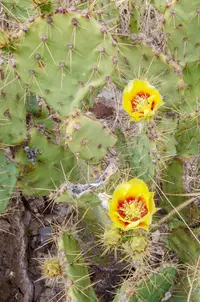
The Rio Grande pricklypear, Opuntia aureispina, is a clump-forming cactus with flat, oval pads covered in dense golden spines. It often develops a low, spreading mound that provides strong architectural structure in dry landscapes.
This species is native to arid regions near the Rio Grande in the southwestern United States and northern Mexico. It is highly drought tolerant and adapted to intense sun and poor, rocky soils.
Its slow growth, long-lived pads, and low water demand make it a durable choice for xeric gardens, though handling requires care due to the sharp spines. Those who want to learn how to care for Rio Grande pricklypear should focus on very sharp drainage, bright light, and avoiding overwatering.

Care Difficulty
Easy Care

Light Preference
Full Sun

Water Requirements
Low Water

Temperature Preference
Warm Climate

Hardiness Zone
8–11

Soil Texture
Sandy, Loamy, Rocky

Soil pH
Slightly acidic (6.5–7.0), Slightly alkaline (7.0–7.5)

Soil Drainage
Well-drained

Fertilization
Minimal (feed rarely)
Scan your plant to receive care tips personalized for your specific plant
Available on iOS and Android
This desert cactus thrives in strong, direct light with careful acclimation to full sun.
This species prefers infrequent, deep watering and extended dry periods between soakings.
This cactus is adapted to hot, arid climates but has notable cold tolerance when kept dry.
This cactus thrives in dry air and rarely needs special humidity management.
Opuntia aureispina needs very fast-draining, sandy mineral soil to prevent root and pad rot.
This species is well suited to container growing when drainage and stability are carefully managed.
This desert cactus needs only light feeding, as Rio Grande pricklypear is adapted to nutrient-poor soils.
Pruning Opuntia aureispina is mainly for safety, shape control, and plant health rather than for flowering.
This cactus is usually grown in the ground, but container plants or young clumps may need occasional transplanting.
Propagation of this species is commonly done from stem pads rather than from seed.
This cactus is quite cold tolerant when kept dry but benefits from some winter preparation, especially in wetter climates.

Plant Health Check
Not sure what's wrong with your plant? Check your plant's health inside the app.
This cactus is distinguished within its genus by its dense covering of bright golden-yellow spines, which strongly reflect sunlight and help reduce stem overheating in its hot, arid habitat in northern Mexico and southern Texas.
It is naturally restricted to a relatively narrow range along the lower Rio Grande region, where it grows in dry scrub and rocky soils and often forms low, spreading clumps that stabilize fragile, eroding ground.
In its native range, its fleshy fruits and sometimes its pads are eaten by mammals and birds, providing moisture and energy during dry periods and contributing to local seed dispersal dynamics.

This species is considered of conservation concern in parts of its United States range, as habitat loss and land-use changes along the lower Rio Grande have reduced some of its natural populations, prompting interest in ex situ conservation and careful documentation of wild stands.
Lack of blooms usually comes from too little direct sun, excess nitrogen fertilizer, or plants that are still immature. Cold winter rest and strong light trigger flowering; avoid heavy feeding and repotting right before the blooming season.
Keep your plants happy and healthy with plant identification, disease detection, and easy care guidance.

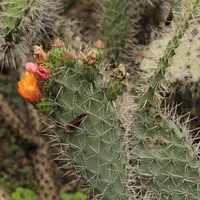
Opuntia soederstromiana
Opuntia soederstromiana
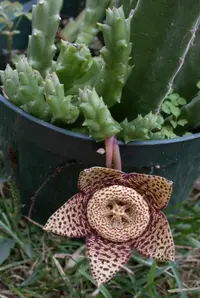
Carrion-flower
Orbea variegata
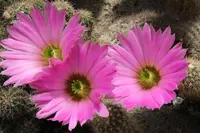
Echinocereus sciurus
Echinocereus sciurus
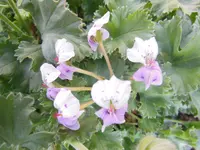
Pelargonium crassicaule
Pelargonium crassicaule
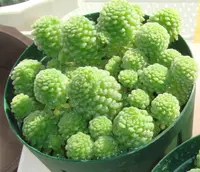
Monanthes polyphylla
Monanthes polyphylla
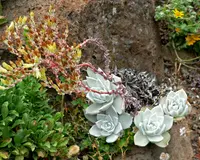
powdery liveforever
Dudleya farinosa
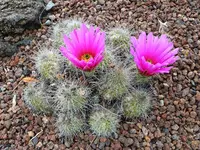
strawberry hedgehog cactus
Echinocereus stramineus
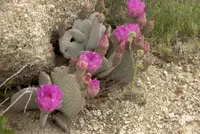
beavertail pricklypear
Opuntia basilaris