Rock mulch ring
Place a loose ring of light-colored rocks or gravel around the clump to keep stems off wet soil, reduce splash onto the crown, and moderate temperature swings at root level.

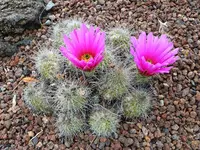
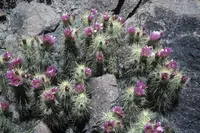
The strawberry hedgehog cactus, Echinocereus stramineus, is a small, clumping desert cactus known for its dense spines and vivid spring flowers. It forms low, rounded mounds made of many upright stems. Each stem is ribbed and heavily armed with sharp spines that protect it from herbivores and intense sun.
This species is native to arid regions of the southwestern United States and northern Mexico, where it grows in rocky, well-drained soils. It is considered relatively easy to grow, as long as it receives strong light, fast-draining soil, and minimal excess moisture. For gardeners learning how to care for strawberry hedgehog cactus, its slow growth and drought tolerance make it a low-maintenance option.

Care Difficulty
Easy Care

Light Preference
Full Sun

Water Requirements
Low Water

Temperature Preference
Warm Climate

Hardiness Zone
7–10

Soil Texture
Sandy, Rocky, Loamy

Soil pH
Slightly acidic (6.5–7.0), Neutral (7.0)

Soil Drainage
Well-drained

Fertilization
Minimal (feed rarely)
Scan your plant to receive care tips personalized for your specific plant
Available on iOS and Android
This cactus thrives in strong light that mimics its sunny desert habitat.
Watering should be infrequent and guided by soil dryness rather than a fixed schedule.
Stable warm to hot conditions suit this desert cactus best, with short exposure to cooler nights tolerated.
This cactus prefers dry air and rarely suffers from low household humidity.
This cactus needs a very fast-draining, mineral-dominated substrate to prevent root rot.
This species is well suited to container culture in dry, bright conditions.
This cactus needs only light feeding to support flowering and healthy stems.
Pruning needs for Echinocereus stramineus are minimal and mainly hygienic.
This species prefers to stay undisturbed, so repotting or transplanting is infrequent.
Echinocereus stramineus is commonly propagated by offsets and sometimes by seed.
This cactus is relatively cold hardy when kept dry but still benefits from thoughtful winter care.

Plant Health Check
Not sure what's wrong with your plant? Check your plant's health inside the app.
This species often forms dense mounds made of many tightly packed stems that are genetically identical clones, all arising from a shared root system in its native habitats of Texas and northern Mexico.
Unlike many cacti from warmer deserts, this species tolerates brief freezes and light snow in habitat, surviving in exposed limestone and gravel slopes where winter temperatures can drop below 32°F.
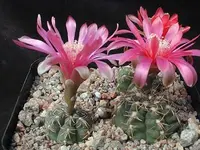
The plant produces large, funnel-shaped magenta to purple flowers in spring, often scented, which attract native bees and other pollinators across its blooming period.

The large, fleshy red fruits of this cactus, sometimes called strawberry cactus fruits, are edible and have been traditionally collected as a local wild food in parts of its native range, contributing both sugar and moisture in very arid landscapes.
Lack of flowers usually comes from insufficient light, no cool, dry winter rest, or a plant that is still immature. Avoid high nitrogen fertilizer and keep it slightly cooler and drier in winter to set buds.
Keep your plants happy and healthy with plant identification, disease detection, and easy care guidance.