Western Pricklypear Care (Opuntia orbiculata)

Western Pricklypear

About Western Pricklypear

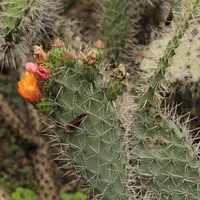
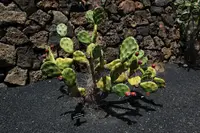
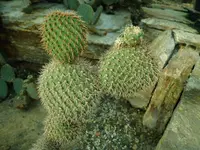
Western pricklypear, Opuntia orbiculata, is a sun-loving cactus with flattened, rounded pads and sparse spines or bristles. It forms low, spreading clumps that can slowly expand over time. In suitable climates it produces bright flowers followed by colorful, fleshy fruits that attract wildlife. This species is native to arid and semi-arid regions, where it thrives in rocky, well-drained soils and intense light. Its drought tolerance and modest nutrient needs make it relatively easy to maintain for those who learn how to care for Western Pricklypear. It generally prefers strong light, low to moderate moisture, and gritty, fast-draining soil.

Main Plant Requirements

Care Difficulty

Easy Care

Light Preference

Full Sun

Water Requirements

Low Water

Temperature Preference

Warm Climate

Hardiness Zone

9–11

Soil Texture

Sandy, Loamy, Rocky

Soil pH

Slightly acidic (6.5–7.0), Slightly alkaline (7.0–7.5)

Soil Drainage

Well-drained

Fertilization

Minimal (feed rarely)

Get Personalized Care Plan

Scan your plant to receive care tips personalized for your specific plant

Available on iOS and Android

How to Care for the Western Pricklypear

Opuntia orbiculata thrives in strong, direct sun similar to arid, open habitats.

  • Provide 6–8 hours of direct sun daily; full morning and midday sun are ideal in most climates.
  • Plant can tolerate light partial shade, especially with mild afternoon shade in very hot regions to reduce sunscald on pads.
  • In winter, maximize exposure by avoiding shade from buildings or trees; stretched, pale pads indicate insufficient light, while bronzing or scorched spots suggest excessive intensity.

This cactus stores water in its pads and prefers thorough but infrequent watering.

  • Allow the top 5–8 cm of soil to dry completely before watering, then soak the root zone and let excess drain away.
  • Reduce watering sharply in winter, only irrigating when pads start to look slightly wrinkled, especially in frost-free climates.
  • Yellowing, mushy pads and a sour soil smell indicate overwatering, while severe pad shriveling and crisp edges signal prolonged drought or extremely fast drainage.

This species prefers warm, dry conditions with good tolerance for heat but limited frost hardiness.

  • Aim for 70–90°F (21–32°C) during active growth; short spikes up to 100°F (38°C) are tolerated if soil drains well.
  • Protect from hard frost; brief exposure down to about 25°F (−4°C) may be survived if soil is dry, but damage is likely below this.
  • In regions with cold winters, use a very gritty soil mix and shelter from winter rain to reduce rot risk when temperatures hover near freezing.

This cactus handles typical indoor humidity well and rarely needs adjustment.

  • Aim for 30–50% humidity, similar to most heated or air-conditioned homes.
  • Very dry air is usually tolerated; issues arise more from overwatering than from low humidity.
  • If pads shrivel while soil stays moist, reduce watering rather than increasing humidity, as true humidity stress is uncommon.

This cactus needs fast-draining, mineral-rich soil to prevent root and stem rot.

  • Use a gritty mix such as 50–70% mineral material (pumice, coarse sand, small gravel) blended with 30–50% cactus potting soil.
  • Ensure the structure stays loose and airy; avoid dense loam or any mix that compacts after a few waterings.
  • Keep pH slightly acidic to neutral, around 6.0–7.2, which suits Opuntia orbiculata in most regions.
  • Avoid peat-heavy or high-compost mixes that hold water around the roots; add extra pumice or perlite to improve drainage.

This species is well suited to container growing when stability and drainage are managed carefully.

  • Choose a wide, shallow pot to accommodate spreading pads while limiting excess unused soil that can stay wet.
  • Select unglazed clay if faster moisture loss is needed in cool or humid climates, or thicker ceramic in hot, exposed spots to slow drying.
  • Place heavy stones on the soil surface or use a weighty container to prevent tipping as the pads grow outward and become top-heavy.

Opuntia orbiculata needs modest feeding, especially in containers, to support healthy pad growth.

  • Use a diluted balanced liquid fertilizer (around 10-10-10) at 1/4–1/2 strength or a light layer of compost in spring.
  • Feed every 4–6 weeks during the active growing season if growth is in poor, sandy soil or in pots.
  • Stop feeding in late summer so pads harden before winter and avoid any fertilizer in winter dormancy.
  • For Western Pricklypear and related species, avoid high-nitrogen products that cause weak, overly soft pads.

Pruning Opuntia orbiculata is mainly done to control size, remove damage, and keep the plant safe to handle.

  • Best time is late spring to early summer, once the risk of frost has passed and new growth is visible.
  • Cut away dead, shriveled, storm-damaged, or crossing pads to reduce rot risk and improve airflow.
  • Use long-handled tongs and a sharp, disinfected knife or pruning saw; cut pads at their joints.
  • Selective removal of outer pads shapes the clump, keeps paths clear, and can improve light penetration for flowering.

This species is often grown in the ground, but container plants benefit from occasional repotting or careful transplanting.

  • Plan to repot or transplant every 3–5 years, or when roots circle the pot, drainage declines, or growth slows noticeably.
  • Choose late spring to early summer so roots can re-establish in warm, dry conditions after disturbance.
  • Move the plant into a pot only 2–5 cm wider, using a gritty cactus mix to limit waterlogging and root rot.
  • Handle pads with tongs, keep roots as intact as possible, and keep soil almost dry for 7–10 days afterward to reduce transplant shock.

Opuntia orbiculata is most often propagated from pads, which root reliably under warm, dry conditions.

  • Take healthy, mature pads in late spring or early summer, cutting cleanly at the joint with a sterile knife.
  • Allow cut pads to callus for 7–14 days in a dry, shaded place to reduce infection and rot risk.
  • Set callused pads upright in a gritty, barely moist cactus mix and keep at 70–80°F with bright, indirect light.
  • Seeds can also be sown in warm, free-draining soil, though germination and growth are slower than from cuttings.

This cactus is moderately cold tolerant but benefits from dry conditions and some protection in harsh winters.

  • Established plants often endure brief drops near 10–15°F if soil is very well drained and stays mostly dry.
  • In-ground clumps in colder regions can benefit from a 5–8 cm layer of gravel mulch around the base to insulate roots.
  • Container plants in zones colder than about USDA 8 should be moved to a bright, cool indoor space before hard frost.
  • Keep winter watering minimal, just enough to prevent severe shriveling, to avoid cold-related root rot and pad damage.

Care Tips

Root-zone containment

When planting in the ground, use a root barrier or a bottomless container sunk into the soil to limit spread and make future pad removal and reshaping of the clump easier.

Pad selection for propagation

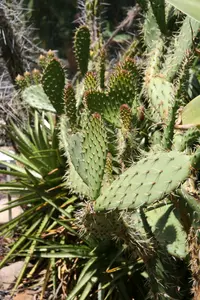
Choose firm, fully mature pads and let the cut surface callus for 5–10 days in a dry, shaded place before planting, which greatly reduces rot and improves strike rate.

Cold rain protection

In regions with cool, wet winters, place plants under an eave, cold frame, or simple lean-to cover so pads stay dry in prolonged rain, which helps prevent fungal spotting and tissue collapse.

Glove and tool hygiene

Use dedicated tongs or thick, smooth leather gloves for handling pads and disinfect pruners between cuts to avoid spreading fungal or bacterial issues from one pad to another.

Gravel topdressing

Apply a 1–2 in layer of coarse gravel or pumice on the soil surface to keep pads off moist soil, discourage rot at the base, and make caring for Western Pricklypear with overhead watering less risky.

Common Pests and Diseases

Cochineal scale

This pest forms dense white, cottony patches on pads and exudes red carmine dye when crushed. Symptoms include stunted segments, yellowing areas around colonies, and gradual decline if populations are heavy.

Solution

Prune and dispose of heavily infested pads, avoiding contact with the red sap. For light to moderate infestations, dislodge insects with a strong stream of water, then spot-treat remaining clusters with cotton swabs dipped in 70% isopropyl alcohol or use an insecticidal soap labeled for cacti, repeating weekly until no new colonies appear.

Cactus mealybugs

These insects hide in pad joints and roots, leaving small white, fluffy masses and sticky honeydew that can lead to sooty mold. Symptoms include slow, uneven growth and pad shriveling even when soil moisture seems adequate.

Solution

Inspect pad joints and roots, then remove visible mealybugs with a firm water spray and cotton swabs dipped in 70% isopropyl alcohol. For persistent infestations, repeat alcohol or insecticidal soap treatments every 7–10 days and consider repotting into fresh, sterile cactus mix while discarding infested soil from the root zone.

Opuntia blister mite

This pest causes raised, blister-like galls and rough, corky patches on pads, often starting as small, translucent spots that later turn brown. Symptoms include distorted new pads and cosmetic scarring, although severe infestations can reduce vigor.

Solution

Remove and discard badly deformed or heavily galled pads to reduce mite populations. Improve spacing and airflow, avoid overhead watering, and if new galls appear, apply a sulfur-based miticide or horticultural oil suitable for cacti during cooler parts of the day, following label directions closely.

Phyllosticta pad spot

This disease produces circular, sunken tan to gray spots on pads, often with dark margins and tiny black fruiting bodies in the center. Symptoms include coalescing lesions that weaken segments and increase susceptibility to secondary infections.

Solution

Cut off and discard affected pads, sterilizing tools between cuts with alcohol to prevent spread. Keep pads dry, water at soil level only, improve airflow, and in outdoor plantings consider a copper-based fungicide labeled for ornamental cacti during prolonged wet periods, applying at the first sign of spotting.

Sunscald with secondary infection

This disorder starts as pale, bleached areas on pads exposed to sudden intense sun, which can later crack and become entry points for fungi and bacteria. Symptoms include rough, corky scars and patches that may darken, ooze slightly, or attract insects.

Solution

Gradually acclimate plants to higher light and provide temporary shade cloth when moving from indoor or greenhouse conditions to full sun. Remove severely damaged pads, keep the plant on a dry, airy regime so wounded tissue can callus, and if lesions become soft or foul-smelling, cut back to healthy tissue with a sterile blade and allow the cut surfaces to dry before watering again.

Interesting Facts

Flattened, round pads

This species forms distinctive almost circular cladodes, or pads, which are broader and more disk-like than many other Opuntia species, giving the plant a low, spreading profile in habitat.

Cape Floristic native

It is naturally restricted to parts of the Western and Eastern Cape in South Africa, where it grows in rocky, semi-arid areas alongside fynbos and succulent shrubland, tolerating strong sun and poor, well-drained soils.

Bright yellow spring flowers

Mature plants produce showy yellow flowers near the pad edges in late spring to early summer, which are followed by fleshy fruits that feed a range of local wildlife in its native range.

FAQs about Western Pricklypear

Lack of flowers usually comes from insufficient maturity, poor light intensity, or excessive nitrogen fertilization. Old pads bloom best. Ensure strong seasonal temperature contrast and a dry rest period to support bud formation and consistent flowering.

Grow Healthy Plants with Botan Care

Keep your plants happy and healthy with plant identification, disease detection, and easy care guidance.

Botan plant care app — identify plants on mobile

Explore More Plants