Winter moisture control
In climates with wet winters, plant on a steep, south-facing slope or raised mound of coarse gravel so water drains away from the crown and roots, which is critical for long-term survival when growing Utah agave outdoors.

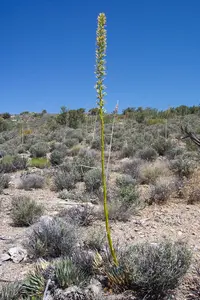
Utah agave, Agave utahensis, is a compact desert succulent native to the arid regions of Utah, Nevada, Arizona, and California. It forms tight rosettes of narrow, blue-green leaves with sharp spines along the edges and tip.
Plants grow slowly and stay relatively small, making them suitable for rock gardens, xeriscapes, and containers in dry, sunny climates. Mature rosettes send up a tall flowering stalk once in their lifetime, then die back while surrounding offsets continue the clump.
This species prefers strong light, very well-drained gritty soil, and infrequent watering. These drought-adapted traits influence how to care for Utah agave and make it well suited to low-maintenance, water-wise landscapes.

Care Difficulty
Moderate Care

Light Preference
Full Sun

Water Requirements
Low Water

Temperature Preference
Cold Hardy

Hardiness Zone
5–9

Soil Texture
Sandy, Rocky, Loamy

Soil pH
Slightly acidic (6.5–7.0), Slightly alkaline (7.0–7.5)

Soil Drainage
Well-drained

Fertilization
Minimal (feed rarely)
Scan your plant to receive care tips personalized for your specific plant
Available on iOS and Android
This desert species needs abundant direct sun to stay compact and healthy.
This plant is highly drought-tolerant and prefers infrequent, deep watering.
This cold-hardy agave tolerates a wide temperature range if soil drains very well.
This desert species tolerates very dry air and usually does not need humidity adjustment indoors.
Agave utahensis needs very fast-draining, mineral-heavy soil to prevent root and crown rot.
This species is suitable for container growing, especially in regions with cold or wet winters.
In cultivation, Utah agave needs only light, infrequent feeding to support steady growth without soft, weak tissue.
Agave utahensis needs minimal pruning, focused on sanitation and safety rather than shaping.
Container-grown or newly established plants benefit from careful, infrequent repotting or transplanting to maintain root health.
Propagation is commonly done through offsets, with seed used mainly by more experienced growers or for larger batches.
This species is notably cold hardy, but winter care still matters in very wet or extremely cold climates.

Plant Health Check
Not sure what's wrong with your plant? Check your plant's health inside the app.
Agave utahensis often grows on sheer limestone or dolomite cliffs in the Mojave Desert and on the Colorado Plateau, anchoring itself in rock crevices where few other vascular plants can survive.
This species forms tight rosettes with rigid leaves tipped with a sharp terminal spine and strong marginal teeth, an adaptation that helps reduce herbivory by desert mammals.
Individual rosettes can live for several decades and are monocarpic, meaning each rosette flowers only once, then dies after sending up a tall flowering stalk that produces seeds and often offsets around its base.

Some populations of Agave utahensis are thought to descend from plants historically tended, moved, or even semi-domesticated by Indigenous peoples in the American Southwest, as suggested by their occurrence in archaeological contexts and in locations unlikely to be colonized naturally.
Brown leaves usually result from rot at the base, frost damage, or physical injury to the stiff spines. Check for soft, dark tissue, improve drainage, remove damaged leaves, and avoid watering into the rosette center.
Keep your plants happy and healthy with plant identification, disease detection, and easy care guidance.

-1-200x150.webp)