Early scaffold training
In the first 2–3 years, select 3–4 well-spaced main branches around the trunk and gently spread them with branch spacers or soft ties to create a wide, open canopy that can support heavy fruit loads later.

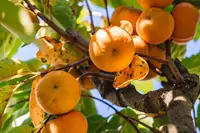
Diospyros kaki 'Fuyu', commonly called Japanese persimmon, is a small deciduous fruit tree grown for its sweet, crisp, non-astringent fruit. It is usually compact and rounded, with glossy green leaves that turn attractive shades of yellow, orange, and red in autumn.
This cultivar originates from East Asia but is widely grown in temperate regions for home orchards and landscapes. It is generally considered easier to manage than many other fruit trees because it has few serious pest or disease problems.
To care for Japanese Persimmon successfully, gardeners usually provide a sunny site, moderate moisture, and well-drained soil, which support reliable flowering and fruiting.

Care Difficulty
Moderate Care

Light Preference
Full Sun

Water Requirements
Moderate Water

Temperature Preference
Warm Climate

Hardiness Zone
7–10

Soil Texture
Sandy, Loamy, Clay

Soil pH
Acidic (5.5–6.5), Slightly acidic (6.5–7.0)

Soil Drainage
Well-drained

Fertilization
Minimal (feed rarely)
Scan your plant to receive care tips personalized for your specific plant
Available on iOS and Android
Diospyros kaki 'Fuyu' needs abundant direct sun to flower and fruit well outdoors.
Outdoor Diospyros kaki 'Fuyu' prefers steady soil moisture without staying saturated.
This persimmon is a temperate fruit tree that requires distinct warm and cool seasons.
This species tolerates a wide humidity range and rarely needs special humidity management in typical outdoor conditions.
Diospyros kaki 'Fuyu' prefers deep, well-drained, slightly acidic to neutral soil with stable structure.
This species can be grown in large containers if root volume, drainage, and weight are carefully managed.
This fruit tree benefits from moderate, well-timed feeding to support steady growth and cropping.
Thoughtful pruning helps Diospyros kaki 'Fuyu' maintain a strong structure and productive canopy.
This persimmon is usually grown in-ground, so planning transplanting carefully is more important than frequent repotting.
Gardeners usually purchase grafted trees, since standard propagation methods for Diospyros kaki 'Fuyu' are specialized.
Mature trees are fairly cold hardy but benefit from some winter attention, especially in colder regions or containers.

Plant Health Check
Not sure what's wrong with your plant? Check your plant's health inside the app.
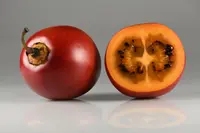
This cultivar produces non-astringent fruit, meaning the flesh is sweet and edible while still firm and crisp, unlike many other persimmons that must soften fully to remove bitterness.
The tree can set seedless fruit without pollination, but if pollinated, the fruit may contain seeds and often develops darker, cinnamon-colored flesh near the seeds with a richer flavor.
Compared with many other Japanese persimmon types, this cultivar tends to form a relatively compact, rounded canopy, which has made it a common choice for home orchards and small gardens.

In Japan, this cultivar became popular not only as a fresh dessert fruit but also for traditional drying methods, where its firm, sweet flesh allows it to be hung and air-dried into dense, sugary treats that store well without refrigeration.
Yes, this tree can grow in large containers if given enough root space, water, and nutrients. Dwarf or semi-dwarf rootstocks are best. Expect reduced ultimate size and fruit yield compared with in-ground planting.
Keep your plants happy and healthy with plant identification, disease detection, and easy care guidance.