× Chitalpa Care

× Chitalpa

About × Chitalpa

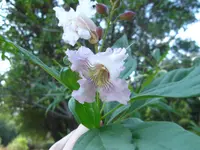
× Chitalpa is a deciduous flowering tree, bred from desert willow (Chilopsis) and catalpa. It is usually grown as a small shade tree or large ornamental shrub. Plants form a rounded crown with many branches and showy, trumpet-shaped flowers in clusters during the warmer months. Foliage is narrow and willow-like, giving a light, airy appearance in the landscape. This hybrid does not occur in the wild; it was developed for gardens, especially in warm, dry regions. It tends to be fast-growing and relatively tough but may react poorly to prolonged wet or very humid conditions. Understanding how to care for × Chitalpa helps keep it flowering well in suitable climates.

Main Plant Requirements

Care Difficulty

Easy Care

Light Preference

Full Sun

Water Requirements

Moderate Water

Temperature Preference

Warm Climate

Hardiness Zone

6–9

Soil Texture

Sandy, Loamy, Clay

Soil pH

Slightly acidic (6.5–7.0), Slightly alkaline (7.0–7.5)

Soil Drainage

Well-drained

Fertilization

Minimal (feed rarely)

Get Personalized Care Plan

Scan your plant to receive care tips personalized for your specific plant

Available on iOS and Android

How to Care for the × Chitalpa

This hybrid flowering tree performs best with abundant direct light but benefits from some protection in extreme heat.

  • Provide 6–8 hours of direct sun daily, with preference for full morning sun and light afternoon shade in hotter regions to reduce leaf scorch on × Chitalpa.
  • In climates with mild summers, it can handle full sun all day; in hotter inland areas, aim for partial shade after 2–3 p.m.
  • Watch for pale, sparse foliage and few flowers as signs of insufficient light, and for crispy, brown leaf edges as a sign of excessive intense sun exposure.

This tree prefers deep, infrequent watering once established, with soil allowed to dry slightly between waterings.

  • Use well-drained soil and water slowly until the root zone is moist, then allow the top 5–8 cm of soil to dry before watering again.
  • In the first 1–2 growing seasons, water more often during dry spells; once established, reduce to deep watering every 7–14 days in hot, dry weather, less in cool or rainy periods.
  • Yellowing, soft leaves and persistent wet soil indicate overwatering, while curling leaves, dry twig tips, and rapid wilting during heat suggest underwatering.

This deciduous tree is suited to warm-temperate climates with moderate winters and hot summers.

  • Best growth occurs around 70–90°F (21–32°C), with active flowering in warm, bright conditions and a natural rest period in cooler months.
  • Established plants typically tolerate down to about 0°F (−18°C), but young trees benefit from protection when temperatures drop below 20°F (−7°C).
  • Heat tolerance is high if soil moisture is adequate, but prolonged exposure above 100°F (38°C) can stress the plant, so mulch the root zone and avoid reflected heat from walls or paving.

Humidity is rarely a concern, as this hybrid tree is adapted to dry, arid climates.

  • × Chitalpa grows well in 30–50% humidity and does not need added moisture in most homes or gardens.
  • Dry air rarely harms the plant; leaf edges browning usually indicates drought or heat stress rather than low humidity.
  • Increase humidity only in extremely dry indoor air by grouping plants or using a shallow pebble tray under nearby containers.

Soil preparation focuses on sharp drainage and avoiding prolonged root wetness.

  • Use a lean, well-drained loam or sandy loam with 20–30% coarse sand or fine gravel to prevent waterlogging.
  • Aim for slightly acidic to neutral pH, around 6.0–7.5, which suits most × Chitalpa specimens in landscapes.
  • Incorporate a modest amount of compost for structure but avoid heavy clay, peat-heavy mixes, or muck that stays soggy after rain.
  • On heavy soils, create a raised mound or berm and mix in coarse sand plus fine bark to improve aeration and runoff.

This hybrid tree can be grown in large containers for several years, especially in patios or small gardens.

  • Choose a deep, heavy container to counterbalance the canopy and reduce tipping in strong winds.
  • Select thick-walled clay or concrete pots if extra moisture loss is needed in rainy climates to prevent root rot.
  • Use a coarse, barky tree shrub mix and keep the top 2–3 in slightly higher than the rim to keep the root flare dry after watering.

This hybrid flowering tree benefits from light, targeted feeding rather than heavy fertilization.

  • Apply a balanced slow-release fertilizer (around 10-10-10) once in early spring as new growth starts.
  • Supplement with a thin layer of compost over the root zone in spring to improve soil structure and microbial activity.
  • During the growing season, limit additional feeding to 1–2 light applications of diluted balanced liquid fertilizer at 1/2 strength.
  • Stop fertilizing × Chitalpa in late summer so growth can harden before winter dormancy.

Pruning helps maintain structure, remove damage, and support healthy flowering on × Chitalpa.

  • Prune in late winter or very early spring before new growth begins to minimize stress and sap bleeding.
  • Remove dead, diseased, or crossing branches first, cutting back to healthy wood with clean, sharp bypass pruners or loppers.
  • Thin crowded interior shoots to improve light penetration and airflow, which supports stronger flowering and reduces disease risk.
  • Shorten overly long branches to shape the canopy, keeping cuts just above outward-facing buds for balanced, open growth.

This tree is usually grown in the ground, so focus on correct site planting and occasional transplanting of young specimens.

  • Transplant in early spring or early fall when temperatures are mild and the tree is not under strong heat stress.
  • Look for signs like circling roots in a nursery container or poor vigor, then move to a slightly larger container or into open ground.
  • Dig a wide planting hole, gently loosen encircling roots, and set the root flare at soil level to reduce long-term stress.
  • Water deeply after planting, then keep soil evenly moist for the first growing season to support root establishment and reduce transplant shock.

Propagation of × Chitalpa is usually done vegetatively to maintain the hybrid’s flowering and growth traits.

  • Use semi-hardwood cuttings in mid to late summer, taken from healthy, non-flowering shoots 10–15 cm long.
  • Remove lower leaves, dip the cut base in rooting hormone, and insert into a well-drained, sterile medium such as perlite and peat.
  • Maintain bright, indirect light, high humidity, and soil temperatures around 70–75°F to encourage root development.
  • Cover cuttings with a clear dome or plastic bag for humidity, ventilating periodically to prevent fungal problems and rot.

Established trees are moderately cold hardy and often need only minimal winter care in most mild to moderate climates.

  • In regions with freezing winters, apply a 5–8 cm mulch layer over the root zone, keeping it slightly away from the trunk.
  • Young or newly planted trees benefit from burlap wrap or windbreaks to limit desiccation and stem damage in hard frosts.
  • Container-grown plants in colder zones should be moved to an unheated garage or sheltered spot where temperatures stay above about 20–25°F.

Care Tips

Wind-resistant training

In the first 2–3 years, selectively pinch back overly long, whippy shoots after flowering to encourage a broader, lower canopy that is more resistant to storm damage.

Graft union protection

Keep the graft union clearly visible above soil level and avoid piling mulch against it so the scion does not root on its own or suffer from rot at the graft point.

Salt and alkali check

In regions with alkaline or salty irrigation water, leach the root zone deeply 2–3 times during the growing season to flush built-up salts that can cause marginal leaf burn.

Trunk flare management

Expose and maintain a visible trunk flare by brushing away excess soil or mulch from the base each spring, which reduces risk of girdling roots and basal rot.

Targeted storm pruning

Before the windy season, remove crossing, rubbing, or weakly attached interior branches and shorten long, unbalanced limbs to reduce breakage and simplify caring for × Chitalpa after storms.

Common Pests and Diseases

Powdery mildew

This disease often appears in warm, dry weather combined with overhead watering or poor air flow, leading to a white, powdery film on leaves and young shoots. Symptoms include distorted new growth and premature leaf drop, which can reduce flowering and vigor.

Solution

Prune to open the canopy, remove and dispose of infected leaves and twigs, and avoid overhead irrigation so foliage dries quickly. For ongoing issues, apply a sulfur or potassium bicarbonate fungicide labeled for ornamental trees according to label directions, starting in spring when new growth emerges as part of × Chitalpa care instructions.

Leaf spot (fungal)

This disease causes tan to dark brown spots on foliage that may develop purple margins and can coalesce into larger dead patches. Symptoms include thinning foliage and early defoliation, especially after periods of extended rain or high humidity.

Solution

Collect and discard fallen leaves, thin crowded branches to improve air circulation, and avoid wetting the foliage when watering. In severe or recurrent cases, use a preventive ornamental-tree fungicide containing chlorothalonil or copper during wet periods, following label guidance carefully.

Verticillium wilt

This disease is soil-borne and can invade through roots, leading to sudden wilting, yellowing, and dieback of branches, often on one side of the tree first. Symptoms include poor recovery after watering and dark streaks in the wood beneath the bark of affected branches.

Solution

Prune out affected branches back to healthy wood and sanitize tools between cuts, then improve overall tree health with proper watering and mulching to reduce stress. Do not replant susceptible species like catalpa or maple in the same spot, and consider consulting a local arborist if wilting progresses rapidly.

Aphids

These insects feed on tender shoot tips and leaf undersides, causing curled, sticky leaves and distorted new growth. This pest also excretes honeydew, which can lead to black sooty mold on leaves and nearby surfaces.

Solution

Dislodge aphids with a strong stream of water from a hose, focusing on the undersides of leaves and young shoots, and repeat as needed. For heavier infestations, use insecticidal soap or a ready-to-use neem oil spray labeled for ornamental trees, applying in the early morning or evening to reduce leaf burn.

Spider mites

This pest thrives in hot, dry conditions and feeds on leaf sap, leading to fine stippling, a dull or bronzed appearance, and in severe cases light webbing between leaves and stems. Symptoms include leaves that look dusty or speckled and may drop prematurely if populations are high.

Solution

Increase humidity around the plant canopy by occasional hosing of foliage and keep the tree well watered during heat spells, then wash leaves thoroughly to knock mites off. If populations remain high, apply a horticultural oil or miticide labeled for spider mites on ornamental trees, ensuring full coverage of leaf undersides and repeating per label intervals.

Interesting Facts

Hybrid between two genera

× Chitalpa is an intergeneric hybrid between Chilopsis linearis (desert willow) and Catalpa bignonioides (southern catalpa), combining desert willow’s drought tolerance with catalpa’s broader, showier flower clusters.

Sterile, long-blooming flowers

Most × Chitalpa cultivars are functionally sterile, so they set little to no seed, which encourages the tree to keep producing its pink, trumpet-shaped flowers over a long summer season rather than diverting energy to seed production.

Narrow hybrid growth form

The plant typically forms a small, multi-stemmed tree with a relatively narrow crown compared with Catalpa, reflecting the influence of the more upright, willowy parent Chilopsis linearis.

Botan icon

Did you know?

× Chitalpa was first created by Russian plant breeder Nicolai V. Shipchinsky in the mid-20th century at the Botanical Garden of the Academy of Sciences in Tashkent, Uzbekistan, making it one of the relatively rare deliberately produced intergeneric ornamental tree hybrids to enter mainstream landscaping.

FAQs about × Chitalpa

Poor flowering usually comes from too little sun, excess nitrogen fertilizer, or drought stress. Ensure full sun, moderate watering, and a balanced fertilizer. Avoid heavy pruning in late spring, which can remove developing flower buds and reduce bloom.

Grow Healthy Plants with Botan Care

Keep your plants happy and healthy with plant identification, disease detection, and easy care guidance.

Botan plant care app — identify plants on mobile

Explore More Plants