Mycelium-friendly raking
Lightly rake and loosen leaf litter over the patch in late fall or early spring to keep a loose, airy layer that protects the mycelium but still lets fruiting bodies push through easily.

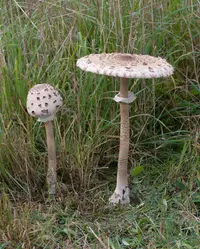
Parasol (Macrolepiota procera) is a large, distinctive mushroom, not a true plant, often grown by enthusiasts interested in edible fungi. It forms tall, slender stems topped with broad, scaly caps that resemble a sunshade, giving rise to its common name. In nature it occurs mainly in Europe and parts of North America, usually in grasslands, forest edges, and light woodland. It prefers moderately moist, well-drained, organic-rich substrates and benefits from dappled light and stable conditions. Although edible when correctly identified and cooked, cultivation is more advanced than typical houseplants, so learning how to care for Parasol requires attention to hygiene, substrate quality, and correct environmental balance.

Care Difficulty
Moderate Care

Light Preference
Partial Shade

Water Requirements
Regular Water

Temperature Preference
Cool Climate

Hardiness Zone
3–8

Soil Texture
Loamy, Silty, Organic-rich

Soil pH
Acidic (5.5–6.5), Slightly acidic (6.5–7.0)

Soil Drainage
Moist but well-drained

Fertilization
Minimal (feed rarely)
Scan your plant to receive care tips personalized for your specific plant
Available on iOS and Android
Macrolepiota procera, commonly called parasol mushroom, fruits best with bright, gentle light rather than harsh, direct sun.
Macrolepiota procera needs consistently moist but not waterlogged soil to form healthy fruiting bodies.
This species fruits best in mild conditions and reacts poorly to both hard frost and extreme heat.
Humidity is not a primary cultivation factor for Macrolepiota procera, which depends far more on moisture in its growing substrate than on air humidity.
Macrolepiota procera develops best in loose, organic-rich, well-aerated substrate that mimics a forest floor.
This species is generally unsuitable for long-term container growing, as it prefers extensive soil contact and stable woodland-like conditions.
Macrolepiota procera is usually grown in the ground and does not need routine fertilization when native soil is reasonably rich.
Macrolepiota procera does not require structured pruning, but light sanitation helps keep the fruiting area tidy and reduces disease risk.
This fungus is rarely grown in containers; management focuses on establishing and maintaining outdoor patches rather than repotting.
Propagation of Macrolepiota procera is specialized and usually handled by experienced growers using spore or mycelium techniques.
Outdoor colonies of Macrolepiota procera are generally cold hardy in temperate climates and need minimal winter attention.

Plant Health Check
Not sure what's wrong with your plant? Check your plant's health inside the app.
This mushroom has a distinctive, thick ring on the stem that can slide up and down, a key trait used by mycologists to separate it from similar but potentially toxic species.
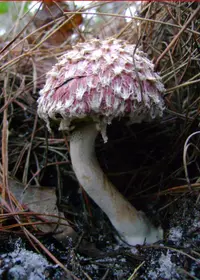
The tall stem often shows a characteristic brown, snake-skin like pattern of scales on a paler background, which helps distinguish it from many other large parasol-shaped mushrooms in the field.
It is a saprotrophic fungus, meaning it feeds on and decomposes dead organic matter, playing an important role in nutrient cycling in grassland edges, clearings, and light woodland habitats.

In suitable conditions, the cap of this species can reach more than 30 cm across, making it one of the largest common gilled mushrooms in many European and North American landscapes.
The cap of this species is considered a good edible mushroom when fully expanded, correctly identified, and well cooked. The stem is usually tough and discarded. Never eat wild mushrooms without expert confirmation, since poisonous look-alikes exist.
Keep your plants happy and healthy with plant identification, disease detection, and easy care guidance.