Bluebush Starapple Care (Diospyros lycioides)

Also known as: Bluebush, Blackstem Starapple, Red Star Apple, Quilted Bluebush, Karoo Bluebush
Bluebush Starapple

About Bluebush Starapple

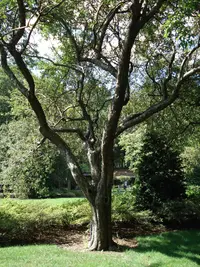
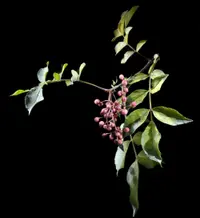
Bluebush starapple, Diospyros lycioides, is a dense, spiny shrub or small tree from dry woodland and savanna regions of southern Africa. It often forms a thicket-like shape with small, glossy leaves and dark, edible berries that attract birds and wildlife.

The plant is adapted to hot, dry conditions and tolerates poor, rocky soils, which makes it relatively tough in suitable climates. Its slow to moderate growth and natural drought resistance can simplify how to care for Bluebush Starapple in low-rainfall gardens.

It prefers full sun, well-drained soil, and occasional deep watering once established. In cultivation, it is grown mainly as a hardy landscape shrub, hedging plant, or for its wildlife value.

Main Plant Requirements

Care Difficulty

Easy Care

Light Preference

Full Sun

Water Requirements

Low Water

Temperature Preference

Warm Climate

Hardiness Zone

9–11

Soil Texture

Sandy, Loamy, Rocky

Soil pH

Slightly acidic (6.5–7.0), Neutral (7.0)

Soil Drainage

Well-drained

Fertilization

Minimal (feed rarely)

Get Personalized Care Plan

Scan your plant to receive care tips personalized for your specific plant

Available on iOS and Android

How to Care for the Bluebush Starapple

This drought-tolerant shrub prefers bright, open conditions similar to its native scrub habitats.

  • Provide 6–8 hours of direct sun daily; morning sun with light afternoon shade helps prevent leaf scorch in very hot regions.
  • It tolerates light to moderate partial shade, but flowering and fruiting of Bluebush Starapple decrease if sun drops below about 4 hours per day.
  • In cooler climates, choose a south- or west-facing site; in hot, inland areas, use filtered afternoon light or a high, open canopy for protection.

This species prefers deep but infrequent watering once established, matching its semi-arid origins.

  • Allow the top 5–8 cm of soil to dry before watering, then soak the root zone thoroughly so moisture reaches 20–30 cm deep.
  • Reduce watering in cool seasons and during natural leaf drop; increase slightly in very hot, dry periods if leaves start to curl or wilt during the day.
  • Ensure gritty, fast-draining soil; persistent wet soil, yellowing leaves, and soft new growth indicate overwatering, while crisp leaf edges and early leaf shed suggest drought stress.

This shrub thrives in warm, frost-light climates and tolerates seasonal heat once established.

  • Optimal growth occurs around 70–85°F (21–29°C); it handles short peaks to 95°F (35°C) if soil is not waterlogged.
  • Mature plants may survive brief drops near 25°F (−4°C), but foliage and young shoots are damaged below 30°F (−1°C), especially in exposed sites.
  • In regions with regular hard frost, plant in a sheltered microclimate such as a south-facing wall, and avoid low-lying frost pockets that trap cold air.

This species handles typical indoor humidity but benefits from slightly drier air than many tropical houseplants.

  • Aim for 30–50% humidity, which suits the semi-arid origins of Bluebush Starapple.
  • It tolerates dry air well, but very stagnant, humid rooms can promote leaf spotting and fungal issues.
  • Watch for black fungal spots or persistent surface mold on soil as signs humidity is too high and improve air flow or use a dehumidifier.

Provide loose, well-drained, slightly lean soil to support healthy Diospyros lycioides growth.

  • Use a sandy or sandy-loam mix with clear structure, for example 50% cactus mix, 30% coarse sand, 20% fine bark or grit.
  • Ensure fast drainage so water runs through in seconds, preventing prolonged saturation that can cause root rot.
  • A slightly acidic to neutral pH around 6.0–7.0 suits this species and keeps nutrients available without excess salts.
  • Improve aeration by adding coarse perlite or pumice and avoid heavy clay-based mixes or peat-heavy bags that compact easily.

This shrub can be grown in containers with careful attention to stability and drainage behavior.

  • Select a deep, relatively heavy pot so the woody root system anchors well and the plant does not tip in strong wind.
  • Choose a pot material that matches your climate, such as unglazed clay in humid regions to let excess moisture evaporate.
  • Elevate the container slightly on feet or bricks so drainage holes stay clear and water cannot pool under the base.

This drought-tolerant shrub, often called Bluebush Starapple, grows acceptably in poor soils but benefits from light feeding in cultivation.

  • Apply a balanced slow-release fertilizer (for example 8-8-8 or 10-10-10) at half strength once in early spring.
  • In lean or sandy soils, supplement with a thin layer of well-rotted compost around the root zone each spring.
  • During the main growing season, a light granular feed every 8–10 weeks is usually sufficient for container or intensively grown plants.
  • Stop feeding in late summer and avoid fertilizing during winter dormancy to prevent weak, frost-prone growth.

Pruning Diospyros lycioides is mainly used to maintain structure, remove problem wood, and encourage healthy, balanced growth.

  • Plan main pruning for late winter to very early spring, before new growth begins.
  • Remove dead, diseased, crossing, or storm-damaged branches with sharp, clean bypass pruners or a small pruning saw.
  • Thin congested interior shoots to improve light penetration and air movement through the canopy.
  • Shorten or selectively remove wayward branches to maintain a strong framework and desired shrub or small-tree shape.

This species is usually grown in the ground, so focus on thoughtful transplanting rather than frequent repotting.

  • Transplant young plants in late winter or early spring, when soil is workable and before active growth starts.
  • Look for signs such as roots circling inside the container or very slow growth as indicators a potted plant needs a larger pot or planting out.
  • Move up only 1 pot size, keeping the root ball intact and gently loosening circling roots to reduce future girdling.
  • Water deeply after transplanting, then keep soil evenly moist and shaded for 1–2 weeks to limit transplant shock.

Diospyros lycioides is most often propagated from seed, though semi-hardwood cuttings are also possible for selected forms.

  • Collect fully ripe fruit, clean seeds, and sow in a free-draining mix; a cool period (stratification) of several weeks improves germination.
  • Sow seeds in spring, keeping the medium just moist and in bright, indirect light with mild temperatures around 68–77°F.
  • For cuttings, take semi-hardwood stems in late summer, use rooting hormone, and place in a humid, well-aerated substrate.
  • Provide bottom warmth if possible and maintain high humidity with good air flow to reduce rot during rooting.

This shrub is fairly cold hardy in suitable climates and usually needs only modest winter care outdoors.

  • In regions with moderate frost, a 5–8 cm layer of organic mulch around the root zone helps buffer soil temperature.
  • Avoid heavy pruning or nitrogen-rich feeding late in the season, which can produce tender growth that winters poorly.
  • For container plants in colder areas, move pots into a sheltered, unheated but frost-free space with good light until spring.

Care Tips

Root sucker management

Inspect the base of the shrub 2–3 times per year and cut away any root suckers at soil level to keep a single, strong framework and prevent the plant from spreading into an unwanted thicket.

Wildlife-friendly spacing

If planting as a hedge or wildlife screen, space plants 1.5–2 m apart so each shrub can form a full crown that supports flowering and fruiting without excessive competition for light and water.

Deep anchoring roots

In the first 2–3 seasons, water more deeply but less often rather than frequent light watering to encourage a deep root system that stabilizes the plant in windy, exposed sites.

Adaptive wind pruning

In coastal or windy areas, selectively thin long, whippy shoots on the windward side once a year to reduce wind sail effect and lower the risk of branch breakage.

Seedling selection practice

When raising plants from seed, keep only the most vigorous seedlings with straight central stems and discard weak or distorted ones, which leads to a more uniform hedge or small tree when growing Bluebush Starapple.

Common Pests and Diseases

Scale insects

This pest feeds on young stems and the underside of leaves, sucking sap and causing yellowing, leaf drop, and weakened growth. Symptoms include small, dome-shaped or flattened bumps that are fixed in place and often covered in a waxy coating.

Solution

Prune and dispose of heavily infested twigs, then wipe remaining scales off stems with a cloth or cotton pad dipped in diluted alcohol or insecticidal soap. For larger shrubs or hedges, apply a horticultural oil spray during mild weather, covering stems and leaf undersides to smother remaining insects and repeat after 7–10 days if needed.

Leaf spot

This disease causes small dark or reddish-brown spots on leaves that can merge into larger patches, leading to partial defoliation during wet, humid periods. Symptoms include premature yellowing and thinning of the canopy on stressed plants.

Solution

Remove and discard affected fallen leaves and thin dense growth slightly to improve airflow around the plant. Avoid overhead watering, and if spotting is progressive in prolonged wet weather, a copper-based fungicide labeled for ornamental shrubs can be applied to new foliage according to label directions.

Mealybugs

These insects cluster in leaf axils and on young shoots, covering themselves in a white, cotton-like wax and excreting honeydew that can attract ants and lead to sooty mold. This pest weakens plants by feeding on sap, particularly in container or sheltered plantings.

Solution

Physically remove clusters with a cotton swab dipped in alcohol or rinse the plant with a strong, but not damaging, stream of water to dislodge insects. For persistent infestations, treat all plant surfaces with insecticidal soap or horticultural oil, repeating every 7–14 days until no new mealybugs appear and monitoring nearby plants for reinfestation.

Sooty mold

This disease appears as a black, powdery or velvety coating on leaves and stems, growing on the sugary honeydew secreted by sap-feeding insects such as scale or mealybugs. Symptoms include reduced photosynthesis, dull foliage, and sometimes sticky leaf surfaces.

Solution

First control the underlying honeydew-producing insects with targeted scale or mealybug management, then gently wash affected foliage with lukewarm water and a mild soap solution to remove the fungal growth. Improve light and airflow around the shrub, as clean, well-lit foliage recovers normal function quickly once the insect source is controlled.

Interesting Facts

Variable leaf spines

This shrub often develops sharp, spine-tipped short shoots along its branches, an adaptation that helps protect it from browsing animals in its native savanna and scrub habitats.

Fruit for wildlife

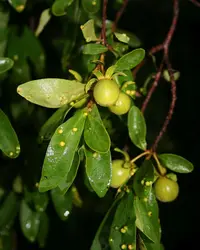
The small, orange to reddish berries are eaten by many birds and mammals in southern Africa, which disperse the seeds and help maintain populations across dry woodland and bushveld.

Host for butterfly larvae

It serves as a larval food plant for several African butterfly species, including some in the genus Precis, making it an important structural and nutritional component of local insect communities.

Botan icon

Did you know?

In parts of southern Africa, the very hard, dark brown to black heartwood of this species has traditionally been used for small tools and walking sticks, valued for its durability and fine texture despite the plant’s relatively modest size.

FAQs about Bluebush Starapple

Growth is moderate rather than rapid. Young plants usually add 15–30 cm of height per year under good conditions. In poorer, drier sites, growth slows noticeably, but the species is generally reliable and steady once established.

Grow Healthy Plants with Botan Care

Keep your plants happy and healthy with plant identification, disease detection, and easy care guidance.

Botan plant care app — identify plants on mobile

Explore More Plants