

Root-zone mulching
Apply a 2–3 cm layer of fine gravel or grit around the crown instead of organic mulch to suppress weeds while keeping the root zone cool and the foliage base dry, which helps prevent rot in this mat-forming plant.

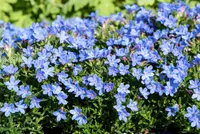
Lithodora, botanically known as Glandora prostrata 'Grace Ward', is a low, mat-forming evergreen shrub often used as a groundcover or edging plant. It is valued for its intense deep blue, star-shaped flowers that stand out against small, narrow, dark green leaves. Native to rocky, Mediterranean-type areas of southwestern Europe, it naturally grows in sunny, well-drained, often slightly acidic sites. Its compact, spreading habit makes it suitable for rock gardens, walls, and the front of borders. This cultivar can be somewhat demanding, as it dislikes heavy, wet, or alkaline soils and reacts poorly to root disturbance. Understanding how to care for Lithodora starts with providing sun, drainage, and consistently moist but not waterlogged soil.

Care Difficulty
Moderate Care

Light Preference
Full Sun

Water Requirements
Moderate Water

Temperature Preference
Cold Hardy

Hardiness Zone
5–8

Soil Texture
Sandy, Loamy, Rocky

Soil pH
Strongly acidic (4.5–5.5), Acidic (5.5–6.5)

Soil Drainage
Well-drained

Fertilization
Minimal (feed rarely)
Scan your plant to receive care tips personalized for your specific plant
Available on iOS and Android
Glandora prostrata 'Grace Ward' performs best in bright outdoor conditions with several hours of direct sun each day.
Watering should support steady growth while keeping the root zone on the drier side between soakings.
This low-growing shrub prefers mild, temperate conditions and tolerates some cold once established.
Humidity is rarely a concern for this coastal shrub in typical outdoor conditions.
This plant needs sharply drained, mineral-rich soil to maintain healthy roots and long-lived flowering.
This species adapts well to container growing when its need for fast drainage is met.
This plant prefers lean, well-drained soil and needs only light feeding compared with many flowering shrubs, which is typical when caring for Lithodora relatives.
Pruning keeps Glandora prostrata 'Grace Ward' compact, encourages new flowering growth, and maintains a neat matting habit.
This ground-hugging shrub is more often transplanted in the garden than repotted, as it prefers staying relatively undisturbed.
New plants are most reliably produced from cuttings, making vegetative propagation the preferred method for this cultivar.
This plant is fairly cold hardy but benefits from simple winter care in colder climates to maintain long-term vigor.

Plant Health Check
Not sure what's wrong with your plant? Check your plant's health inside the app.
This cultivar is selected for unusually saturated cobalt-blue, star-shaped flowers that hold their color well in strong sun, making it more vivid than many other Lithodora and Glandora selections.
It forms a dense, low, mat-forming shrub that rarely develops upright shoots, which makes it especially suited to rock gardens, wall crevices, and trailing over edges without much pruning.
This plant is adapted to lean, gritty, sharply drained soils derived from sand or rock in its native Mediterranean range and often performs better in low-fertility conditions than in rich, moisture-retentive garden soil.

The cultivar name 'Grace Ward' traces back to British selection work in the mid-20th century, and it quickly became a benchmark plant in rock garden circles because its flower color and ground-hugging form were considered superior to earlier blue Lithodora types.
Lack of flowers often relates to heavy pruning at the wrong time, excess nitrogen fertilizer, or stress from poor drainage. Avoid cutting stems hard after late spring, and use a low-nitrogen, slow-release fertilizer formulated for flowering shrubs.
Keep your plants happy and healthy with plant identification, disease detection, and easy care guidance.

Corsican Hellebore
Helleborus argutifolius
African rosemallow
Hibiscus acetosella
Eyebright
Euphrasia officinalis
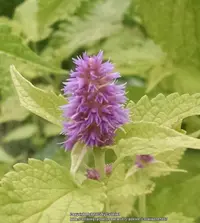
Anise Hyssop
Agastache foeniculum 'Golden Jubilee'
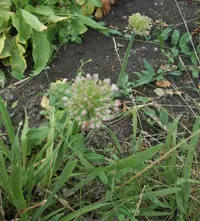
Siberian chives
Allium nutans
Wintercreeper
Euonymus fortunei var. radicans 'Emerald 'n Gold'
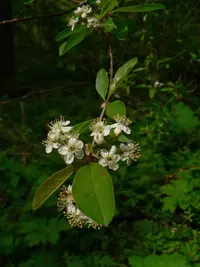
bitter cherry
Prunus emarginata
Edible debregeasia
Debregeasia orientalis