Corsican Hellebore Care (Helleborus argutifolius)

Also known as: purple hellebore, Corsican Hellebore
Corsican Hellebore

About Corsican Hellebore

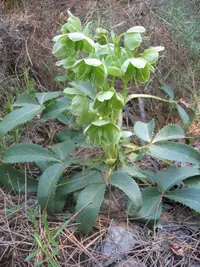
Corsican hellebore, Helleborus argutifolius, is an evergreen perennial grown mainly for its bold foliage and late winter to early spring flowers. It forms a clump of thick, deeply cut, leathery leaves that stay attractive most of the year.

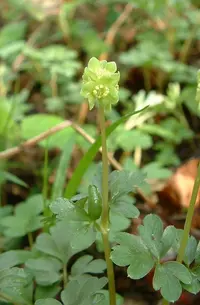
Flower stems rise above the foliage with clusters of nodding, pale green, cup-shaped blooms that can last for many weeks. The plant naturally occurs in Corsica and Sardinia, where it grows on rocky slopes and open woodland edges.

It is generally robust and long-lived when planted in the right spot, which makes it relatively easy to care for Corsican Hellebore. It prefers partial shade, consistent but not waterlogged moisture, and well-drained, humus-rich soil.

Main Plant Requirements

Care Difficulty

Easy Care

Light Preference

Partial Shade

Water Requirements

Moderate Water

Temperature Preference

Cold Hardy

Hardiness Zone

6–9

Soil Texture

Loamy, Sandy, Organic-rich

Soil pH

Acidic (5.5–6.5), Slightly acidic (6.5–7.0)

Soil Drainage

Moist but well-drained

Fertilization

Minimal (feed rarely)

Get Personalized Care Plan

Scan your plant to receive care tips personalized for your specific plant

Available on iOS and Android

How to Care for the Corsican Hellebore

This evergreen perennial prefers bright but not harsh light for steady growth and flowering.

  • Provide 3–5 hours of morning sun with afternoon shade; eastern exposure or light dappled shade suits Corsican Hellebore best.
  • In hot summers, protect from strong sun between 11 a.m. and 4 p.m. to reduce leaf scorch and premature wilting.
  • In cooler climates, allow more direct winter sun, but in warmer zones rely on filtered light beneath open shrubs or deciduous trees.

This species prefers evenly moist but not saturated soil, especially during active growth.

  • Water when the top 3–5 cm of soil feel dry, allowing moisture to reach the full root zone without pooling around the crown.
  • In spring and early summer, increase watering during dry spells; in fall and winter, reduce frequency but prevent the soil from fully drying out.
  • Use well-drained, humus-rich soil; yellowing, limp leaves suggest overwatering, while crisp, drooping foliage indicates the plant is too dry.

This hardy perennial is adapted to cool to mild climates and tolerates substantial winter cold.

  • Optimal growth occurs around 50–70°F (10–21°C), with flowering often strongest in late winter to early spring under cool conditions.
  • Plants tolerate lows near 0°F (−18°C) once established, though young specimens benefit from mulch to buffer freeze–thaw cycles.
  • In summer, sustained heat above 85°F (29°C) can stress plants, so provide shade and consistent soil moisture to prevent scorching and decline.

Humidity is rarely a limiting factor for Corsican Hellebore grown outdoors in temperate climates.

Helleborus argutifolius prefers deep, moisture-retentive but free-draining soil with stable structure.

  • Use a loamy mix with 40–60% garden soil, 20–30% compost, and 10–20% grit or coarse sand for drainage.
  • Aim for slightly alkaline to neutral pH around 7.0–7.5; add garden lime only if your soil is notably acidic.
  • In heavy clay, improve aeration by incorporating coarse grit and well-rotted compost into the top 20–30 cm before planting.
  • Avoid compacted, waterlogged, or very shallow soils, which encourage root rot and weak, shallow root systems.

This species can be grown in containers, though it performs best in large, stable pots outdoors.

  • Choose a heavy, frost-resistant pot (ceramic or concrete) to stabilize the tall, leafy growth against wind.
  • Select a container at least 30 cm deep and wide to accommodate the thick, slowly expanding root system.
  • Use a gritty, loam-based compost and raise the pot on feet so drainage holes never sit in standing water.

This plant is modest in its nutrient demands, but thoughtful feeding supports steady growth and flowering in Corsican Hellebore.

  • Apply a balanced slow-release fertilizer (for example 10-10-10) at half label rate once in early spring as new growth emerges.
  • Supplement with a thin layer of garden compost around the root zone in spring to improve soil structure and microbial activity.
  • During late spring to midsummer, feed at most once more with diluted liquid balanced NPK at 1/2–1/4 strength if growth appears weak.
  • Avoid feeding in late fall and winter, when the plant is relatively dormant, to prevent soft, frost-prone growth.

Pruning Helleborus argutifolius is mainly about hygiene and maintaining a tidy, healthy clump.

  • Cut back old, spotted, or dead leaves in late winter before flower stalks fully open, using clean, sharp hand pruners.
  • Remove damaged, diseased, or crowding stems at the base to improve air flow and reduce foliar disease risk.
  • Shear off spent flower stalks after seed set if self-seeding is not desired and to direct energy back to foliage and roots.
  • Disinfect blades between plants, especially if leaf spot or virus symptoms are present, to limit pathogen spread.

This species is usually grown in the ground, so focus on careful transplanting rather than frequent repotting.

  • Transplant in early spring or early fall, when temperatures are mild and soil is moist but not waterlogged, to limit stress.
  • Look for signs such as slow growth, plants crowding each other, or roots circling in containers as cues for moving Helleborus argutifolius.
  • Lift with a wide root ball, keeping as much soil intact as possible, and replant at the same depth in well-drained, humus-rich soil.
  • Water thoroughly after transplanting, then keep soil evenly moist for several weeks, shading lightly in bright sun until new growth resumes.

Helleborus argutifolius is most often propagated by seed, with division used more cautiously on established clumps.

  • Sow fresh seed in late spring to early summer in pots or trays outdoors, allowing natural cold stratification over winter.
  • Use a well-drained seed mix, keep moisture even, and expect germination mainly the following spring, as seeds often sprout slowly.
  • Divide only mature, vigorous plants in early spring, cutting the crown into several pieces with at least 2–3 buds each.
  • Replant divisions promptly at original depth, water well, and provide partial shade until strong new growth develops.

This hellebore is generally cold hardy in temperate climates and needs only modest winter care.

  • Tolerates light to moderate frost once established, but young plants benefit from a sheltered position their first winter.
  • Apply a 5–8 cm layer of organic mulch in late fall to buffer soil temperature and protect the root zone.
  • Brush off heavy, wet snow from foliage to reduce the risk of stem breakage while allowing normal cold exposure.
  • For container plants in colder regions, move pots against a house wall or into an unheated garage to avoid prolonged deep freezing.

Care Tips

Winter cleanup timing

Cut back old, spotted, or tattered leaves in late winter just before flower stems emerge, so new blooms are visible and disease spores on old foliage are removed at the same time.

Support heavy stems

In windy or exposed sites, discreetly ring the clump with low shrub supports or soft twine tied to short canes to prevent tall flowering stems from snapping under their own weight or snow load.

Self-seed management

Mark preferred clumps and remove fading flower heads from unwanted plants before seeds drop, while leaving seed pods on well-placed plants if you want controlled naturalized seedlings.

Crown protection mulch

Apply a thin, open-textured mulch around but not over the crowns, keeping a 3–5 cm gap, to keep roots cool and moist while avoiding crown rot.

Summer stress reduction

During hot spells, provide temporary shade cloth or plant near taller shrubs to shield foliage from harsh afternoon sun, which helps maintain vigor when caring for Corsican Hellebore in warmer regions.

Common Pests and Diseases

Black death

This disease causes dramatic black streaking and mottling on young leaves, stems, and flower stalks, often leading to distorted growth and plant decline. Symptoms include slow, weakened growth that does not improve even under good conditions.

Solution

Remove and destroy the entire affected plant, including roots, as soon as black, inky streaks and distortion are seen, and do not compost the material. Disinfect tools, avoid taking offsets from suspect plants, and replant only with healthy stock at a new spot to reduce virus carryover.

Leaf spot

This disease produces brown or purple spots on leaves that may merge into larger blotches and cause premature leaf drop. Symptoms include unsightly foliage, especially in damp, crowded plantings.

Solution

Cut off and dispose of affected leaves, particularly in late winter and early spring, to remove inoculum. Improve air circulation, avoid overhead watering, keep old debris cleared, and if needed use a fungicide labeled for hellebore leaf spot according to the product directions as part of broader Helleborus argutifolius care.

Downy mildew

This disease leads to yellow or pale patches on the upper leaf surface with a grey or whitish downy growth underneath, often in cool, damp conditions. Symptoms include weakened plants and leaves that may curl or die back prematurely.

Solution

Remove and bin affected leaves to reduce spread, and space plants so foliage dries quickly after rain. Water at soil level in the morning, reduce overhead splash, and in persistent cases use a suitable downy mildew fungicide on nearby healthy plants to protect new growth.

Aphids

These insects cluster on tender stems, leaf undersides, and flower stalks, sucking sap and causing curling, distortion, and sticky honeydew deposits. This pest can also act as a vector for viruses, increasing the risk of serious diseases such as black death.

Solution

Wash colonies off with a firm stream of water and pinch off heavily infested shoot tips. Encourage or introduce natural predators like lady beetles, use yellow sticky traps nearby, and if needed apply insecticidal soap or a horticultural oil, coating leaf undersides carefully.

Vine weevils

This pest damages hellebores in 2 stages: adults notch leaf edges, while white, legless larvae feed on roots and crowns, sometimes killing the plant. Symptoms include chewed leaf margins above ground and sudden wilting or collapse despite moist soil due to root loss below ground.

Solution

Inspect at night and hand-pick adult beetles from foliage, and avoid leaving dense ground covers that hide them. For larvae, apply a biological control containing entomopathogenic nematodes to moist soil during the appropriate temperature window, and grow Helleborus argutifolius in containers with fresh, free-draining mix if infestations are persistent.

Interesting Facts

Corsican island origin

This species is native mainly to the islands of Corsica and Sardinia, where it grows on rocky slopes and open scrub, adapted to windy, exposed Mediterranean conditions.

Distinctive spiny foliage

Its evergreen leaves are thick, leathery, and sharply toothed, an adaptation that helps reduce grazing by herbivores and limits water loss in its dry, sun-exposed native habitats.

Late-winter nectar source

It produces large clusters of pale green, cup-shaped flowers from late winter into early spring, offering an important early-season nectar and pollen source for bees and other pollinating insects when few other plants are in bloom.

Botan icon

Did you know?

Unlike many other hellebore species that prefer woodland shade, this plant is naturally more sun-tolerant and often occupies open, rocky sites in its native Mediterranean range, which has influenced many modern Helleborus argutifolius care instructions for garden use.

FAQs about Corsican Hellebore

Lack of flowering usually comes from too much shade, recent division or transplanting, excess nitrogen fertilizer, or immature plants. Older clumps may also need spent flower stems and damaged foliage removed to redirect energy into next season’s buds.

Grow Healthy Plants with Botan Care

Keep your plants happy and healthy with plant identification, disease detection, and easy care guidance.

Botan plant care app — identify plants on mobile

Explore More Plants