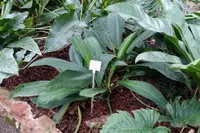
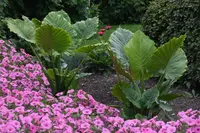
palm lily Care (Cordyline rubra)

palm lily

About palm lily

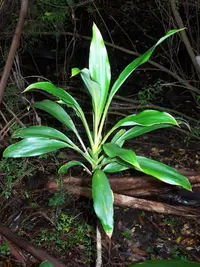
Cordyline rubra, often called palm lily, is an evergreen shrub grown mainly for its colorful, strappy foliage. It typically forms upright canes with arching leaves in shades of green, pink, and red.

This species is native to eastern Australia, where it grows in warm, sheltered forest environments. In cultivation it adapts well as a container or understory plant in mild climates and as a foliage houseplant.

It is considered moderately easy to grow, as it tolerates indoor conditions if light and moisture are kept reasonably stable. It prefers bright, filtered light, evenly moist but not waterlogged soil, and good drainage, which makes it relatively straightforward to care for Cordyline rubra.

Main Plant Requirements

Care Difficulty

Moderate Care

Light Preference

Partial Shade

Water Requirements

Moderate Water

Temperature Preference

Tropical / Frost Sensitive

Hardiness Zone

10–12

Soil Texture

Sandy, Loamy, Organic-rich

Soil pH

Acidic (5.5–6.5), Slightly acidic (6.5–7.0)

Soil Drainage

Moist but well-drained

Fertilization

Light (every 4–6 weeks)

Get Personalized Care Plan

Scan your plant to receive care tips personalized for your specific plant

Available on iOS and Android

How to Care for the palm lily

This species prefers bright, filtered light with some gentle direct sun.

  • Provide 3–5 hours of morning sun with dappled or bright indirect light for the rest of the day to keep foliage colored without scorch.
  • Allow light to medium partial shade; in deeper shade, Cordyline rubra tends to stretch, with longer, weaker stems and duller leaves.
  • In hot summers, protect from strong midday and afternoon sun with overhead shade cloth or a high tree canopy, especially in exposed positions.

Watering should keep the root zone evenly moist but never saturated.

  • Before watering, check the top 3–5 cm of soil; water only when this layer feels dry but the soil below is still slightly cool and moist.
  • In warm growing seasons, expect to water more often during dry, windy spells; in cooler months, reduce frequency so the soil surface dries between waterings.
  • Watch for drooping, crisp leaf tips, and dry soil as underwatering signs, and yellowing lower leaves, soft stems, or a sour smell as overwatering warnings, especially in poorly drained sites.

Stable mild to warm conditions support the best growth and foliage color.

  • Aim for 65–80°F (18–27°C) during active growth; temperatures in this band promote steady leaf production and stronger color.
  • Protect from cold below about 40°F (4°C); prolonged exposure near or below this level can damage foliage, and hard frost can kill young plants.
  • In hot regions, plants tolerate short periods up to about 90–95°F (32–35°C) if soil moisture is maintained and roots are mulched, but avoid hot, reflected heat against walls or paving.

This species prefers moderate humidity and reacts to very dry indoor air over time.

  • Aim for 40–60% humidity, as prolonged air below 30% can cause brown, crispy leaf tips and edges.
  • Keep the plant away from heating vents or strong drafts, which rapidly dry the foliage and stress Cordyline rubra.
  • Increase humidity by grouping plants, placing the pot on a pebble tray with water below the pot base, or using a small room humidifier nearby.

Cordyline rubra grows best in airy, moisture-retentive but sharply drained soil.

  • Use a loose mix such as 2 parts all-purpose potting mix, 1 part fine bark, and 1 part perlite to balance moisture retention and drainage.
  • Aim for slightly acidic to neutral pH, around 6.0–7.0, which supports nutrient uptake and limits leaf chlorosis.
  • Ensure the mix never compacts; coarse particles like bark or perlite keep pores open for oxygen around the roots.
  • Avoid heavy clay, unamended garden soil, or constantly waterlogged mixes that promote root rot and stunted growth.

This species is well suited to container growing for patios or bright indoor positions.

  • Choose a pot wide and deep enough to anchor the tall, tufted canopy so it does not tip in strong wind.
  • Select a heavy, non-porous container if outdoors in exposed spots to improve stability and slow rapid drying.
  • Ensure large, unobstructed drainage holes so excess water exits quickly, preventing water from pooling at the root zone.

Light, consistent feeding supports steady growth and foliage color in Cordyline rubra.

  • Use a balanced liquid fertilizer (around 10-10-10 or 20-20-20) at 1/2 strength every 4–6 weeks in spring and summer.
  • Apply a slow-release granular fertilizer at the start of the growing season if preferred, following label rates.
  • Skip feeding in late fall and winter when growth slows, especially in low light.
  • Water before and after fertilizing to reduce root burn and improve nutrient uptake.

Pruning Cordyline rubra is mainly done to maintain a tidy shape and remove weak tissue.

  • Carry out main pruning in late winter or early spring before strong new growth starts.
  • Remove dead, damaged, or crossing leaves and stems with clean, sharp pruners or a knife.
  • Shorten tall, leggy stems above a leaf node to encourage branching and a fuller crown.
  • Dispose of pruned material and disinfect tools to reduce disease spread.

Container-grown plants benefit from thoughtful repotting to keep Cordyline rubra healthy and stable.

  • Check for roots circling the pot, emerging from drainage holes, or slowed growth as a signal to repot.
  • Repot every 2–3 years in spring, stepping up only 1 pot size with a free-draining mix.
  • Water well the day before, then gently loosen and untangle roots, trimming only damaged sections.
  • After repotting, water thoroughly, keep in bright but indirect light, and avoid heavy feeding for 2–3 weeks.

New Cordyline rubra plants are most reliably produced from stem cuttings taken from healthy stock.

  • Take 5–10 cm stem sections in late spring or early summer, each with several nodes.
  • Lay sections horizontally or plant upright in a sterile, free-draining mix such as peat-free potting soil with perlite.
  • Maintain 70–80°F, bright indirect light, and high humidity until roots and buds form.
  • Keep the medium just slightly moist and avoid disturbance until strong new shoots develop.

In mild climates, Cordyline rubra needs only moderate winter protection, but it is sensitive to hard frost.

  • In ground, mulch the root zone with 5–8 cm of bark or compost before temperatures approach freezing.
  • Wrap the lower stem with breathable frost cloth during cold snaps in marginal zones.
  • Move containers indoors or to a frost-free, bright, cool space when temps risk dropping below 30–32°F.
  • Reduce watering in winter, keeping the root ball just barely moist to limit rot.

Care Tips

Root zone monitoring

Lift or gently tip the pot every few weeks to feel root mass and check drainage holes for circling roots, then plan a repot before the root ball becomes densely packed and water starts running straight through.

Salt buildup management

Every 2–3 months leach the pot by slowly running tepid water through the soil for several minutes, allowing it to drain fully, to reduce fertilizer salt accumulation that can brown leaf tips on this species.

Canopy shaping

Periodically remove a few of the oldest lower leaves close to the stem and rotate the container 1/4 turn every 2–3 weeks to encourage an even, upright canopy instead of a lopsided lean toward the light source.

Preventing cane flop

As stems elongate, insert a slim, sturdy stake close to the main cane and secure it with soft plant ties in 2–3 places so the top-heavy foliage does not bend or snap after watering or when the plant is moved.

Preventive pest checks

Inspect leaf bases, midribs, and the undersides of leaves every 1–2 weeks with a hand lens if possible, and at the first sign of scale, mealybugs, or spider mites isolate the plant and treat promptly with a horticultural oil labeled for indoor use to support long-term success when growing Cordyline rubra.

Common Pests and Diseases

Cordyline leaf spot

This disease causes small water-soaked lesions that turn brown or purplish with yellow halos, often merging into larger dead patches on older leaves. Symptoms include premature leaf drop, especially in plants kept too wet or crowded.

Solution

Remove and discard affected leaves, then improve air circulation and avoid overhead watering so foliage dries quickly. If spotting continues, apply a copper-based or chlorothalonil fungicide labeled for ornamental foliage plants, following directions and keeping leaves as dry and clean as possible as part of general Cordyline rubra care instructions.

Phytophthora crown rot

This disease starts at the base of the stem and crown, leading to blackened, mushy tissue and sudden collapse of leaves, especially in poorly drained or waterlogged soil. Symptoms include foul smell from the base and easy toppling of the plant when pulled gently.

Solution

Discard severely affected plants, since Phytophthora is difficult to eradicate once established, and never compost infected material. For early or mild cases, improve drainage, reduce watering, raise containers off saucers, and drench soil with a phosphonate (phosphorous acid) product labeled for Phytophthora, while avoiding future waterlogging.

Cordyline scale

These insects appear as small, fixed bumps along leaf midribs and stems, causing yellowing, speckling, and sticky honeydew on foliage and nearby surfaces. This pest often attracts sooty mold, which forms a black film on leaves.

Solution

Wipe leaves and stems with a cloth or cotton pad dipped in dilute soapy water or isopropyl alcohol to remove visible scale and honeydew, repeating weekly until clear. In heavier infestations, follow with a horticultural oil spray labeled for scale on ornamental plants, making sure to coat leaf undersides and stems thoroughly.

Mealybugs

These insects form white, cottony clumps in leaf axils, along leaf bases, and on roots in containers, leading to stunted growth and distorted new leaves. This pest also excretes honeydew, encouraging sooty mold on foliage.

Solution

Physically remove clusters with cotton swabs dipped in isopropyl alcohol, then rinse the plant with a gentle shower of lukewarm water to dislodge remaining insects. For persistent problems, use repeated applications of insecticidal soap or horticultural oil, ensuring good coverage of hidden areas, and inspect any new plants before placing them nearby.

Spider mites

These pests cause fine speckling, dulling, and bronzing of leaves, often with very fine webbing between leaf bases and stems, especially in warm, dry indoor air. This pest can cause gradual thinning and drop of older foliage if not controlled.

Solution

Increase humidity around the plant and regularly hose or shower the foliage, focusing on leaf undersides where mites feed. For ongoing infestations, apply insecticidal soap or a horticultural oil labeled for spider mites at 7–10 day intervals, isolating the plant from others until new growth appears clean.

Interesting Facts

Rainforest understorey origins

Cordyline rubra is naturally distributed in the warm, shaded understorey of coastal rainforests in eastern Australia, especially from southeastern Queensland to northeastern New South Wales. This habitat explains its tolerance of lower light and consistently moist, humus-rich soils.

Red foliage adaptation

The reddish to bronze pigmentation in its leaves comes from anthocyanins, plant pigments that can help protect leaf tissue from excess light and UV radiation in patchy forest shade. This pigmentation also contributes to its use as an ornamental foliage plant in subtropical and tropical landscapes.

Bird-dispersed berries

The plant produces small, bright red berries that are attractive to fruit-eating birds in its native range. Birds consume the fruit and later disperse the seeds, helping maintain populations across fragmented rainforest habitats.

Botan icon

Did you know?

Cordyline rubra has been used in Australian horticulture as a hardy foliage plant that bridges the gap between true tropical cordylines and more cool-tolerant landscape species, making it valuable for creating a subtropical look in mild-climate gardens without requiring year-round high heat.

FAQs about palm lily

Brown tips or edges usually result from low humidity, underwatering, or excess fertilizer salts. Fluoride or chlorine in tap water can also scorch margins. Use filtered water, leach the pot occasionally, and maintain moderate, stable moisture.

Grow Healthy Plants with Botan Care

Keep your plants happy and healthy with plant identification, disease detection, and easy care guidance.

Botan plant care app — identify plants on mobile

Explore More Plants