Rotate For Symmetry
Rotate the pot 90° every 2–3 weeks so the rosette develops evenly and leaves do not lean permanently toward the strongest light source.

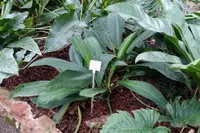
Philodendron wendlandii is a tropical aroid grown mainly for its dense rosettes of long, narrow, glossy leaves. It usually stays compact, so it suits tabletops and small indoor spaces.
This species comes from Central American rainforests, where it grows in warm, shaded, and consistently humid conditions. Its sturdy growth and tolerance of typical indoor humidity make it relatively manageable for most home growers.
Once its basic needs are understood, it is straightforward to care for Philodendron wendlandii. It prefers bright, filtered light, lightly moist but airy soil, and protection from cold drafts and direct, burning sun.

Care Difficulty
Moderate Care

Light Preference
Bright Indirect Light

Water Requirements
Moderate Water

Temperature Preference
Tropical / Frost Sensitive

Hardiness Zone
11–12

Soil Texture
Loamy, Peaty, Organic-rich

Soil pH
Acidic (5.5–6.5), Slightly acidic (6.5–7.0)

Soil Drainage
Moist but well-drained

Fertilization
Light (every 4–6 weeks)
Scan your plant to receive care tips personalized for your specific plant
Available on iOS and Android
This aroid prefers bright, gentle light that mimics filtered tropical forest conditions.
Watering should keep the root zone evenly moist but never saturated.
Stable, warm conditions support strong growth and reduce stress.
This species benefits from moderately high, stable humidity for best foliage quality.
This plant prefers a loose, airy, organic-rich mix that drains quickly but holds light, even moisture.
This species adapts very well to container growing in homes and sheltered outdoor spaces.
This plant responds well to light, consistent feeding during active growth.
Pruning helps maintain shape and plant health without heavy intervention.
Repotting keeps the root system healthy and supports steady growth.
This species is commonly propagated from stem cuttings rather than seed at home.
Cool-season care focuses on temperature management and stable indoor conditions.

Plant Health Check
Not sure what's wrong with your plant? Check your plant's health inside the app.
This species is native to lowland and premontane rainforests of Costa Rica, where it grows as an understory plant in warm, very humid, shaded habitats on the Caribbean side of the country.
Unlike many climbing philodendrons, this species typically forms a compact terrestrial or epiphytic rosette, with leaves arising from a short, thick stem rather than running along long vines.
It is known for its narrow, lance-shaped leaf blades with a prominent midrib and moderately thick texture, an adaptation that helps the foliage tolerate filtered but relatively intense tropical light without scorching.
Yellow leaves usually come from overwatering, compacted or poorly drained soil, or insufficient light. Check that the pot drains freely, let the top soil layer partially dry, and remove old, naturally aging leaves near the base.
Keep your plants happy and healthy with plant identification, disease detection, and easy care guidance.