Dry-season rest
Mark the start of the dry season and gradually reduce watering over 2–3 weeks, allowing the tuberous rootstock to rest and store energy for stronger flowering next season.

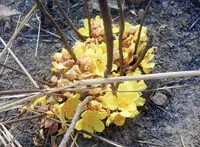
Cochlospermum tinctorium is a small deciduous shrub or subshrub, best known for its thick, tuberous roots and bright yellow flowers. It is native to dry savanna regions of West and Central Africa, where it grows in open, sunny sites with poor, well-drained soils.
The plant stores water and nutrients in its underground tubers, which helps it tolerate drought and seasonal dry periods. Its growth above ground is often sparse and open, with simple leaves and showy blooms followed by capsule fruits.
Because it comes from an arid climate, it generally prefers strong light, low to moderate moisture, and loose, gritty substrates. These adaptations can make it relatively forgiving once you understand how to care for Cochlospermum tinctorium.

Care Difficulty
Moderate Care

Light Preference
Full Sun

Water Requirements
Low Water

Temperature Preference
Tropical / Frost Sensitive

Hardiness Zone
10–11

Soil Texture
Sandy, Loamy, Rocky

Soil pH
Acidic (5.5–6.5), Slightly acidic (6.5–7.0)

Soil Drainage
Well-drained

Fertilization
Minimal (feed rarely)
Scan your plant to receive care tips personalized for your specific plant
Available on iOS and Android
This sun-loving savanna shrub needs strong light to flower and keep a compact shape.
This drought-tolerant species prefers thorough but infrequent watering that mimics seasonal rains.
This species is adapted to warm, tropical to subtropical climates and dislikes cold, damp conditions.
This dryland shrub tolerates low humidity and usually does not need special moisture control indoors.
Cochlospermum tinctorium prefers loose, fast-draining, sandy to loamy soil that mimics its native savanna conditions.
This species can be grown in containers if given a deep, very free-draining setup that prevents waterlogging.
This drought-adapted shrub needs only modest feeding in cultivation to support healthy growth and flowering.
Pruning is mainly used to maintain structure and remove damaged wood on this small tree.
This species is usually grown in the ground, so focus on careful transplanting of young plants.
Propagation of this species is most reliable from seed, which suits patient growers and restoration projects.
This warm-climate shrub is sensitive to hard frost and benefits from simple winter precautions in cooler regions.

Plant Health Check
Not sure what's wrong with your plant? Check your plant's health inside the app.
The tuberous roots contain yellow pigments that have been used for generations in parts of West Africa to dye fabrics and body decorations, giving rise to common names such as African yellow dye root.
This species is naturally distributed in the dry savanna belt of West Africa and is adapted to pronounced wet–dry seasonality, surviving long dry periods through its underground storage organs.
It produces relatively large, bright yellow, often fragrant flowers on leafless stems at the start of the rainy season, which makes the plant conspicuous in otherwise dry, open landscapes.

In several West African cultures, the thickened underground parts of this species are important in ritual contexts, where the plant is harvested and prepared under specific taboos and rules because of its long-standing symbolic value in local spiritual practices.
This species performs best outdoors in warm, frost-free climates where it receives strong light and heat. Indoors it often becomes weak and sparse. Cochlospermum tinctorium indoor care is challenging and usually not recommended long term.
Keep your plants happy and healthy with plant identification, disease detection, and easy care guidance.