paperwhite narcissus Care (Narcissus papyraceus)

Also known as: Paperwhite, Běła narcisa, Paper-white Daffodil
paperwhite narcissus

About paperwhite narcissus

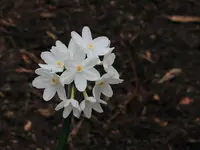
Paperwhite narcissus (Narcissus papyraceus) is a tender bulbous plant in the amaryllis family, often grown indoors for its fragrant winter blooms. It produces slender, upright leaves and clusters of small, star-shaped white flowers on sturdy stems.

This species is native to the Mediterranean region, where it grows in mild, coastal climates with dry summers and wetter winters. Indoors it is valued for fast, reliable flowering from pre-chilled bulbs, which makes it straightforward for beginners who want to learn how to care for paperwhite narcissus.

It generally prefers bright light, moderate moisture, and well-drained, gritty or soilless media, and does not need a long-term outdoor planting spot to perform well.

Main Plant Requirements

Care Difficulty

Easy Care

Light Preference

Full Sun

Water Requirements

Moderate Water

Temperature Preference

Cool Climate

Hardiness Zone

8–11

Soil Texture

Sandy, Loamy, Organic-rich

Soil pH

Slightly acidic (6.5–7.0), Neutral (7.0)

Soil Drainage

Well-drained

Fertilization

Minimal (feed rarely)

Get Personalized Care Plan

Scan your plant to receive care tips personalized for your specific plant

Available on iOS and Android

How to Care for the paperwhite narcissus

This bulb prefers bright conditions tailored to its growth stage and climate.

  • Outdoors, provide 4–6 hours of sun daily, favoring morning or late-afternoon sun with light midday shade in hot summer areas to prevent leaf scorch.
  • For paperwhite narcissus forced indoors, place near a bright east or south window with bright, indirect light for 6–8 hours to keep stems compact and upright.
  • Insufficient light causes weak, floppy foliage and sparse blooms, while intense, all-day summer sun can bleach leaves; adjust with sheer curtains or partial shade as seasons shift.

Watering should support active growth while protecting the bulbs from staying wet for long periods.

  • Use sharply drained soil and water thoroughly only when the top 2–3 cm of soil feel dry, allowing excess to run off so bulbs do not sit in water.
  • During active growth and flowering, keep soil slightly moist but never saturated; in summer dormancy, reduce watering sharply so the soil dries out more between waterings.
  • Watch for yellowing, mushy bulbs or a sour smell as signs of overwatering, and for limp, folding leaves and dry, pulling-away soil as signs the plant needs water; adjust Narcissus papyraceus care accordingly.

Temperature needs change between the cool rooting phase and the flowering period.

  • For root development, aim for 50–55°F (10–13°C) for 2–4 weeks if possible, then move to 60–65°F (16–18°C) to encourage sturdy growth and flowering.
  • Actively growing plants perform well at 60–70°F (16–21°C); short exposures down to about 28–30°F (-2 to -1°C) may be tolerated outdoors but can damage open flowers.
  • Protect from prolonged frost below 25°F (-4°C) and from hot rooms above 75–80°F (24–27°C), which cause rapid bloom fade and stretched, weak stems; choose the coolest bright room indoors in warm climates.

This bulb tolerates typical indoor humidity but benefits from moderate levels during active growth.

  • Aim for 35–55% relative humidity to support firm leaves and longer-lasting flowers in paperwhite narcissus.
  • Dry air can cause leaf tips to brown and flowers to fade faster, especially near heating vents.
  • Increase humidity locally by grouping pots or placing the container on a pebble tray with water, without letting the pot sit in water.

Narcissus papyraceus prefers airy, sharply drained soil that keeps bulbs moist but never waterlogged.

  • Use a loose mix of 2 parts standard potting mix, 1 part coarse sand, and 1 part perlite to improve drainage and aeration around the bulbs.
  • Aim for slightly acidic to neutral pH, roughly 6.0–7.0, which supports nutrient availability without stressing the roots.
  • Plant bulbs with their tops just at or slightly above the soil surface so the basal plate stays stable but the neck does not stay wet.
  • Avoid heavy clay, compacted mixes, or high-peat blends that stay soggy, as constant saturation promotes bulb rot.

This species is well suited to container growing for seasonal display.

  • Choose a shallow but wide pot that allows bulbs to be planted close together while still leaving 3–5 cm of space beneath for root spread.
  • Use a container with multiple drainage holes so excess water leaves quickly, reducing the time bulbs sit in saturated media.
  • Select a heavier material such as ceramic or clay to stabilize top-heavy flowering stems and prevent the pot from tipping over.

This bulb needs only light feeding to support flowering, especially when grown in pots.

  • Use a balanced, water-soluble fertilizer (for example 10-10-10) at 1/2 strength for paperwhite narcissus in active growth.
  • Apply every 2–3 weeks from shoot emergence until about 2 weeks after flowering finishes.
  • Avoid fertilizing during summer dormancy or when foliage is absent, as bulbs are resting.
  • For outdoor beds, a thin layer of compost or a light slow-release bulb fertilizer in fall is sufficient.

Narcissus papyraceus requires only simple cleanup rather than structural pruning.

  • After flowering, remove spent flower stems at the base without cutting green leaves.
  • Allow foliage to yellow and dry naturally for 4–6 weeks, then trim it off at soil level.
  • Use clean, sharp scissors or hand pruners to reduce disease spread when removing dead tissue.
  • Do not braid, knot, or tie leaves, as this reduces photosynthesis and weakens future flowering.

Paperwhite bulbs are usually treated as temporary indoor displays but can be transplanted if kept long term.

  • Look for roots circling the container, crowded bulbs, or reduced flowering as cues to transplant.
  • Move bulbs after foliage dies back, typically in late spring, every 3–4 years if naturalizing outdoors.
  • Gently lift clumps, shake off loose soil, separate bulbs by hand, and replant at 2–3x bulb height depth.
  • Water lightly after transplanting, then keep soil just moist, avoiding heavy disturbance of tender new roots.

Narcissus papyraceus is most commonly propagated by bulb division rather than from seed.

  • Divide clumps after flowering when foliage has yellowed and bulbs enter dormancy.
  • Lift bulbs with a fork or trowel, then separate offsets (small daughter bulbs) from the parent bulb by hand.
  • Replant offsets in well-drained soil at 2–3x their own height, spacing 8–10 cm apart.
  • Keep soil lightly moist during autumn and early winter to support root growth before flowering.

In mild climates this bulb is fairly tolerant of cool winters but needs extra care in colder regions.

  • In USDA zones colder than 8, grow Narcissus papyraceus in containers so they can be moved indoors before hard frost.
  • Provide bright, cool indoor conditions around 50–60°F and avoid waterlogged soil in winter.
  • Outdoors in borderline climates, add a 5–8 cm mulch layer over the planting area after soils cool.

Care Tips

Use cool storage

After bulb purchase, store unpotted bulbs in a cool, dark place at 40–50°F with good air circulation to slow sprouting so you can better time flowering for holidays or events.

Control stem stretch

To reduce floppy, overlong stems indoors, keep plants in the brightest possible spot and rotate the container 1–2 times per week so stems grow more evenly and need less staking.

Simple stem support

If stems lean or topple, group several together with a soft plant tie and place a narrow, unobtrusive stake or decorative branch in the container to support the cluster rather than staking each stem individually.

Post-bloom handling

Once flowers fade, cut off the entire spent flower stalk but keep leaves intact until they yellow naturally so the bulb can recharge before composting or discarding, since most indoor-forced bulbs do not reliably rebloom.

Staggered planting plan

For longer display when growing paperwhite narcissus, pot groups of bulbs in small batches every 10–14 days so each planting comes into bloom as the previous one finishes.

Common Pests and Diseases

Narcissus basal rot

This disease causes bulbs to develop brown, dry, sunken areas at the base and leads to weak shoots, yellowing foliage, and eventual collapse. Symptoms include poor emergence or complete failure of some bulbs to sprout.

Solution

Discard any soft, discolored, or foul-smelling bulbs and never plant them. For remaining healthy bulbs, use only firm stock from reputable suppliers, keep bulbs cool and dry before planting, avoid overwatering containers, and rotate planting sites outdoors to reduce soil-borne infection.

Narcissus smoulder

This disease, caused by the fungus Botrytis narcissicola, produces tan to brown leaf and flower spots, gray fuzzy mold on fading blooms, and general blight of foliage and scapes. Symptoms include rapid collapse of flowers in cool, damp conditions.

Solution

Promptly remove and discard spent blooms and any soft, moldy tissue, and avoid overhead watering. Improve air circulation around pots, keep foliage as dry as possible, and if problems recur, dispose of heavily affected bulbs and replant with fresh, healthy ones in a cleaner, drier location.

Narcissus bulb fly

This pest lays eggs at the base of bulbs; the larvae tunnel inside and feed, leaving bulbs hollow, soft, and unable to produce normal shoots. Symptoms include weak, distorted growth or complete failure to emerge, often with a single large maggot found inside the bulb.

Solution

Destroy any infested bulbs by sealing and discarding them so larvae do not complete their life cycle. For prevention, inspect bulbs before planting, plant them slightly deeper in outdoor beds, protect stored or potted bulbs with fine mesh if flies are present, and use only clean, firm bulbs for growing paperwhite narcissus.

Narcissus leaf scorch

This disease, often caused by the fungus Stagonospora (red leaf spot), produces reddish-brown streaks or spots on leaves and flower stalks that later turn tan with darker margins. Symptoms include premature yellowing and dieback of the foliage while bulbs remain in the soil or pot.

Solution

Remove and discard affected leaves and spent flower stalks as soon as spotting is noticed, and keep fallen plant debris away from the bulbs. Water at the soil level, avoid crowding pots, ensure good air movement, and if the problem is severe outdoors, rotate plantings to a new site and start with clean bulbs.

Aphids

These insects cluster on new leaves and flower stems, sucking sap and causing curling, distortion, and sticky honeydew that can attract sooty mold. This pest can also weaken plants during active growth and may spread viral diseases between bulbs.

Solution

Rinse colonies off with a firm stream of water or wipe them away with a damp cloth on indoor paperwhites. For persistent infestations, apply insecticidal soap or a horticultural oil, ensuring thorough coverage of undersides of leaves and stems, and remove heavily distorted growth once plants finish flowering.

Interesting Facts

Naturally coastal species

This species is native to rocky coastal regions of the western Mediterranean, especially along the coasts of Spain, Morocco, and nearby islands, where it grows in well-drained, often calcareous soils with mild, maritime winters.

Fragrance chemistry

Its intense scent comes from a complex mix of volatile compounds such as indole and various benzyl esters, which are produced to attract nocturnal and crepuscular pollinators in its native range.

Leafless flowering habit

In cultivation, bulbs often flower indoors with little or no foliage at first because the floral buds are preformed in the bulb during the previous growing season, allowing rapid bloom when moisture and temperature cues are provided.

Botan icon

Did you know?

In some Mediterranean habitats, this species forms large, genetically mixed colonies that flower in midwinter, providing important nectar and pollen resources for early-season insects when few other plants are in bloom.

FAQs about paperwhite narcissus

Lack of flowering usually comes from weak bulbs, insufficient rest period, or bulbs stored too warm and dry. Discard undersized bulbs, chill future bulbs correctly, and avoid forcing the same bulbs repeatedly for reliable blooms.

Grow Healthy Plants with Botan Care

Keep your plants happy and healthy with plant identification, disease detection, and easy care guidance.

Botan plant care app — identify plants on mobile

Explore More Plants