Vanda cristata Care

Vanda cristata

About Vanda cristata

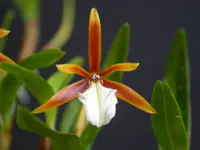
Vanda cristata is an epiphytic orchid that naturally anchors itself on trees rather than growing in soil. It forms an open fan of narrow, arching leaves with showy, often yellow to green flowers marked by distinctive patterns.

This species occurs in the Himalayas and nearby mountain regions, where it experiences bright light, cool to mild temperatures, and good air movement. Its need for strong light, frequent moisture, and excellent drainage makes it moderately challenging for beginners, but experienced growers find it rewarding to care for Vanda cristata.

Main Plant Requirements

Care Difficulty

Hard Care

Light Preference

Partial Shade

Water Requirements

Regular Water

Temperature Preference

Cool Climate

Hardiness Zone

Unknown

Soil Texture

Organic-rich, Rocky

Soil pH

Acidic (5.5–6.5)

Soil Drainage

Well-drained

Fertilization

Moderate (every 2–4 weeks)

Get Personalized Care Plan

Scan your plant to receive care tips personalized for your specific plant

Available on iOS and Android

How to Care for the Vanda cristata

This orchid needs bright, filtered light that mimics high-elevation forest canopies.

  • Provide 6–8 hours of bright, indirect light daily, such as dappled shade under 30–50% shade cloth or a lightly filtered greenhouse roof.
  • Allow gentle morning sun but protect from strong midday and afternoon sun, which can scorch leaves and cause yellow patches or hard, bleached areas.
  • In winter, increase light exposure slightly (longer morning sun or lighter shade) while still avoiding harsh, direct midday rays for Vanda cristata.

This epiphytic orchid prefers frequent moisture with excellent drainage and plentiful air around the roots.

  • Water thoroughly when exposed roots turn silvery-white and feel dry, then let them rehydrate to a bright green, usually once a day in hot, dry weather and less often in cool or humid periods.
  • Avoid standing water around the roots; use a very free-draining medium or basket so water runs through within seconds, preventing root rot and sour smells.
  • Increase watering frequency and misting in summer heat, then reduce in cooler months while still preventing prolonged shriveling or accordion-like leaf wrinkling, which indicate underwatering.

This species prefers cool to intermediate conditions with a clear difference between day and night temperatures.

  • Aim for daytime temperatures of 65–77°F (18–25°C) and nights of 50–60°F (10–16°C) for steady growth and flowering.
  • Protect the plant from frost; short dips to about 41°F (5°C) may be tolerated if dry and brief, but prolonged cold below this damages roots and leaves.
  • In hot weather above 86°F (30°C), increase shade, air movement, and humidity, and avoid placing the plant near hot, reflective surfaces that can overheat tissues.

This orchid needs high, steady humidity to maintain healthy roots and leaves.

  • Aim for 60–80% humidity, as Vanda cristata is adapted to humid, montane forest air.
  • It tolerates brief dips to 40–50%, but prolonged dry air causes wrinkled leaves, stalled root tips, and bud blast.
  • Increase humidity with daily misting of roots, grouped plants, or a room humidifier rather than wetting the crown or keeping the medium soggy.

This species prefers an airy, epiphytic-style medium rather than dense, traditional soil.

  • Use a very open mix such as large-grade bark with charcoal and a little coarse perlite to keep roots highly aerated.
  • Ensure extremely rapid drainage; water must flow through in seconds and the mix should dry quickly between waterings.
  • Aim for slightly acidic to neutral conditions (pH 5.5–7.0), which suit most orchid bark-based substrates.
  • Avoid fine peat, heavy compost, or standard potting soil that packs around the roots and encourages rot in Vanda cristata.

This orchid is well suited to containers such as baskets or pots with very open sides and bottoms.

  • Use slatted baskets or pots with many side holes so aerial roots can grow out freely and dry quickly after watering.
  • Choose a heavy or wide-based container to counterbalance the tall, top-heavy growth and prevent tipping.
  • Select plastic if longer moisture retention is needed, or wood/terracotta in very humid climates to avoid overly wet roots.

This orchid responds well to light, consistent feeding during active growth.

  • Use a balanced orchid fertilizer (around 20-20-20) diluted to 1/4–1/2 strength for Vanda cristata.
  • Feed every 1–2 weeks in spring and summer after thorough watering to avoid root burn.
  • Switch to monthly feeding at very weak strength in fall and winter to match slower growth.
  • Avoid compost or heavy, slow-release products that can clog roots; use clear orchid solutions instead.

Pruning needs are minimal and focus on hygiene rather than shaping this orchid.

  • In late winter or after flowering, remove dry flower spikes close to the stem with sterile scissors or pruners.
  • Trim only dead, damaged, or shriveled roots on Vanda cristata, leaving firm green or silvery roots intact.
  • Cut off yellow, diseased, or broken leaves at the base to improve airflow and reduce infection risk.
  • Disinfect tools before and after use to limit spread of fungi and bacteria between plants.

Handling the roots gently is crucial when adjusting this epiphytic orchid’s support.

  • Repot or remount when roots overflow the basket, media breaks down, or growth slows noticeably.
  • Best timing is late spring to early summer, just as new roots start, to help Vanda cristata reestablish quickly.
  • Expect repotting every 2–3 years; use open baskets or slatted mounts with coarse orchid bark or similar airy media.
  • Soak roots in lukewarm water before working, trim only dead tissue, and keep shade and humidity higher for 1–2 weeks afterward.

Propagation is usually done vegetatively, as seed methods require laboratory conditions.

  • Divide by removing mature offshoots or keikis in late spring or early summer when they have several roots of 5–7 cm.
  • Use a sterile knife or pruners to separate the section, keeping at least 3–4 healthy leaves on each division of Vanda cristata.
  • Mount or pot divisions in airy orchid media, then secure firmly to prevent wobbling that can damage new roots.
  • Maintain high humidity, bright filtered light, and gentle air movement until strong new roots and leaves appear.

This warm-growing orchid needs indoor or greenhouse conditions during cold months in most climates.

  • Keep Vanda cristata above 55°F, with an ideal winter range of 60–68°F to avoid chill damage.
  • Move outdoor baskets or mounts indoors before nights drop below 55°F, using bright, draft-free spots.
  • Reduce watering and fertilizer in winter, letting roots dry between waterings while maintaining 40–60% humidity.
  • Avoid placing plants against cold windows; use a small fan for light airflow without exposing them to cold drafts.

Care Tips

Basket positioning

Hang plants in open-sided baskets so roots can dangle freely, then rotate the basket 1–2 times per month to keep growth balanced and prevent the plant from leaning toward one side.

Root inspection routine

Inspect aerial roots every 2–3 weeks, trimming only dead, hollow, or blackened sections with sterilized tools to maintain airflow and reduce the risk of rot and fungal problems.

Air circulation management

Use a small oscillating fan on a low setting near, but not directly at, the plant to keep air moving around leaves and roots, which helps prevent fungal spots and bacterial rot without drying the plant excessively.

Seasonal mounting check

Once or twice per year, check ties, hooks, and basket hardware, loosening or replacing them if they start to pinch roots or stems so the plant can expand without mechanical damage.

Preventive pest monitoring

Inspect leaf axils, flower stems, and root junctions weekly with a hand lens, and at the first sign of scale or mealybugs, isolate the plant and treat with an appropriate horticultural oil to protect long-term Vanda cristata plant care.

Common Pests and Diseases

Spider mites

This pest thrives on Vanda leaves in warm, dry, bright conditions and is common on plants grown with high light and air movement. Symptoms include fine webbing in leaf axils, silvery stippling, and gradual yellowing of the strap leaves.

Solution

Rinse foliage thoroughly with a strong, lukewarm water spray, focusing on leaf undersides and between leaves, then improve humidity and reduce heat stress. For persistent infestations, use a miticide or insecticidal soap labeled for orchids, applied in repeated treatments and combined with increased air circulation as part of general Vanda cristata care instructions.

Scale insects

These insects attach to the leaves and leaf sheaths, appearing as small, brown or white bumps, and suck plant sap. Symptoms include sticky honeydew, sooty mold on leaves, and weakening of the plant, especially on older or stressed specimens.

Solution

Remove visible scale by gently scraping with a cotton swab dipped in isopropyl alcohol, paying attention to leaf bases and around aerial roots. Follow with several rounds of horticultural oil or insecticidal soap at label rates and isolate affected plants until no new crawlers appear.

Mealybugs

These insects hide in leaf axils and root junctions, forming white cottony clusters that feed on plant sap. Symptoms include distorted new growth, sticky honeydew, and increased susceptibility to fungal problems in the crown and roots.

Solution

Physically remove mealybugs with cotton swabs dipped in isopropyl alcohol and rinse the plant, including exposed roots, with lukewarm water. For ongoing problems, apply a systemic insecticide approved for ornamental orchids or repeat treatments with insecticidal soap, and inspect new plants before bringing them near a Vanda collection.

Bacterial brown spot

This disease causes water-soaked, translucent lesions on leaves that rapidly turn brown to black, often starting in mechanical injuries or water-splashed areas. Symptoms include soft, sunken patches that may emit a foul odor in advanced stages.

Solution

Immediately remove affected leaf portions with a sterile blade, cutting well into healthy tissue, and keep water off the foliage, especially in cool conditions. Improve air movement, space plants to dry quickly, disinfect tools, and, if needed, use a bactericide labeled for orchids while avoiding overhead watering late in the day.

Black rot

This disease is caused by water-mold pathogens that spread in warm, wet conditions and attack leaves, crowns, and young roots. Symptoms include rapidly expanding black, mushy areas starting from leaf bases or roots, often killing young fans if not checked quickly.

Solution

Cut out all infected tissue with sterilized tools, dust cuts with a fungicidal powder such as thiophanate-methyl or a copper-based product suitable for orchids, and keep the plant on the dry side for a short period. Improve drainage and airflow, keep water out of leaf crowns, and avoid allowing roots to sit in stagnant water when mounting or basket-growing Vanda cristata.

Interesting Facts

Himalayan epiphyte origin

This species is native to the eastern Himalayas, where it grows as an epiphyte on mossy tree trunks in cool to intermediate montane forests at higher elevations than many other Vanda species.

Distinctive fringed lip

Its flowers have a characteristically three-lobed lip with a fringed or toothed margin and yellow markings, a combination that helps distinguish it from closely related Vanda species in the wild and in cultivation.

Cool-tolerant Vanda

Unlike many lowland Vanda orchids that demand high heat, this species is adapted to cooler nights in its native range and can tolerate lower temperatures than most of its relatives if kept drier and well ventilated.

Botan icon

Did you know?

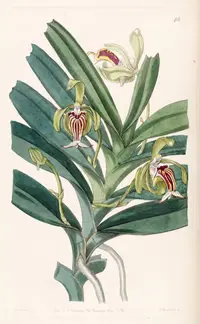
Vanda cristata has a long history in European horticulture, having been one of the earlier Vanda species introduced to Western collections in the 19th century, which led to its use in hybridization and its appearance in early orchid literature and botanical illustrations.

FAQs about Vanda cristata

Lack of flowering often comes from insufficient light, too little day–night temperature difference, or inadequate nutrition. Provide bright conditions, cooler nights, and a balanced orchid fertilizer. A stable routine helps trigger spike formation after a rest period.

Grow Healthy Plants with Botan Care

Keep your plants happy and healthy with plant identification, disease detection, and easy care guidance.

Botan plant care app — identify plants on mobile

Explore More Plants