Anthurium faustomirandae Care

Anthurium faustomirandae

About Anthurium faustomirandae

Anthurium faustomirandae is a large aroid foliage plant valued for its bold, leathery leaves and strong architectural presence. It forms an upright clump with broad, paddle-shaped blades and thick petioles.

This species is native to cloud forests of southern Mexico, where it grows as a terrestrial plant in moist, shady habitats. Its size and need for stable humidity make it better suited to committed growers than to very casual plant owners.

Light shade, evenly moist but well-draining substrate, and good air movement support healthy growth. With these conditions in place, it is generally straightforward to care for Anthurium faustomirandae.

Main Plant Requirements

Care Difficulty

Hard Care

Light Preference

Bright Indirect Light

Water Requirements

Moderate Water

Temperature Preference

Tropical / Frost Sensitive

Hardiness Zone

11–12

Soil Texture

Loamy, Peaty, Organic-rich

Soil pH

Acidic (5.5–6.5)

Soil Drainage

Moist but well-drained

Fertilization

Light (every 4–6 weeks)

Get Personalized Care Plan

Scan your plant to receive care tips personalized for your specific plant

Available on iOS and Android

How to Care for the Anthurium faustomirandae

This species prefers bright, filtered light that mimics dappled forest shade.

  • Provide 4–6 hours of bright, indirect light daily, such as near an east window or under 30–50% shade cloth outdoors.
  • Tolerates partial shade, but very low light leads to slow growth and smaller leaves; move slightly closer to the light source if new leaves emerge small and dark.
  • Protect Anthurium faustomirandae from direct midday sun, which can scorch leaves; brief early-morning or late-afternoon sun is acceptable in cooler seasons.

Watering should keep the root zone evenly moist but never saturated.

  • Allow the top 2–4 cm of the mix to dry before watering again, using a finger check rather than a fixed schedule.
  • In spring and summer, expect to water more often as growth and evaporation increase; reduce frequency in fall and winter when growth slows.
  • Watch for yellowing, limp leaves and a sour smell as signs of overwatering, and dry, curling edges or drooping leaves as signs of underwatering; always use a sharply draining, chunky mix.

This plant thrives in stable, warm, tropical conditions without temperature extremes.

  • Aim for 65–80°F (18–27°C) for active growth; short peaks to 85°F (29°C) are acceptable if humidity and air movement are good.
  • Avoid temperatures below 55°F (13°C); growth slows below 60°F (16°C), and tissue damage can occur if exposure near 40°F (4°C) is prolonged.
  • Protect from frost at all times and from hot, drying winds; in heat waves above 90°F (32°C), increase shade and humidity to limit stress.

This species benefits from elevated humidity and reacts quickly to dry indoor air.

  • Aim for 60–80% humidity for Anthurium faustomirandae to keep leaves large, firm, and unblemished.
  • In air below 50%, expect crispy leaf edges, slow growth, and rolled new leaves as humidity stress signs.
  • Increase humidity with a nearby humidifier, grouped plants, and a wide pebble tray, but still maintain gentle air movement to prevent fungal issues.

This aroid prefers an airy, fast-draining yet moisture-retentive medium that mimics loose forest litter.

  • Use a chunky mix of roughly 40% fine orchid bark, 30% coco coir or peat, 20% perlite or pumice, and 10% compost.
  • Aim for slightly acidic to neutral pH around 5.5–6.8, which supports nutrient availability without causing toxicity.
  • Ensure strong drainage so water runs through in seconds; a soggy, compacted, or muddy mix leads to root rot and stunted growth.
  • Improve aeration by increasing bark and perlite content if the pot feels heavy for long after watering or roots appear oxygen-starved.

This species adapts well to container culture when the pot supports its large leaves and extensive root system.

  • Choose a broad, heavy container or add top dressing stones to counterbalance tall foliage and prevent tipping in light winds.
  • Select a pot depth that allows roots to spread laterally, not just downward, to reduce stress on the thick, structural roots.
  • Opt for porous materials like unglazed terra-cotta if the mix stays wet for long, or glazed/plastic if it dries very fast in low humidity homes.

Large-leaved Anthurium faustomirandae benefits from modest, consistent feeding during active growth.

  • Use a balanced liquid fertilizer (around 10-10-10 or 20-20-20) at 1/4–1/2 strength for potted plants in a loose, organic mix.
  • Feed every 4–6 weeks in spring and summer, applying to already-moist substrate to reduce root burn risk.
  • Skip or reduce feeding to 1 light application in fall and winter when growth slows markedly.
  • Incorporate a small amount of slow-release fertilizer or fine compost in the upper mix once per growing season instead of frequent heavy feeding.

Pruning Anthurium faustomirandae is light and mainly hygienic, aimed at keeping foliage healthy and manageable.

  • Carry out most pruning in late winter or early spring before strong new growth starts.
  • Remove yellowing, dead, or damaged leaves at the base with clean, sharp scissors or pruners to limit disease spread.
  • Thin out crowded or overlapping leaves to improve air movement around the plant and maintain an open, balanced shape.
  • Sterilize tools with alcohol between plants and avoid removing more than 20–25% of foliage at one time.

This species prefers a stable root environment, so repotting Anthurium faustomirandae is infrequent but important when space is tight.

  • Plan to repot every 2–3 years in late spring when roots circle the pot, emerge from drainage holes, or growth slows.
  • Choose a container 2–5 cm wider with excellent drainage and a very chunky aroid mix containing bark, perlite, and coarse peat or coco coir.
  • Slide the root ball out gently, loosen only the outer circling roots, and trim rotted portions with sterile scissors to limit stress.
  • Water thoroughly after repotting, then keep humidity high, light bright but indirect, and watering slightly lighter for 1–2 weeks while roots re-establish.

Propagation of Anthurium faustomirandae is usually done by careful division rather than from seed in home settings.

  • Divide mature clumps in late spring or early summer when several stems or growth points are present.
  • Lift the plant from its pot and tease apart natural sections, ensuring each division has healthy roots and at least 1–2 leaves.
  • Plant divisions in a fresh, airy mix, keep humidity 60–80%, and maintain bright, indirect light for rooting.
  • Avoid heavy watering at first; keep the mix just slightly moist until new leaf or root growth confirms establishment.

In temperate climates this species is very cold-sensitive and needs structured winter protection.

  • Keep temperatures above 55°F, ideally 65–75°F, as foliage and roots are damaged by cold drafts and any frost.
  • Move container plants indoors before night temperatures drop below 60°F, placing them in bright, indirect light.
  • Maintain slightly drier soil in winter, letting the top layer dry more between waterings to prevent rot in cooler conditions.
  • Provide a light mulch over the root zone of large specimens in cool rooms to buffer temperature swings.

Care Tips

Support heavy leaves

Install a sturdy moss pole or cedar stake and loosely tie the thick petioles with soft plant ties so the oversized leaves are supported and less likely to crease or snap at the base.

Encourage strong roots

Use a tall, heavy pot and plant slightly deeper than nursery level so the thick stem base is well anchored, which stabilizes the plant as leaves enlarge and reduces the risk of tipping.

Improve air movement

Position a small fan on a low, indirect setting to move air gently across the foliage, which helps prevent bacterial leaf spot and reduces the risk of fungal issues on such large leaf surfaces.

Inspect undersides routinely

Schedule a quick monthly check of the massive leaf undersides with a flashlight, wiping with a damp microfiber cloth to remove dust and catch early signs of scale or spider mites before they spread.

Adjust care seasonally

During low-light winter months, rotate the pot 90° every 2–3 weeks and slightly reduce watering frequency to keep growth even and prevent the heavy canopy from leaning as part of caring for Anthurium faustomirandae.

Common Pests and Diseases

Spider mites

This pest thrives in warm, dry indoor air and can be attracted to the large, leathery leaves of this species. Symptoms include fine webbing, stippled or roughened leaf surfaces, and gradual loss of gloss on the foliage.

Solution

Rinse both sides of the leaves under lukewarm running water or with a handheld shower, then wipe with a soft cloth to remove mites and webbing; repeat weekly until no new damage appears. Raise humidity to 60–70%, improve air circulation, and, if needed, apply insecticidal soap or a horticultural oil labeled for spider mites, making sure to cover leaf undersides carefully.

Thrips

These insects feed along the midrib and veins of the broad leaves, causing silvery streaks, distorted new growth, and dark specks of frass. Damage can be more visible on this plant’s large leaf blades, where linear scarring and patchy discoloration stand out clearly.

Solution

Remove and discard the worst‑affected leaves, then shower the plant to dislodge active insects. Isolate the plant, use sticky traps to monitor adults, and treat all leaf surfaces and petioles with insecticidal soap or a systemic product labeled for thrips, repeating at 7–10 day intervals until new growth emerges clean; inspect any nearby aroids at the same time.

Bacterial leaf blight

This disease causes water‑soaked, translucent patches that quickly turn brown and irregular on the large leaves, often starting along margins or mechanical wounds. Symptoms include yellow halos around lesions and a tendency for affected areas to collapse and tear on older foliage.

Solution

Promptly remove and discard all infected leaves, sterilizing cutting tools with 70% alcohol between cuts, and avoid overhead watering so foliage dries quickly. Improve air movement around the large leaf blades, keep moisture off the leaves, and keep the plant isolated; if spread continues, consider discarding the plant to prevent infection of other Anthurium species and hybrids.

Bacterial blight (Xanthomonas)

This disease, common in Anthurium cultivation, creates small, dark, water‑soaked spots along veins that enlarge and coalesce into large necrotic areas on the foliage. Symptoms include yellowing around the spots and a characteristic angular pattern bounded by the leaf veins.

Solution

Isolate the plant, remove all visibly affected tissue well into healthy green areas, and disinfect tools between every cut. Keep leaves dry, reduce splashing when watering, increase spacing and airflow, and source any new plants or cuttings from reputable growers that follow sanitation practices, as there is no reliable home fungicide for curing systemic bacterial infections.

Foliar fungal spots

This disease appears as scattered tan to dark brown spots on the broad leaf surface, sometimes with concentric rings or pale margins, and is favored by high humidity with poor airflow around the large foliage. Symptoms include gradual coalescing of spots and premature yellowing of older leaves, especially in crowded interior plantings.

Solution

Trim and discard affected leaves, then space the plant so air can move freely around the foliage and allow the potting mix surface to dry slightly between waterings. Avoid wetting the leaves, run a fan on low to reduce leaf‑surface moisture, and, if new spots keep forming, apply a copper‑based or other houseplant‑safe fungicide according to label directions as part of broader Anthurium faustomirandae care instructions.

Interesting Facts

Giant velvet foliage

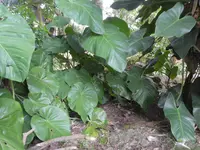
This species is known for producing extremely large, velvety, dark green leaves that can reach well over 1 m in length in optimal conditions, giving it a distinctive, almost sculptural presence compared with most cultivated anthuriums.

Native Chiapas endemic

It occurs naturally in a limited area of Chiapas, Mexico, where it grows as a terrestrial or lithophytic aroid on forest floors and rocky slopes in humid, montane habitats.

Thick, quilted leaf texture

The blades are notably thick, leathery, and strongly quilted between the main veins, an adaptation that likely helps the plant maintain structural support and water balance in its native environment.

Botan icon

Did you know?

In habitat this species can form imposing clumps with individual leaves that rank among the largest in the genus, which is one reason it has become a reference point for collectors interested in growing Anthurium faustomirandae.

FAQs about Anthurium faustomirandae

This species usually performs better indoors or in protected shade structures where temperature, light, and humidity stay stable. Outdoors, it suits frost-free, humid, sheltered spots only. Cold, strong sun, or dry wind quickly damages foliage.

Grow Healthy Plants with Botan Care

Keep your plants happy and healthy with plant identification, disease detection, and easy care guidance.

Botan plant care app — identify plants on mobile

Explore More Plants