Florida butterfly orchid Care (Encyclia tampensis)

Also known as: Florida butterfly orchid
Florida butterfly orchid

About Florida butterfly orchid

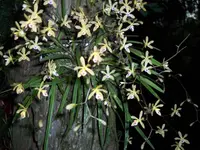
The Florida butterfly orchid, Encyclia tampensis, is a small epiphytic orchid that usually grows attached to tree trunks and branches. It forms tight clumps with narrow, upright leaves and many wiry roots. Its flower spikes carry numerous small, starry blossoms with greenish petals and a white to purple-marked lip, giving a light, airy look. Blooming often occurs in warm months, and established plants can flower reliably each year. This species is native to Florida, the Caribbean, and nearby coastal regions, where it experiences bright light, good air movement, and fast drying after rain. These traits make it relatively forgiving once established and help guide how to care for Florida butterfly orchid at home.

Main Plant Requirements

Care Difficulty

Moderate Care

Light Preference

Partial Sun

Water Requirements

Moderate Water

Temperature Preference

Tropical / Frost Sensitive

Hardiness Zone

10–11

Soil Texture

Sandy, Organic-rich

Soil pH

Acidic (5.5–6.5)

Soil Drainage

Well-drained

Fertilization

Light (every 4–6 weeks)

Get Personalized Care Plan

Scan your plant to receive care tips personalized for your specific plant

Available on iOS and Android

How to Care for the Florida butterfly orchid

This epiphytic orchid needs bright, filtered light to flower well without leaf scorch.

  • Provide 4–6 hours of bright, indirect light daily, such as morning sun with light shade from late morning to afternoon.
  • Allow dappled shade under open trees; Florida butterfly orchid tolerates brief midday sun if air movement is strong and humidity stays above 40–50%.
  • Watch leaves: dark, soft foliage indicates too little light, while yellow, leathery, or scorched patches indicate excessive direct sun exposure.

This orchid prefers frequent light moisture with rapid drying around the roots.

  • Water when roots and bark or mount surface feel dry to the touch, typically after 1–3 days in warm weather, longer in cool, humid periods.
  • Use very free-draining orchid bark or a mount so water runs through within seconds, preventing standing water around Encyclia tampensis roots.
  • Reduce watering in cooler months when growth slows; shriveling pseudobulbs signal underwatering, while blackened roots or a sour smell indicate overwatering.

This subtropical orchid prefers warm conditions with a mild temperature drop at night.

  • Aim for 70–85°F (21–29°C) by day and 60–70°F (16–21°C) at night during active growth for best root and leaf development.
  • Tolerates brief highs up to 95°F (35°C) if humidity is 40–60% and air movement is strong to prevent heat stress.
  • Avoid frost; growth slows below 55°F (13°C) and damage occurs near 40°F (4°C), so provide protection or move plants before cold fronts.

This epiphytic orchid prefers moderately humid air but adapts to many home environments.

  • Aim for 50–70% humidity, similar to bright, airy subtropical conditions for the Florida butterfly orchid.
  • It tolerates short spells of 35–40% humidity, but prolonged very dry air slows growth and reduces flowering.
  • Crisping root tips or wrinkled pseudobulbs signal low humidity; use a pebble tray or room humidifier rather than misting heavily.

Encyclia tampensis grows best mounted or in a very open, bark-based medium rather than conventional potting soil.

  • Use a chunky orchid mix of medium-fine fir bark, perlite, and a little charcoal to keep structure open and airy.
  • Ensure extremely fast drainage; water must pass through in seconds, leaving roots moist but never waterlogged.
  • Keep pH slightly acidic to neutral, around 5.5–7.0, which suits most bark-based orchid media.
  • Avoid dense peat, standard houseplant mixes, or compacted media that smother roots and encourage rot.

This species adapts well to container culture when mounted or potted in a shallow, very free-draining setup.

  • Choose a slotted or net orchid pot that maximizes side airflow and lets roots dry quickly after watering.
  • Use a relatively small, shallow pot so the loose medium does not stay wet longer than the roots can tolerate.
  • Place the pot in a heavier cachepot or on a stable tray to prevent tipping as new pseudobulbs develop and shift weight.

Encyclia tampensis benefits from light, consistent feeding during active growth but is sensitive to excess salts.

  • Use a balanced orchid fertilizer (for example 20-20-20) diluted to 1/4–1/2 strength in low-mineral water.
  • Feed every 2–3 weeks in spring and summer while new roots and leaves are forming.
  • Reduce feeding to monthly at very weak strength in fall and stop in midwinter rest.
  • For mounted Florida butterfly orchid plants, flush thoroughly with plain water between feedings to prevent salt buildup.

Encyclia tampensis needs minimal pruning focused on hygiene and post-bloom cleanup rather than shaping.

  • Trim spent flower spikes at the base after blooms fade, using sterile, sharp scissors or snips.
  • Remove only dead, shriveled pseudobulbs and leaves; keep firm green tissue to support future flowering.
  • Cut away clearly rotted or damaged roots during repotting to maintain a healthy root system.
  • Avoid heavy pruning, since reducing healthy foliage can limit energy storage and reduce flowering.

Repotting Encyclia tampensis is infrequent and should be done carefully to avoid disturbing the roots.

  • Plan to repot every 2–3 years or when roots circle the pot, the mix breaks down, or growth slows.
  • Choose late winter to early spring, just before new root tips appear, to reduce stress.
  • Use a small, snug pot with airy orchid bark or mount on cork or hardwood for long-term health.
  • Gently loosen old medium, trim only dead roots, keep new growth near the pot rim, then water lightly until recovery is clear.

Propagation of Encyclia tampensis is usually done by division rather than by seed in home settings.

  • Divide mature clumps in late winter or early spring when new growth starts.
  • Ensure each division has at least 3–4 healthy pseudobulbs and a strong root system.
  • Pot or mount divisions in fresh, airy orchid medium and keep humidity around 50–70%.
  • Provide bright, filtered light, gentle air movement, and slightly reduced watering until new roots and leaves are visible.

Winter care for Encyclia tampensis focuses on avoiding frost damage and slightly cooler, drier rest conditions.

  • This orchid is not frost tolerant and should be kept above 50°F, ideally 55–65°F in winter.
  • Move container plants indoors or into a greenhouse before night temperatures drop near 50°F.
  • Reduce watering so the medium dries almost completely between waterings, while avoiding total shriveling.
  • Maintain bright, indirect light and good air movement to prevent fungal issues in cool, slower-growth periods.

Care Tips

Mounting selection

Choose hardwood mounts like cork or tree fern that will not break down quickly, and position the plant so roots can attach firmly while allowing air to circulate freely around them.

Root establishment

After mounting or repotting, secure the plant with soft ties or fishing line for 3–6 months so new roots can grip the surface without wobbling, which greatly improves long‑term stability and growth.

Outdoor summering

In suitable climates, hang plants outdoors under bright, dappled shade in late spring through early fall to benefit from higher air movement and day–night temperature swings, which encourage stronger growth and flowering.

Winter rest adjustment

In late fall and winter, reduce watering frequency and fertilizer strength while keeping light levels high to support healthy pseudobulb ripening and more reliable flowering the following season.

Airflow and spacing

Space plants so leaves and pseudobulbs do not touch neighboring pots, and use a small circulating fan nearby to lower the risk of fungal spotting and rot when caring for Florida butterfly orchid.

Common Pests and Diseases

Scale insects

These insects attach to pseudobulbs and leaves, sucking sap and weakening the plant, especially on older, outdoor-grown clumps. Symptoms include sticky honeydew, sooty mold, and small brown or tan bumps that do not rub off easily.

Solution

Physically remove visible scale with a cotton swab dipped in isopropyl alcohol, then wash the plant with lukewarm water and a few drops of mild soap. Improve air movement, avoid overfertilizing with high nitrogen, and repeat alcohol swabs every 7–10 days until no new scale appears; for large outdoor clumps, a horticultural oil spray labeled for orchids can help smother remaining insects.

Spider mites

These pests thrive on Encyclia tampensis grown in hot, dry conditions, causing stippled, dull foliage and fine webbing on the undersides of leaves. This pest can cause leaf yellowing and premature leaf drop if populations are not controlled.

Solution

Rinse foliage thoroughly under a strong but gentle stream of water, especially leaf undersides, and increase humidity to above 40–50%. For persistent infestations, use a miticide or insecticidal soap labeled for orchids, applied in 2–3 treatments at 5–7 day intervals, and avoid placing plants in stagnant, very dry air.

Soft scale with sooty mold

This pest excretes large amounts of honeydew that support black sooty mold growth on leaves and pseudobulbs, common on plants mounted outdoors in warm, humid climates. Symptoms include sticky surfaces, blackened leaf areas, and a general decline in vigor.

Solution

Wipe off soft scale and sooty mold with a damp cloth or sponge and discard badly infested leaf sheaths that harbor insects. Follow up with a light horticultural oil spray during cooler parts of the day, ensuring good coverage, and prune nearby ant trails because ants often protect scale colonies.

Bacterial brown spot

This disease causes water-soaked, translucent lesions on leaves that quickly turn brown and sunken, often starting where water sits in leaf bases or sheaths. Symptoms include a foul smell in advanced stages and rapid spread in warm, wet conditions.

Solution

Immediately cut out affected tissue with a sterile blade, extending into healthy green tissue, and discard the removed parts. Keep leaves dry, improve air circulation, avoid evening watering, and use a bactericide labeled for orchids if new spots continue to appear, while isolating the plant from others during active infection.

Leaf tip dieback

Symptoms include progressive browning from the leaf tip inward, often linked to high fertilizer salts, low humidity, or irregular watering on this epiphytic species. This physiological problem is common on plants grown in small pots with aging, compacted media.

Solution

Trim affected tips back into healthy tissue with sterilized scissors and flush the pot or mount thoroughly with plain water to leach excess salts. Adjust fertilizing to a dilute, orchid-specific regimen, refresh or loosen old medium, increase humidity to 40–60%, and provide steadier watering cycles that allow the roots to dry slightly but not remain dry for long periods.

Interesting Facts

Native Florida epiphyte

This orchid naturally grows as an epiphyte on tree branches in central and southern Florida, especially on live oaks and bald cypress in bright, airy canopies.

Fragrant summer blooms

It typically flowers in late spring to summer, producing many small, star-shaped flowers with a noticeable spicy or honey-like fragrance that attracts bees and other pollinators.

High salt tolerance

Populations near coastal areas show an unusual tolerance to salt spray for an orchid, allowing the species to colonize trees in exposed, breezy habitats close to the shore.

Botan icon

Did you know?

Encyclia tampensis is one of the few orchids legally designated as a state wildflower symbol in the United States, recognized as an official symbol of Tampa, Florida, reflecting its long association with the region’s natural heritage.

FAQs about Florida butterfly orchid

Lack of blooms often comes from insufficient light intensity, too little temperature drop at night, or depleted nutrients. A slight dry rest after new growth matures and stable, bright conditions usually restore flowering over the next season.

Grow Healthy Plants with Botan Care

Keep your plants happy and healthy with plant identification, disease detection, and easy care guidance.

Botan plant care app — identify plants on mobile

Explore More Plants