


Control Plant Spread
Use a hand fork to gently lift and thin out crowded rosettes every 2–3 years, replanting small clumps 15–20 cm apart to keep mats dense, healthy, and free of dieback patches.

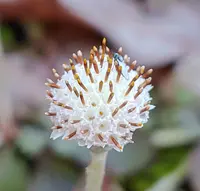
Singlehead pussytoes, Antennaria solitaria, is a small, mat-forming perennial wildflower in the aster family. It is native to the southeastern United States, often found in open woodlands and rocky slopes. This plant forms low, gray-green rosettes of leaves with short, upright stems bearing a single fuzzy flower head, giving it a distinctive, compact look. It stays quite low to the ground and slowly spreads, making a subtle groundcover. Singlehead pussytoes prefers sun to light shade, with well-drained, rather lean soils and modest moisture. These traits make care for singlehead pussytoes relatively straightforward for gardeners who avoid overwatering and heavy, rich soil.

Care Difficulty
Easy Care

Light Preference
Partial Shade

Water Requirements
Low Water

Temperature Preference
Cold Hardy

Hardiness Zone
5–8

Soil Texture
Sandy, Loamy, Rocky

Soil pH
Acidic (5.5–6.5), Slightly acidic (6.5–7.0)

Soil Drainage
Well-drained

Fertilization
Minimal (feed rarely)
Scan your plant to receive care tips personalized for your specific plant
Available on iOS and Android
This species prefers open, bright conditions that mimic dry meadows and glades.
This plant is adapted to dry, well-drained sites and is sensitive to excess moisture.
This species is a cold-hardy perennial suited to temperate climates with distinct seasons.
This drought-tolerant species handles a wide humidity range and rarely needs special humidity management.
This species prefers lean, sharply drained soil that mimics dry, rocky habitats.
This species can grow in containers if they are shallow, very free-draining, and kept on the dry side.
This species is adapted to low-nutrient soils, so singlehead pussytoes needs only minimal fertilization in cultivation.
Antennaria solitaria needs only light pruning to keep the mat dense and tidy.
This plant is usually grown in the ground, so transplanting is more common than container repotting.
Antennaria solitaria plant care often includes simple propagation to expand groundcover patches.
This species is generally cold hardy and needs little special winter care in most temperate climates.

Plant Health Check
Not sure what's wrong with your plant? Check your plant's health inside the app.
This species often flowers from late winter into early spring in the southeastern US, producing small white flower heads before many neighboring forest plants have fully leafed out.
It naturally occurs in dry to mesic deciduous woodlands and on shaded slopes, tolerating low light levels that would be unsuitable for many other pussytoes species adapted to open, sunny habitats.
Unlike several related Antennaria species that form clusters of flower heads, this plant typically bears solitary or very few flower heads on each stem, which is the main trait reflected in the name solitaria.
This species spreads slowly by short stolons, forming small, tidy patches rather than large colonies. It is not considered aggressive and is usually easy to keep within its allotted garden space.
Keep your plants happy and healthy with plant identification, disease detection, and easy care guidance.

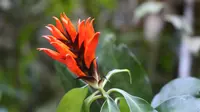
Aphelandra chamissoniana
Aphelandra chamissoniana
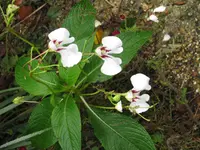
dyers busy lizzie
Impatiens tinctoria
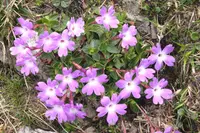
Wulfen's Primrose
Primula wulfeniana
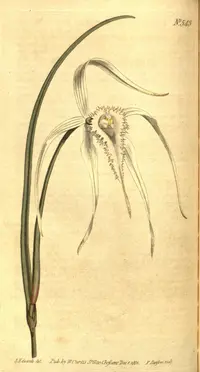
Daddy longlegs orchid
Brassavola cucullata
Blue Aphyllanthes
Aphyllanthes monspeliensis
Pedicularis megalantha
Pedicularis megalantha
Yellow Chincherinchee
Ornithogalum dubium
Sierra primrose
Primula suffrutescens