Daddy longlegs orchid Care (Brassavola cucullata)

Daddy longlegs orchid

About Daddy longlegs orchid

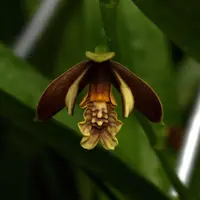
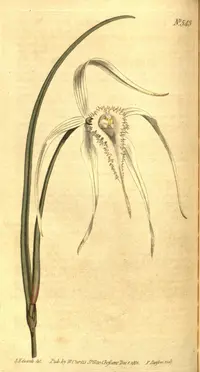
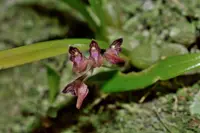
Daddy longlegs orchid, Brassavola cucullata, is a small epiphytic orchid that naturally grows on trees in warm forests of Mexico, Central America, and northern South America. It forms slender, upright leaves from narrow pseudobulbs and produces long, thin, spider-like flowers with a broad, flared lip.

The blooms are usually white to cream and often fragrant at night, which attracts moth pollinators. The plant tends to grow relatively compactly, which makes it suitable for mounts, baskets, or small pots.

It is considered moderately easy if given bright light, good air movement, and quick-draining orchid media. Understanding these basic needs is key to how to care for Daddy longlegs orchid at home.

Main Plant Requirements

Care Difficulty

Moderate Care

Light Preference

Partial Sun

Water Requirements

Moderate Water

Temperature Preference

Tropical / Frost Sensitive

Hardiness Zone

11–12

Soil Texture

Sandy, Organic-rich

Soil pH

Acidic (5.5–6.5)

Soil Drainage

Well-drained

Fertilization

Moderate (every 2–4 weeks)

Get Personalized Care Plan

Scan your plant to receive care tips personalized for your specific plant

Available on iOS and Android

How to Care for the Daddy longlegs orchid

Brassavola cucullata thrives in bright conditions that mimic exposed tree canopies in its native habitat.

  • Provide 6–8 hours of bright light daily, with gentle morning sun and high, filtered light for the rest of the day to support flowering in this Daddy longlegs orchid.
  • Outdoors, give bright shade or dappled sun; indoors, place near an east or lightly shaded south window, avoiding harsh midday rays that scorch leaves.
  • Watch leaf color: medium green indicates good light, very dark green suggests too little light, while yellowing or bleached patches point to excess sun exposure.

Watering for Brassavola cucullata should balance frequent moisture pulses with fast drying around the roots.

  • Allow the medium or mount to dry almost completely between waterings; roots should look silvery to whitish before you water again.
  • In warm active growth, water more often so the roots do not stay dry for more than 1–2 days; in cooler months, reduce frequency while still avoiding shriveled pseudobulbs.
  • Use a very free-draining orchid mix or mount; signs of overwatering include black, mushy roots, while deep leaf wrinkling and shriveled pseudobulbs indicate underwatering.

Temperature management should reflect a warm, frost-free climate with a gentle day–night drop.

  • Aim for daytime temperatures of 70–85°F (21–29°C) and night temperatures of 60–68°F (16–20°C) to support steady growth and flowering.
  • Protect the plant from cold; growth slows below about 55°F (13°C) and tissue damage can occur if exposed to near-freezing or frost conditions.
  • In hot spells above 90°F (32°C), increase air movement and humidity and avoid enclosed, stagnant locations to reduce heat stress and leaf scorch risk.

This orchid prefers moderately humid air and tolerates short dry spells if watered well.

  • Aim for 50–70% humidity, especially during active growth and flowering.
  • In very dry air, Brassavola cucullata (Daddy longlegs orchid) may show wrinkled pseudobulbs and limp, folding leaves.
  • Increase humidity with a pebble tray under the pot, grouped plants, or a room humidifier while keeping air movement gentle.

This epiphytic orchid grows best in a very open, airy medium rather than traditional soil.

  • Use a coarse mix such as medium bark with chunky perlite and a little sphagnum moss for moisture retention without compaction.
  • Ensure extremely fast drainage so water runs through in seconds and roots are left surrounded by air pockets.
  • Keep pH slightly acidic to neutral, roughly 5.5–7.0, by avoiding heavy garden soil, manure, or lime-heavy additives.
  • Avoid dense, fine-textured mixes that stay wet, which promote root rot and reduce oxygen around the root system of Brassavola cucullata.

This species is very suitable for container growing, especially in baskets or slotted orchid pots.

  • Choose a shallow, wide orchid pot or basket that allows roots to spread and attach rather than a deep, narrow container.
  • Use rigid plastic or clay containers when plants become top-heavy so the pot does not tip when canes and leaves elongate.
  • Select containers with multiple side slits or mesh walls to increase air movement through the root zone while still holding the chunky medium.

This epiphytic orchid responds well to light, consistent feeding during its active growth period.

  • Use a balanced orchid fertilizer (around 20-20-20) diluted to 1/4–1/2 strength for caring for Daddy longlegs orchid.
  • Feed every 2 weeks in spring–summer when new roots and leaves are forming.
  • Reduce feeding to 1x/month or pause entirely in fall–winter, depending on light and growth.
  • Flush the pot or mount with plain water monthly to prevent fertilizer salt buildup.

Brassavola cucullata needs only light pruning to stay clean and healthy.

  • Best time to prune is after flowering, when new growths are visible.
  • Use sharp, disinfected scissors or pruning snips to remove dead, diseased, or shriveled pseudobulbs and leaves.
  • Cut spent flower spikes close to their base to direct energy to new growth and future blooms.
  • Avoid cutting firm, green roots; only trim dry, hollow, or blackened sections.

This orchid prefers tight conditions and infrequent repotting or remounting.

  • Repot or remount when roots circle densely, medium has broken down, or growth slows despite good care.
  • Aim for every 2–3 years in late winter to early spring, just before or as new roots start.
  • Use a small pot or mount with very coarse orchid bark or similar airy medium to keep roots well aerated.
  • Handle roots gently, keep them slightly moist after repotting, and provide shaded, stable conditions for 1–2 weeks to reduce stress.

Division is the standard method for multiplying Brassavola cucullata in cultivation.

  • Divide mature clumps in late winter or early spring as new roots emerge.
  • Use a sterile knife or shears to separate sections with at least 3–4 healthy pseudobulbs and active roots.
  • Plant divisions in fresh, coarse orchid mix or remount, keeping them firmly supported.
  • Maintain high humidity, bright indirect light, and gentle air movement to encourage rapid re-rooting.

This warmth-loving orchid requires protection from cool conditions in most climates.

  • Not frost tolerant; keep night temperatures above 55–60°F in winter.
  • Move container plants indoors or into a heated greenhouse before outdoor lows drop below 60°F.
  • Provide bright light, good air movement, and allow the medium to dry slightly more between waterings.
  • Avoid cold drafts and sudden temperature swings to prevent stress and bud drop.

Care Tips

Optimize air movement

Place a small oscillating fan several feet away on a low setting to keep air moving around the roots and leaves, which reduces fungal issues and helps thin roots dry predictably between waterings.

Use open mounts

Mount the plant on cork, hardwood, or tree fern with just a thin layer of sphagnum, then secure it tightly with fishing line or orchid clips so the fine roots make fast, firm contact and do not wobble as they grow.

Night fragrance check

Monitor the plant’s scent in the evening; strong night fragrance often indicates good light and overall vigor, while a weak or absent scent on a mature, flowering plant can hint at insufficient light or stress.

Seasonal watering shift

In late fall and winter, keep the plant slightly drier and rely more on frequent misting or short dunking instead of long soaks, especially in cool rooms, to prevent root rot while still avoiding complete desiccation.

Targeted pest scouting

Inspect the narrow leaves and root junctions under bright light every 1–2 weeks, and at the first sign of scale or spider mites isolate the plant and treat with an appropriate horticultural soap or oil before the infestation spreads to other orchids, which is a key aspect of caring for Daddy longlegs orchid in collections.

Common Pests and Diseases

Scale insects

This pest feeds on Brassavola pseudobulbs and leaves, often hiding in sheaths and crevices and causing yellowing, slowed growth, and sticky honeydew on nearby surfaces.

Solution

Remove visible insects manually with a cotton swab dipped in isopropyl alcohol, then rinse the plant with lukewarm water and increase air movement. For larger infestations, use a systemic insecticide labeled for orchids and repeat treatments according to label directions while isolating the plant from others.

Spider mites

These insects favor the narrow, tough leaves of Brassavola grown in warm, dry conditions, causing fine stippling, dull patches, and fine webbing, especially on leaf undersides and at tips.

Solution

Shower the plant thoroughly, focusing on leaf undersides, and raise humidity to 50–70% while maintaining strong airflow. If mites persist, apply a miticide or horticultural oil labeled for orchids, repeating at intervals to break the life cycle and avoiding use in strong direct sun.

Mealybugs

This pest often hides at the base of leaves, in the pseudobulb sheaths, and around roots, causing distortion, yellowing, and sticky secretions that can lead to sooty mold on the plant and mounts.

Solution

Inspect the plant carefully, remove loose sheaths, and dab visible mealybugs with isopropyl alcohol on a cotton swab, then rinse the plant and mounting material. For persistent problems, treat with a systemic insecticide or insecticidal soap approved for orchids and repeat applications, keeping the plant isolated until no new insects appear.

Bacterial soft rot

This disease causes rapidly spreading, water-soaked, foul-smelling lesions on pseudobulbs and leaf bases, which can collapse into mushy tissue in warm, wet conditions.

Solution

Immediately cut away all affected tissue with a sterile blade, dust cuts with ground cinnamon or a bactericide, and keep the plant dry at the base with excellent air movement. Avoid water sitting in the leaf axils, reduce overhead watering, and discard severely affected plants to prevent spread to nearby orchids.

Leaf spot fungus

This disease produces small, dark, sunken spots on leaves that can merge into larger lesions, especially when Brassavola is kept too wet with poor air circulation.

Solution

Remove affected leaves or leaf sections with sterile tools and dispose of them, then improve spacing and airflow around the plant and allow the foliage to dry quickly after watering. Apply a broad-spectrum fungicide labeled for orchids if new spots continue to appear, and avoid misting the foliage in cool or low-light conditions to support Brassavola cucullata plant care.

Interesting Facts

Night-fragrant pollination

This species opens its narrow, tubular flowers fully at night and releases a strong, sweet scent after dark, an adaptation that targets nocturnal moth pollinators such as sphinx moths.

Long-spurred flowers

Its flowers have an exceptionally long nectary spur that guides moth proboscises deep into the flower, helping ensure precise pollen transfer and reducing wasted nectar.

Epiphyte of seasonally dry forests

In the wild, this orchid grows as an epiphyte on trees in lowland to mid-elevation tropical forests that experience a marked dry season, so its roots are adapted to rapid wet-dry cycles rather than constant moisture.

Botan icon

Did you know?

Historical herbarium and illustration records show that this species has been cultivated and described in horticulture since at least the early 19th century, making it one of the earlier Neotropical Brassavola orchids to become established in European orchid collections.

FAQs about Daddy longlegs orchid

Lack of blooms usually comes from insufficient light, too-warm nights, or no slight dry rest between growth and flowering. Provide bright conditions, moderate night drop, and avoid heavy feeding late in the season to encourage spikes.

Grow Healthy Plants with Botan Care

Keep your plants happy and healthy with plant identification, disease detection, and easy care guidance.

Botan plant care app — identify plants on mobile

Explore More Plants