Old man cactus Care (Cephalocereus senilis)

Old man cactus

About Old man cactus

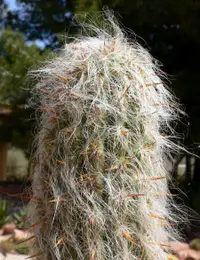
Old man cactus, Cephalocereus senilis, is a columnar desert cactus known for its long, white, hair-like fibers that cover the stem. This shaggy coating helps protect the plant from intense sun and temperature swings in its native habitat.

It naturally occurs in arid regions of central Mexico, where it grows slowly into tall, upright columns, often forming groups over many years. The thick hairs can hide sharp spines underneath, so handling needs care.

For home growers, it is generally considered an easy cactus if given strong light, very well-draining soil, and sparse watering. Understanding how to care for Old man cactus mostly involves avoiding excess moisture and providing enough sun.

Main Plant Requirements

Care Difficulty

Moderate Care

Light Preference

Full Sun

Water Requirements

Low Water

Temperature Preference

Tropical / Frost Sensitive

Hardiness Zone

10–11

Soil Texture

Sandy, Loamy, Rocky

Soil pH

Slightly acidic (6.5–7.0), Neutral (7.0)

Soil Drainage

Well-drained

Fertilization

Minimal (feed rarely)

Get Personalized Care Plan

Scan your plant to receive care tips personalized for your specific plant

Available on iOS and Android

How to Care for the Old man cactus

This cactus needs strong light and benefits from as much sun as it can safely tolerate.

  • Provide 6–8 hours of direct sun daily; full sun is ideal in mild climates, with some light afternoon shade in very hot regions.
  • Young plants and Old man cactus grown in pots adapt best to bright morning sun plus filtered light after midday to prevent burn.
  • In winter, maximize exposure by using south- or west-facing positions; if stems stretch or lean, light is too low and needs to be increased.

Watering should mimic an arid climate with brief soakings and long dry periods.

  • Allow the top 5–8 cm of soil to dry fully before watering; in hot growing seasons this may mean deep watering every 2–4 weeks in very fast-draining soil.
  • In winter or cool conditions, reduce watering sharply, sometimes to once every 4–6 weeks, and skip any watering if the soil still feels cool and dry below the surface.
  • Watch for shriveling ribs as a sign Cephalocereus senilis needs water, and for yellowing, mushy tissue or a sour smell as signs of overwatering and root rot risk.

This species prefers warm, dry air and does not tolerate hard frost.

  • Aim for 70–90°F (21–32°C) during active growth; brief heat up to 100°F (38°C) is tolerated if soil is dry and airflow is good.
  • Protect from cold below 50°F (10°C), and avoid exposure below 40°F (4°C); frost can scar or kill young tissues and roots.
  • In cooler seasons, keep it on the dry side at 50–60°F (10–16°C) to encourage rest, and avoid sudden temperature swings near drafty doors or windows.

This cactus prefers dry air and rarely needs extra humidity.

  • Aim for 20–40% humidity, similar to a dry, heated indoor room.
  • Old man cactus tolerates very dry air but suffers if humidity stays above 60%.
  • Watch for yellowing, mushy stems, or persistent fuzz dampness as signs of excess humidity stress.
  • Increase airflow rather than humidity, using a fan or open window to keep the hairy surface dry.

Cephalocereus senilis needs a very fast-draining, mineral-rich substrate to prevent root rot.

  • Use a gritty mix such as 50–70% inorganic materials (pumice, coarse sand, fine gravel) with 30–50% cactus potting mix.
  • Ensure a loose, open structure so water runs through in seconds and roots receive plenty of air.
  • Keep pH slightly acidic to neutral, around 6.0–7.0, avoiding mixes loaded with peat that stay wet for long periods.
  • Improve drainage by adding extra pumice or perlite and avoid dense garden soil, fine sand alone, or any compacted substrate.

This species is well suited to container growing due to its slow, upright habit.

  • Select a heavy, wide-based pot to counterbalance the tall, top-heavy column and reduce tipping risk.
  • Choose unglazed terracotta if extra evaporation is needed, as it helps the mix dry faster between sparse waterings.
  • Use a container just 2–5 cm wider than the rootball to limit excess wet substrate and keep the root zone evenly aerated.

Cephalocereus senilis benefits from light feeding but is sensitive to excess nutrients.

  • Use a balanced cactus fertilizer (low to moderate NPK) diluted to 25–50% strength.
  • Feed once every 4–6 weeks during the warm growing season when active growth is visible.
  • Avoid organic compost in pots, as it can hold too much moisture and cause root issues.
  • Stop feeding in late fall and winter to respect the plant’s natural dormancy.

Cephalocereus senilis needs almost no structural pruning and is usually left to develop its natural columnar form.

  • Limit work to removing clearly dead, diseased, or badly damaged stem sections.
  • Carry out any pruning in late spring or early summer, when healing is faster.
  • Use clean, sharp knives or pruning saws and thick gloves to handle spines safely.
  • Avoid shaping cuts, since removing healthy tissue can disfigure the column and slow growth.

This cactus prefers infrequent repotting, with minimal disturbance to its roots.

  • Plan to repot every 3–4 years, or when roots circle the pot base or emerge from drainage holes.
  • Schedule repotting for late spring, using a dry, gritty cactus mix and a slightly larger pot.
  • Handle the root ball gently, keeping as much soil intact as possible to reduce stress.
  • After repotting Cephalocereus senilis, keep the mix dry for 7–10 days before lightly watering.

Cephalocereus senilis is usually propagated from seed and requires patience and stable conditions.

  • Sow fresh seeds in late spring on a sterile, fine cactus mix, barely covering them.
  • Maintain 70–80°F, bright but indirect light, and consistently slight moisture for germination.
  • Cover with a clear lid or plastic dome to keep humidity high, venting daily to prevent mold.
  • Once seedlings develop several spines, gradually increase light and reduce watering frequency.

Cold-sensitive Cephalocereus senilis needs a cool, dry rest and must stay above freezing in winter.

  • Maintain temperatures around 45–55°F for indoor plants, with bright light and very sparse watering.
  • Move containers indoors before temperatures drop below 40°F, ensuring a dry, airy spot.
  • Keep soil almost completely dry to prevent root rot in low light and cool conditions.
  • Avoid overhead watering or misting, since cold, wet stems are prone to fungal problems.

Care Tips

Stabilize Tall Stems

Once the plant exceeds about 30–40 cm, anchor the pot in a heavier cachepot or add discreet gravel weight at the bottom to prevent tipping, especially in bright windows or outdoor summer sites.

Protect Hair From Wet

When overhead watering is unavoidable, gently shield the hairy stem with your hand or a plastic sheet so the wool dries quickly, reducing the risk of fungus developing inside the dense hairs.

Rotate For Even Column

Turn the pot 90° every 2–3 weeks during the active season so the column stays straight and evenly lit, rather than leaning permanently toward the light source.

Cool Bright Wintering

In winter, keep the plant in the brightest possible spot at 45–55°F with completely dry soil, which mimics its natural rest period and supports healthier growth in the next warm season when growing Old man cactus.

Use Topdressing Grit

Apply a 0.5–1 cm layer of clean mineral grit (pumice, coarse sand, or fine gravel) on the soil surface to keep the base of the stem dry and discourage fungus gnats and rot around the neck of the plant.

Common Pests and Diseases

Mealybugs

This pest hides in the woolly hair and at the base of spines, where white cottony clusters gradually sap the plant and cause yellowing or stunted growth.

Solution

Isolate the plant, then use a cotton swab dipped in 70% isopropyl alcohol to dab visible insects, repeating weekly until no new clusters appear. For heavier infestations, wash the stem gently with a strong stream of lukewarm water and follow with a light application of an insecticidal soap or neem oil, taking care to keep the root zone dry.

Spider mites

These insects thrive on dry, hot indoor air and can form fine webbing between spines, leading to a dull, speckled surface and slowed growth.

Solution

Rinse the plant under a firm but controlled stream of lukewarm water to remove mites and webbing, allowing it to dry thoroughly in bright light afterward. Increase air movement, avoid extremely hot and stagnant locations, and if needed apply insecticidal soap or horticultural oil, making sure to reach into the hair without saturating the soil.

Scale insects

This pest appears as small, hard, brown or tan bumps on the green stem under or between the hairs, causing yellow spots and general decline over time.

Solution

Scrape or pry off individual scales gently with a wooden toothpick or soft brush, then dab remaining spots with 70% isopropyl alcohol. Monitor closely and repeat treatment as necessary, and in more severe cases use a systemic insecticide labeled for cacti to control hidden juveniles.

Fungal stem spots

This disease can occur when the hairy surface stays damp for long periods, leading to small brown or black spots on the underlying stem that may slowly enlarge.

Solution

Improve airflow, reduce overhead watering, and allow the plant to dry quickly after any wetting of the hairs. Remove severely affected tissue if it is soft or spreading, keep the plant in brighter, warmer conditions, and if new spots continue to appear apply a sulfur-based or copper-based fungicide suitable for cacti, following label directions carefully.

Interesting Facts

Evolved to capture fog

The long white hairs on this cactus act like a sponge, condensing fog and dew into tiny droplets that run down to the stem and roots, an adaptation to its dry, rocky habitats in central Mexico.

Hidden protective spines

Beneath the shaggy hair are much shorter but very sharp yellow spines that protect the plant from herbivores and also shade the green tissue from intense sun.

Slow but long‑lived

In habitat this species grows very slowly, forming tall columnar stems over many decades, and individual plants can persist for a century or more under stable conditions.

Botan icon

Did you know?

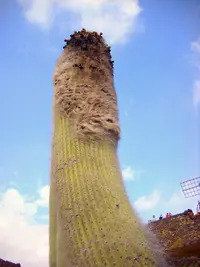
In the wild, mature plants can reach 6–12 m tall and form part of impressive cactus forests on limestone hillsides in Mexico, creating a distinctive vertical landscape that is visible from long distances.

FAQs about Old man cactus

Growth is slow. In home conditions it often adds only 2–5 cm per year, sometimes less. Seedlings are especially slow. Patience is essential when growing Old man cactus, as visible size changes can take several years.

Grow Healthy Plants with Botan Care

Keep your plants happy and healthy with plant identification, disease detection, and easy care guidance.

Botan plant care app — identify plants on mobile

Explore More Plants