South American jelly palm Care (Butia capitata)

Also known as: Jelly palm, pindo palm, Brazilian butia, beccari
South American jelly palm

About South American jelly palm

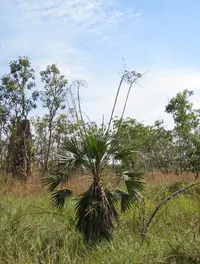
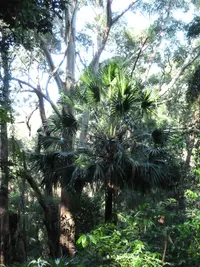
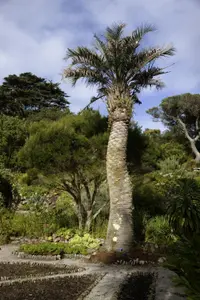
The South American jelly palm, Butia capitata, is a slow-growing feather palm valued for its arching blue-green fronds and edible, jelly-like fruit. It forms a stout, solitary trunk and develops a rounded, graceful canopy that suits both landscapes and large containers.

This species is native to South America, especially Brazil, Uruguay, and nearby regions, where it grows in open, sunny, and often dry habitats. Its tolerance of heat, wind, and short dry periods makes it relatively forgiving, though young plants appreciate steady moisture and well-drained soil.

It is considered a hardy ornamental palm for warm and mild climates, and with thoughtful placement and watering it is not difficult to care for South American jelly palm.

Main Plant Requirements

Care Difficulty

Moderate Care

Light Preference

Full Sun

Water Requirements

Low Water

Temperature Preference

Cold Hardy

Hardiness Zone

8–11

Soil Texture

Sandy, Loamy, Rocky

Soil pH

Slightly acidic (6.5–7.0), Neutral (7.0)

Soil Drainage

Well-drained

Fertilization

Minimal (feed rarely)

Get Personalized Care Plan

Scan your plant to receive care tips personalized for your specific plant

Available on iOS and Android

How to Care for the South American jelly palm

This palm thrives in bright, open sites with plenty of sun and some tolerance to light shade.

  • Provide 6–8 hours of direct sun daily; morning sun with light afternoon shade reduces leaf scorch in hot, inland climates.
  • South American jelly palm tolerates partial shade, but growth becomes slower and fronds more lax if it receives under 4–5 hours of direct light.
  • In summer, young plants may need temporary shade cloth in extreme sun; in winter, avoid dense shade from buildings that blocks low-angle light.

This palm prefers deep, infrequent watering once established, with soil allowed to partially dry between soakings.

  • In the ground, water when the top 5–8 cm of soil feels dry; during hot, dry weather this may mean a thorough soak every 7–14 days for young plants.
  • Ensure sharply draining soil or a raised planting area; prolonged puddling or sour smell in the root zone indicates poor drainage and risk of root rot in Butia capitata.
  • Signs of underwatering include folded, browning leaf tips and very dry, pulling soil; overwatering shows as yellowing lower fronds, soft crown tissue, or fungal smell near the base.

This palm is notably cold tolerant for a feather palm but still benefits from warm growing seasons.

  • Optimal growth occurs around 70–90°F (21–32°C); growth slows noticeably below 60°F (16°C) but resumes when temperatures warm.
  • Mature plants often survive brief drops to about 15–20°F (-9 to -6°C) with some leaf damage; young palms are less hardy and should be protected from hard frost.
  • In hot regions, it tolerates 100–105°F (38–41°C) if soil moisture is adequate; dry, reflective sites can cause leaf burn, so mulch the root zone and avoid heat from nearby walls.

This palm tolerates a wide humidity range and usually does not need special humidity control indoors or outdoors.

  • Aim for 30–60% humidity, which suits most homes and outdoor conditions in suitable climates.
  • South American jelly palm handles dry air but may show browning leaflet tips if air is extremely dry or hot.
  • If tips brown in heated indoor spaces, group plants together or place a pebble tray with water nearby to slightly raise humidity.

Butia capitata prefers fast-draining, slightly sandy soil that does not stay wet around the roots.

  • Use a mix of roughly 50–70% coarse sand or grit with the rest split between loam and a small amount of compost for nutrients.
  • Ensure strong drainage by avoiding dense clay; if existing soil is heavy, amend deeply with sand and fine gravel to improve percolation.
  • Target a pH around 6.0–7.5; overly acidic or strongly alkaline conditions can reduce nutrient availability and slow growth.
  • Avoid compacted or waterlogged sites; check that water drains within 10–15 minutes after thorough soaking before long-term planting.

This species can be grown in large containers for many years, especially in its juvenile stage.

  • Choose a deep, heavy pot to counter the top-heavy crown and reduce the risk of tipping in strong winds.
  • Use a very gritty, palm-style mix and raise the container on pot feet so excess water clears quickly from the drainage holes.
  • Select thick-walled terracotta or concrete-like materials to slightly reduce moisture retention and provide stable anchoring for the root mass.

This palm grows slowly and needs modest feeding to support steady growth in containers or poor soil.

  • Use a slow-release palm fertilizer or balanced NPK (such as 10-10-10) with added micronutrients in spring.
  • Apply 1–2 times during the warm growing season, following label rates and adjusting for plant size.
  • For potted South American jelly palm, use liquid fertilizer at 1/2 strength every 4–6 weeks in active growth.
  • Stop feeding in late fall and winter to avoid soft, frost-sensitive tissue and nutrient buildup.

Pruning Butia capitata is mainly cosmetic and for safety, not to control size.

  • Best time is late winter to early spring, before active growth starts.
  • Remove only dead, brown, broken, or dangerously hanging fronds; leave firm green leaves.
  • Use clean, sharp loppers or a pruning saw, cutting close to the trunk without gouging it.
  • Avoid over-thinning, which weakens the crown and can reduce the plant’s ability to photosynthesize efficiently.

This palm is usually grown in the ground, so focus on thoughtful transplanting rather than frequent repotting.

  • Transplant young specimens in late spring when soil is warm and frost risk has passed.
  • Look for signs such as roots circling the pot, water running off quickly, or very slow growth in containers.
  • Choose a sunny site with well-drained soil; handle the root ball gently and keep it as intact as possible.
  • Water deeply after planting, then keep soil evenly moist for several weeks to limit transplant shock.

Butia capitata is almost always propagated from seed, which germinates slowly but reliably under the right conditions.

  • Sow fresh, cleaned seeds in late spring to early summer for best warmth and light.
  • Use a coarse, free-draining mix and bury seeds about 2–3 cm deep, just covered.
  • Maintain 75–85°F with consistent, barely moist substrate; germination may take several months.
  • Provide bright, indirect light and avoid disturbing seedlings until roots and the first true leaves are well developed.

This palm is relatively cold hardy but benefits from some winter protection in colder regions.

  • Mature plants often tolerate short drops to about 15–20°F, but young palms are more sensitive.
  • Apply a 5–10 cm mulch layer around the root zone, keeping it slightly away from the trunk.
  • In severe cold, loosely wrap the growing point and inner fronds with breathable frost cloth or burlap.
  • Move container plants into a bright, cool, frost-free spot and water sparingly during winter.

Care Tips

Frond stabilization

Stake or loosely tie long, wind-exposed fronds for the first 1–2 years after planting to reduce wind rock, which helps the root system establish more securely.

Root zone mulching

Apply a 5–8 cm layer of coarse, woody mulch in a broad ring well away from the trunk to keep roots cooler, reduce evaporation, and minimize mower or string trimmer damage near the base.

Salt and wind buffering

In coastal or windy sites, use a temporary windbreak fence or plant tough shrubs on the windward side to reduce salt-laden wind burn on young palms during their establishment phase.

Winter crown protection

In marginal climates, loosely bundle the fronds and fill the crown with dry straw or leaves under a breathable cover before hard freezes to protect the growth point from cold damage.

Trunk and base hygiene

Remove old fruit stalks and loose, dead fiber at the trunk base with clean tools and keep debris off the crown area to improve airflow and reduce hiding places for pests, which supports healthier long-term growing South American jelly palm.

Common Pests and Diseases

Palm aphids

These insects feed on the sap of young fronds and inflorescences, causing curling, sticky honeydew, and sooty mold growth. Symptoms include slowed growth and distorted new foliage on the jelly palm.

Solution

Prune and destroy heavily infested flower stalks or fronds, then hose down remaining foliage to remove aphids and honeydew. For persistent infestations, apply an insecticidal soap or horticultural oil labeled for palms, targeting the undersides of fronds and repeating every 7–10 days as needed.

Giant palm borer

This pest is a large beetle whose larvae bore into the trunk, weakening the structural integrity of the palm over time. Symptoms include small emergence holes, frass (wood dust), and general decline in vigor.

Solution

Remove and destroy severely infested or structurally unsafe palms, as internal damage cannot be reversed. In early or localized cases, improve overall Butia capitata care by avoiding trunk wounds, reducing stress from drought, and consulting a local arborist or extension service about regionally approved trunk or soil treatments if the pest is established in the area.

Palm leaf skeletonizer

These insects are caterpillars that feed between leaf surfaces, leaving transparent patches and a lace-like or skeletonized appearance on fronds. Symptoms include brown, papery areas on leaflets and reduced photosynthesis in affected leaves.

Solution

Cut off and dispose of heavily damaged fronds to remove larvae and pupae, then monitor new growth closely. For active infestations, use Bacillus thuringiensis (Bt) or a selective caterpillar product labeled for palms, applying in the evening when larvae are feeding and repeating according to label directions.

Ganoderma butt rot

This disease is caused by the fungus Ganoderma zonatum, which attacks the lower trunk and root flare, leading to gradual decline and eventual death. Symptoms include general yellowing, reduced canopy, and hard, shelf-like conks (fruiting bodies) at the base of the trunk.

Solution

Remove and destroy infected palms, including as much of the stump and major roots as possible, since there is no effective chemical cure. Avoid wounding the trunk, do not replant another palm in the same exact spot, and improve site conditions with good drainage and minimal soil compaction to reduce future infections.

Fusarium wilt

This disease is caused by Fusarium oxysporum f. sp. palmarum and produces one-sided frond yellowing and browning that progresses up the canopy. Symptoms include premature frond death and a distinct line between healthy and dead tissue on leaflets.

Solution

Prune and dispose of affected fronds using clean, disinfected tools, and avoid cross-contaminating healthy palms with contaminated pruning equipment. There is no reliable fungicidal cure, so management focuses on sanitation, avoiding overhead irrigation that wets the crown, and maintaining optimal water and nutrient levels to reduce stress and slow disease progression.

Interesting Facts

Sweet edible pulp

The fruit of this palm produces a fragrant yellow-orange pulp used locally for jellies, juices, and liqueurs, which is why the plant is widely known as the jelly palm.

Frost-tolerant palm

Unlike many tropical palms, this species tolerates brief frosts and subfreezing temperatures, which has allowed it to be cultivated in warm-temperate regions outside its native range.

Natural range in Brazil

In the wild, this palm is native mainly to southern and southeastern Brazil, where it grows in open grasslands and savanna-like habitats on well-drained, often sandy soils.

Botan icon

Did you know?

Mature individuals of this species can live for many decades and develop a massive, stout trunk crowned with dense, arching, blue-green fronds, making them highly valued as long-term focal points in public landscapes and historic gardens.

FAQs about South American jelly palm

Yellowing fronds often indicate natural aging, nutrient deficiency (especially magnesium or potassium), or water stress. Check fertilization schedule, drainage, and root health, and remove only completely brown, dead fronds to avoid weakening the plant.

Grow Healthy Plants with Botan Care

Keep your plants happy and healthy with plant identification, disease detection, and easy care guidance.

Botan plant care app — identify plants on mobile

Explore More Plants