Summer heat protection
In very hot inland climates, move containers to a spot with bright morning sun and light afternoon shade in summer to prevent leaf shriveling and sun scorch on this coastal species.

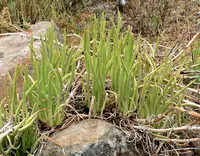
Fingertips (Dudleya edulis) is a compact, stemless succulent native to rocky slopes and coastal bluffs of southern California and northern Baja California. It forms tight clusters of upright, pencil-like leaves that resemble green fingers. In spring to early summer, it sends up slender flower stalks with small, pale yellow to white blooms that attract pollinators. This species grows slowly and remains relatively small, which suits containers and rock gardens. It prefers bright light, excellent drainage, and dry conditions between waterings. Understanding how to care for fingertips is important, as it can be sensitive to excess moisture and prolonged humidity.

Care Difficulty
Hard Care

Light Preference
Full Sun

Water Requirements
Low Water

Temperature Preference
Warm Climate

Hardiness Zone
9–11

Soil Texture
Sandy, Rocky, Loamy

Soil pH
Slightly acidic (6.5–7.0), Neutral (7.0)

Soil Drainage
Well-drained

Fertilization
Minimal (feed rarely)
Scan your plant to receive care tips personalized for your specific plant
Available on iOS and Android
This coastal succulent prefers bright, direct light that mimics its native rocky slopes.
Watering should mimic a dry, coastal habitat with infrequent but thorough soakings.
This species prefers mild, dry conditions and does best without temperature extremes.
Humidity is usually not critical for Dudleya edulis, which prefers dry air similar to its native coastal bluffs.
This species requires a very fast-draining, mineral-based soil that mimics rocky coastal slopes.
This species is suitable for container growing when drainage and airflow are prioritized.
This drought-adapted succulent needs minimal feeding, especially when grown in lean, fast-draining soil.
Pruning needs for this species are light and mainly cosmetic, focused on tidying the rosette and preventing rot.
Container-grown plants prefer infrequent disturbance, as their roots resent heavy handling and overly rich media.
New plants are usually raised by seed or occasional offsets, and success depends on strict drainage and controlled moisture.
This coastal succulent prefers mild, dry winters and can be damaged by sustained hard frost, especially in wet soil.

Plant Health Check
Not sure what's wrong with your plant? Check your plant's health inside the app.
The slender terminal portions of the leaves are edible and were traditionally eaten raw or roasted by Indigenous peoples in southern California, which led to the common name fingertips.
In its native coastal bluffs and rocky outcrops, this species often slows growth and can shed older roots during hot, dry summers, then resumes active growth with cooler, wetter conditions.
Wild populations typically occur on coastal sandstone, granite, or limestone outcrops from southern California into Baja California, often in very shallow, mineral-rich soils exposed to salt-laden winds.

Genetic and field studies show that many natural populations are highly localized and fragmented, and collecting plants from the wild has been restricted or regulated in parts of California due to conservation concerns for native Dudleya species, including this one.
This species usually flowers in late spring to summer once established. Lack of blooms often comes from too little light, excessive summer watering, or recent disturbance. Avoid heavy feeding and allow a cool, bright winter rest for reliable flowering.
Keep your plants happy and healthy with plant identification, disease detection, and easy care guidance.