Old Man of the Andes Care (Oreocereus celsianus)

Old Man of the Andes

About Old Man of the Andes

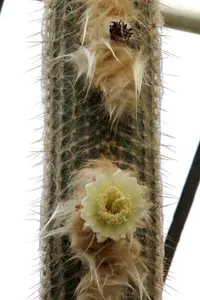
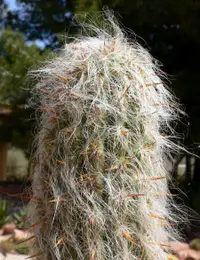
Old man of the Andes (Oreocereus celsianus) is a slow-growing columnar cactus known for its dense white hair that covers the stems like an aged beard. This coating helps protect the plant from intense sun and cold in its native high Andes habitats of Peru, Bolivia, and Argentina.

Plants usually grow upright with ribbed, blue‑green stems and sharp spines hidden beneath the woolly covering. They suit patient growers who appreciate gradual, long-term development rather than fast growth.

This species is considered relatively easy to maintain if its basic needs are respected, so learning how to care for Old Man of the Andes focuses mainly on bright light, fast-draining soil, and avoiding excess moisture.

Main Plant Requirements

Care Difficulty

Easy Care

Light Preference

Full Sun

Water Requirements

Low Water

Temperature Preference

Warm Climate

Hardiness Zone

8–10

Soil Texture

Sandy, Loamy, Rocky

Soil pH

Slightly acidic (6.5–7.0), Neutral (7.0)

Soil Drainage

Well-drained

Fertilization

Minimal (feed rarely)

Get Personalized Care Plan

Scan your plant to receive care tips personalized for your specific plant

Available on iOS and Android

How to Care for the Old Man of the Andes

This high-altitude cactus needs very bright light to full sun to stay compact and healthy.

  • Provide 6–10 hours of direct sun daily, ideally with strong morning sun and lighter afternoon exposure, especially in hot summer climates.
  • Allow light, shifting partial shade in the harshest afternoon sun to prevent scorch of the older white hairs and reddening of new growth on Old Man of the Andes.
  • Outdoors, choose an open south- or west-facing site; in low-light seasons, avoid shading from buildings or trees that cuts sun below about 5 hours.

This drought-adapted cactus needs infrequent, deep watering with thorough drying in between.

  • Water only when the top 3–5 cm of soil are completely dry; in hot active growth this may mean every 2–4 weeks, much less often in cooler weather.
  • Use fast-draining, gritty soil and elevated planting or mounds so water runs off quickly and does not pool around Oreocereus celsianus roots.
  • Reduce or stop watering in cool winter periods; soft, yellowing, or translucent stems suggest overwatering, while severe wrinkling indicates prolonged dryness.

This mountain cactus prefers warm days, cool nights, and very dry cold conditions in winter.

  • Aim for 65–80°F (18–27°C) during active growth, with slightly cooler nights to mimic its native Andean climate.
  • Protect from hard frost; short dips to about 20–25°F (-7 to -4°C) may be tolerated only if the soil is completely dry and exposure is brief.
  • In hot regions, Oreocereus celsianus handles 90–95°F (32–35°C) if humidity is low and there is airflow; provide light afternoon shade during extreme heat waves.

This cactus prefers dry air and generally does best in low indoor humidity.

  • Aim for 20–40% humidity, similar to a typical heated home in winter.
  • It tolerates very dry air, but sustained humidity above 60% increases rot risk at the stem base.
  • Humidity stress appears as soft, dark, or moldy patches under the hair; increase air movement and keep the plant away from humidifiers.

Use a very fast-draining, mineral-rich cactus mix that prevents water from lingering around the roots.

  • Choose a sandy, gritty structure with at least 50–70% mineral content such as pumice, coarse perlite, and 2–4 mm gravel or coarse sand.
  • Blend about 1 part cactus potting mix with 2–3 parts mineral aggregate to improve drainage and root aeration for Oreocereus celsianus.
  • Keep pH slightly acidic to neutral, around 6.0–7.2, avoiding strongly acidic or alkaline materials like fresh peat or large amounts of limestone chips.
  • Avoid dense, water-retentive media such as straight compost, peat-heavy potting mix, or any soil that stays wet longer than 2–3 days.

This species is well suited to container growing when the pot supports its tall, columnar form.

  • Select a heavy clay or ceramic pot to counterbalance the tall, top-heavy stem and reduce tipping risk outdoors.
  • Use a container that is only 2–4 cm wider than the root ball so the mix dries evenly instead of staying wet in unused edges.
  • Raise the pot slightly on feet or pot risers so drainage holes stay clear and water cannot pool under the base.

This slow-growing cactus needs modest feeding to maintain steady growth in pots.

  • Use a diluted balanced cactus fertilizer (for example 10-10-10 or 5-10-5) at 1/4–1/2 strength in spring and summer.
  • Apply every 4–6 weeks during active growth, only on moist soil to avoid root burn.
  • Do not feed in fall and winter when Old Man of the Andes rests and growth slows.
  • Avoid rich compost or heavy organic feeds that hold excess moisture and may cause rot.

Pruning Oreocereus celsianus is minimal and mainly for health and safety, not shaping.

  • Best time is late spring to early summer, when conditions are warm and dry.
  • Remove only dead, diseased, or badly damaged stems using clean, sharp pruning shears.
  • Trim small, hazardous offsets at the base if they crowd walkways or other plants.
  • Avoid cutting healthy main stems, since this can disfigure the column and slow growth.

Repotting is infrequent but helpful to keep this cactus stable and prevent root binding.

  • Check for roots circling the pot, emerging from drainage holes, or very slow growth as signs it needs a larger container.
  • Plan to repot every 3–5 years in late spring, when active growth resumes and recovery is faster.
  • Choose a slightly wider, heavy pot with excellent drainage and a gritty cactus mix.
  • Handle the root ball gently, keep roots mostly intact, and avoid watering for 3–5 days after repotting to limit rot risk.

Oreocereus celsianus is most often propagated from seeds, which requires patience and stable conditions.

  • Sow fresh seeds in late spring in a sterile, very well-drained cactus mix.
  • Press seeds lightly onto the surface and barely cover, since they need light to germinate.
  • Maintain 70–80°F, bright indirect light, and slightly moist but never wet soil until germination.
  • Ventilate gradually as seedlings emerge, then reduce watering and increase light over several weeks.

Winter care focuses on keeping this cactus cold but dry to prevent rot while allowing natural dormancy.

  • Tolerates brief light frosts down to about 20–25°F if soil is completely dry and drainage is excellent.
  • In colder or wet winter climates, move containers indoors to a bright, cool room (40–55°F).
  • Cease watering through winter; only give a light drink if stems severely wrinkle.
  • Outdoors in the ground, ensure a sharply drained site and consider a rain cover to reduce winter moisture.

Care Tips

Rotate For Symmetry

Turn the pot 90° every 3–4 weeks so all sides receive similar light, which keeps the column straight and the woolly covering evenly developed when growing Old Man of the Andes.

Use Mineral Mulch

Apply a 1–2 cm top layer of coarse grit or small lava rock around the base to keep the stem dry at soil level, reduce algae and fungus gnats, and stabilize the plant in its pot.

Cold Rest Management

In winter, keep the plant cool and completely dry, then resume watering only after moving it back to warmth and light in spring to support strong flowering and prevent root rot.

Support Tall Columns

For older, taller plants, add a discreet stake and soft ties on the leeward side to prevent wind or accidental bumps from snapping the brittle column at the base.

Inspect Wool Carefully

Gently part the white hairs with a wooden skewer or soft brush every 1–2 months to check for hidden scale or mealybugs, treating early before pests spread through the dense wool.

Common Pests and Diseases

Mealybugs

This pest hides in woolly white clusters between ribs and at the cactus base, sucking sap and weakening the plant over time. Symptoms include sticky honeydew, distorted growth, and cotton-like patches caught in the hair cover.

Solution

Isolate the plant, then use a cotton swab dipped in 70% isopropyl alcohol to dab visible insects, taking care to part the hair and reach the stem. Repeat weekly until no new patches appear, and improve light and airflow; for larger infestations, apply a systemic insecticide labeled for cacti according to directions.

Red spider mites

These insects thrive in hot, very dry conditions and can colonize the hidden stem beneath the white hairs. Symptoms include dull, grayish patches, fine webbing close to the areoles, and gradual loss of the cactus’ natural color.

Solution

Rinse the plant under a strong but controlled stream of lukewarm water to dislodge mites, gently lifting the hair to expose the stem. Increase ambient humidity slightly around the plant without wetting the crown constantly, and use a targeted miticide or insecticidal soap labeled for mites in several applications, rotating products if needed to prevent resistance.

Scale insects

This pest appears as small, hard, brown or tan bumps along ribs and around areoles, often hidden by the wool. This pest feeds on sap, leading to yellowing, uneven growth, and sometimes sooty mold on honeydew deposits.

Solution

Manually remove individual scales by scraping gently with a wooden toothpick or soft brush after softening them with a dab of 70% isopropyl alcohol. For persistent cases, apply a systemic insecticide suitable for cacti and repeat at the interval on the label, monitoring ribs and areole clusters closely as part of regular Oreocereus celsianus care.

Fungal stem spots

This disease develops when the hairy covering stays damp for long periods, leading to small sunken spots or discolored patches on the stem beneath the wool. Symptoms include brown, black, or rust-colored lesions that may slowly expand and scar the tissue.

Solution

Improve airflow and reduce overhead watering so the hair dries quickly, then carefully trim away loose, clearly dead, or moldy hair with clean scissors to expose affected areas. Disinfect cutting tools between cuts and treat visible lesions with a sulfur-based or copper-based fungicide, keeping the plant in bright, dry conditions while it heals.

Soft bacterial rot

This disease starts at wounds or overly wet areas, causing localized soft, dark, and foul-smelling tissue that can spread quickly through the stem. Symptoms include collapse of ribs, oozing tissue, and a noticeable odor beneath the white hair cover.

Solution

Act immediately by cutting out all soft, discolored tissue with a sterile knife, removing some surrounding healthy tissue to ensure clean margins, and allowing the wound to dry and callus in a warm, airy spot. Discard severely affected plants; for salvageable ones, dust cut surfaces with sulfur powder and adjust watering to a sparse, deep schedule in a very gritty, fast-draining mix to prevent recurrence.

Interesting Facts

High Andean specialist

This cactus is native to the Andean slopes of Argentina, Bolivia, and Peru, where it grows at high elevations exposed to strong sun, wind, and large day–night temperature swings.

Protective white wool

The dense, shaggy white hairs are modified trichomes that shade the stem from intense ultraviolet radiation and help reduce water loss in its harsh mountain habitat.

Cold-tolerant cactus

Unlike many desert cacti, it can tolerate light frost and near-freezing night temperatures in its native range, an adaptation to the cool climate of high-altitude environments.

Botan icon

Did you know?

In the wild, older plants can produce striking tubular red to orange flowers that are pollinated mainly by hummingbirds, which are attracted to the bright color and the nectar deep within the floral tube.

FAQs about Old Man of the Andes

This species grows slowly, often adding only 2–5 cm per year in typical home conditions. Growth speeds up slightly with strong light, warm summers, and careful watering, but it remains a slow-growing cactus overall.

Grow Healthy Plants with Botan Care

Keep your plants happy and healthy with plant identification, disease detection, and easy care guidance.

Botan plant care app — identify plants on mobile

Explore More Plants