Cluster management
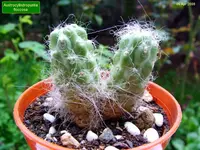
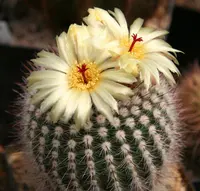
Allow offsets to form a tight cluster for a few years, then carefully remove and root the healthiest pups to refresh older, woody plants and maintain a compact, flowering group.

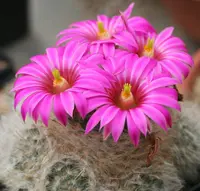
Cochemiea guelzowiana is a small, clustering cactus known for its dense white spines and large, bright magenta flowers that ring the top of each stem. It forms low mounds over time, making it attractive for containers and rock gardens.
This species is native to arid regions of northern Mexico, where it grows in rocky, well-drained soils under strong sun. Its drought tolerance and slow growth make it fairly easy to keep alive if watering is conservative and soil drains quickly.
Understanding how to care for Cochemiea guelzowiana mainly involves providing strong light, occasional deep watering, and a gritty mineral substrate that dries out between waterings.

Care Difficulty
Moderate Care

Light Preference
Full Sun

Water Requirements
Low Water

Temperature Preference
Tropical / Frost Sensitive

Hardiness Zone
10–11

Soil Texture
Sandy, Rocky, Loamy

Soil pH
Slightly acidic (6.5–7.0), Neutral (7.0)

Soil Drainage
Well-drained

Fertilization
Minimal (feed rarely)
Scan your plant to receive care tips personalized for your specific plant
Available on iOS and Android
This small cactus needs strong light but benefits from some protection during the hottest hours.
This species is drought-tolerant and requires careful, infrequent watering to avoid root rot.
This cactus prefers warm, dry conditions and is sensitive to sustained cold and frost.
This cactus prefers dry air and rarely suffers from low household humidity.
This species needs a very fast-draining, mineral-heavy substrate to prevent root rot.
This cactus is very suitable for container growing due to its compact, clumping habit.
This small cactus needs only light feeding to support healthy growth in containers.
Pruning needs are minimal and mainly hygienic for this compact cactus.
Container-grown plants appreciate occasional repotting to refresh the gritty substrate and prevent root congestion.
Home growers usually rely on offsets and seeds to increase plants.
Cool, dry winter conditions are important for this desert cactus and help set flowers.

Plant Health Check
Not sure what's wrong with your plant? Check your plant's health inside the app.
This cactus develops a thick coat of interlaced white radial spines that trap a layer of still air around the stem, reducing water loss and shielding the tissue from intense solar radiation in its native Mexican habitat.
It produces disproportionately large, bright magenta to purple, funnel-shaped flowers that can almost cover the small globe-shaped stem, an adaptation that strongly signals to pollinators such as bees in arid landscapes.
After flowering, it forms small, elongated, often reddish fruits containing many tiny seeds that are easily dispersed by gravity and small animals, helping the species colonize rocky crevices and shallow, fast-draining soils.

This species was long placed in the genus Mammillaria and is now treated as Cochemiea guelzowiana based on modern taxonomic studies that examined spine arrangement, flower structure, and other morphological traits to clarify its evolutionary relationships within the cactus family.
Flowering usually needs strong light, a cool and fairly dry winter rest, and a plant that is at least several years old. Overwatering, frequent repotting, or excess nitrogen fertilizer can all reduce or prevent bud formation.
Keep your plants happy and healthy with plant identification, disease detection, and easy care guidance.