senita cactus Care (Lophocereus schottii)

Also known as: Old Man Cactus
senita cactus

About senita cactus

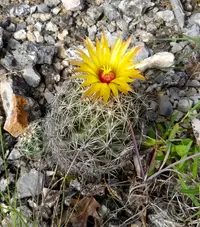
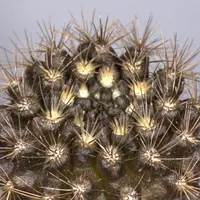
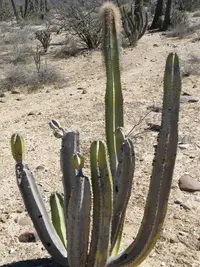
Senita cactus, Lophocereus schottii, is a slow-growing columnar cactus native to the Sonoran Desert of the US and northern Mexico. It forms tall, many-stemmed clumps with slender, ribbed stems and sparse bristly spines that give it a somewhat shaggy look.

In habitat it thrives in very hot, dry conditions and rocky, fast-draining soils. It is relatively forgiving if kept dry and bright, but cold and excess moisture quickly damage roots and stems.

For most home growers, success comes from strong light, very limited watering, and a gritty, well-draining cactus mix. Understanding these desert conditions is the basis of how to care for senita cactus.

Main Plant Requirements

Care Difficulty

Easy Care

Light Preference

Full Sun

Water Requirements

Low Water

Temperature Preference

Warm Climate

Hardiness Zone

9–11

Soil Texture

Sandy, Loamy, Rocky

Soil pH

Slightly acidic (6.5–7.0), Neutral (7.0)

Soil Drainage

Well-drained

Fertilization

Minimal (feed rarely)

Get Personalized Care Plan

Scan your plant to receive care tips personalized for your specific plant

Available on iOS and Android

How to Care for the senita cactus

This desert cactus prefers strong light but benefits from a gradual introduction to full sun.

  • Provide 6–10 hours of sun daily, with full morning sun and light afternoon shade in very hot regions to reduce scorch risk.
  • Young or newly planted senita cactus should start in bright, filtered light, then move into stronger direct sun over 2–3 weeks to prevent bleaching.
  • In winter, prioritize maximum sun exposure; in summer, pale, yellowed ribs indicate too much intense sun, while elongated, leaning growth signals insufficient light.

Watering should mimic infrequent desert rains with thorough soaking and complete drying between events.

  • Allow the top 5–8 cm of soil to dry completely before watering, then soak the root zone until water drains freely from the planting area.
  • During active growth in spring and summer, expect deeper watering roughly every 2–4 weeks, adjusting based on heat, wind, and soil type.
  • In fall and winter, water only when stems show slight softening; soft, blackened tissue suggests overwatering, while shriveling ribs signal prolonged dryness.

This species thrives in warm, arid climates with hot days and mild nights.

  • Aim for 70–95°F (21–35°C) for strongest growth, keeping the plant in a bright, open site with good air movement during hot months.
  • Mature plants tolerate short spikes up to about 110°F (43°C) if soil is very well drained and the roots are not sitting in wet substrate.
  • Protect from cold below 28°F (-2°C); brief light frost may be survived when dry, but repeated freezes or wet cold can damage tissues and roots.

This cactus thrives in dry air and rarely needs extra humidity management indoors.

  • Target ambient humidity around 20–40% to mimic its native desert range.
  • Dry household air is usually acceptable; persistent humidity above 60% increases risk of rot and fungal spots.
  • Watch for soft, pale, or moldy stem sections as signs of excess humidity and improve air circulation rather than adding moisture.

Lophocereus schottii prefers a fast-draining, mineral-rich substrate that dries quickly between waterings.

  • Use a sandy, gritty mix such as 50–70% inorganic material (pumice, coarse perlite, or grit) blended with 30–50% cactus potting mix.
  • Aim for slightly acidic to neutral pH, roughly 6.0–7.0, to support root function and nutrient availability.
  • Increase aeration and drainage by avoiding fine peat and adding larger particles (2–5 mm) that create air pockets around roots.
  • Do not use dense, moisture-retentive garden soil, bark-heavy mixes, or pots without sharp drainage, as these promote root rot.

This species is well suited to container growing, especially in cooler or wetter climates.

  • Choose a heavy terracotta or ceramic pot to stabilize the tall, columnar stems and reduce tipping in wind or accidental bumps.
  • Select a container that is deeper than it is wide so the root system can anchor the plant’s vertical growth securely.
  • Keep the soil line a few cm below the rim so water does not pool against the stem base during overhead watering, reducing rot risk.

This desert cactus needs only light feeding to stay healthy in pots.

  • Use a low-strength balanced cactus fertilizer (around 10-10-10) or diluted all-purpose feed at 1/4 strength.
  • Apply once every 4–6 weeks during the warm growing season only, after watering the soil lightly first.
  • Skip feeding in winter dormancy to avoid soft, weak growth in senita cactus tissues.
  • Avoid manure-rich compost and high-organic mixes that stay wet, which can damage roots.

Lophocereus schottii needs minimal pruning, mainly for safety, appearance, and plant health.

  • Carry out any pruning in late spring or early summer when growth is active and conditions are warm.
  • Remove dead, diseased, storm-damaged, or crossing stems using sharp, clean loppers or a pruning saw.
  • Limit cuts to problem stems so the plant keeps its natural columnar form and stable framework.
  • Disinfect tools before and after use, and avoid large cuts that expose wide areas of living tissue.

This cactus dislikes frequent disturbance, so repot or transplant only when clearly necessary.

  • Check for roots circling the pot, emerging from drainage holes, or very slow growth as signs it needs a larger container.
  • Plan repotting or outdoor transplanting in late spring, once nights stay reliably above 55°F and soil is warming.
  • Expect container plants to need moving to a slightly larger pot about every 3–5 years, using a gritty cactus mix.
  • Handle stems with thick gloves, keep the root ball as intact as possible, and avoid watering for 3–5 days afterward to reduce stress.

This species is most often propagated from stem cuttings rather than from seed.

  • Take healthy stem cuttings in late spring or early summer, choosing firm, unblemished segments.
  • Let cut surfaces dry and callus for 7–14 days in a shaded, airy spot before planting.
  • Set callused cuttings upright in barely moist, gritty cactus mix and keep at 70–85°F with bright, indirect light.
  • Water very sparingly until new growth or resistance to a gentle tug shows roots have formed.

This cactus has some drought and heat tolerance but is sensitive to prolonged hard frost, especially in containers.

  • Keep outdoor plants in climates where winter lows remain above about 20–25°F for best long-term survival.
  • For in-ground plants, use a light gravel or rock mulch to keep the root zone drier rather than warmer in winter.
  • Move potted plants under a bright, cool, frost-free shelter and keep soil almost completely dry until spring.

Care Tips

Staking tall columns

Install sturdy, sun-resistant stakes or rebar on the south or windward side of tall stems and secure them loosely with soft ties to prevent wind rock and mechanical damage as the plant gains height.

Encourage clumping

When repotting or planting out, set multiple rooted stems or offsets in a tight group and orient them vertically so they support each other and form a more stable, wind-resistant clump.

Root-zone gravel mulch

Apply a 2–5 cm layer of coarse gravel or crushed rock on the soil surface to keep the stem base dry, reduce soil splash, and stabilize the root zone without increasing moisture retention around the crown.

Gradual sun hardening

After purchasing or moving from indoors, increase direct sun exposure by 30–60 minutes every 2–3 days to prevent epidermis scorching while still promoting dense, compact growth when growing senita cactus outdoors.

Cold snap protection

Before forecast light frosts, wrap the stems loosely in frost cloth or several layers of breathable fabric, leaving the soil exposed, then remove covers once temperatures rise above freezing to limit cold damage without trapping moisture.

Common Pests and Diseases

Cactoblastis moth

This pest targets columnar cacti in the Sonoran Desert, where larvae tunnel inside stems and cause internal rot, collapse, and sunken, discolored patches. Symptoms include frass (insect droppings), entry holes, and soft, foul-smelling tissue around damaged areas.

Solution

Remove and destroy all infested stem sections, cutting well into firm, healthy tissue and allowing cuts to dry in full sun. For outdoor plants, use fine insect netting during peak moth activity, monitor regularly for fresh entry holes, and apply a targeted Bacillus thuringiensis (Bt) product to young larvae on the surface before they bore into stems.

Cochineal scale

These insects form dense, white, cottony clusters along ribs and areolas, sucking sap and causing yellowing, shriveling, and weak new growth. This pest is especially common on wild and landscape senita cactus in the Southwest.

Solution

Dislodge insects by spraying with a strong jet of water, then wipe remaining patches with cotton swabs dipped in isopropyl alcohol, taking care not to saturate the soil. Improve air movement, keep the plant in high light, and if populations remain high, use a repeat application of insecticidal soap or a horticultural oil labeled safe for cacti, applied in the early morning or late afternoon to avoid sunburn.

Spider mites

These insects favor hot, dry conditions and can appear on stressed plants grown indoors or under cover, causing dull, roughened patches, fine webbing between ribs, and gradual loss of green color. Symptoms include stippling, a dusty look to the skin, and slowed growth rather than sudden collapse.

Solution

Increase humidity around the plant without wetting the soil surface, then wash stems thoroughly with a strong but controlled spray of water to remove mites and webbing. Follow with 2–3 treatments of insecticidal soap or a light horticultural oil at 5–7 day intervals, and avoid prolonged indoor heat stress to support senita cactus indoor care.

Bacterial stem rot

This disease develops when wounds or insect damage allow bacteria into stems, especially under warm, humid conditions or with overhead watering. Symptoms include rapidly spreading soft, water-soaked tissue, darkened areas, and a sour odor, often starting around mechanical injuries or pest entry points.

Solution

Cut out all affected tissue with a sterile knife, removing an extra margin of firm, healthy flesh, then allow the plant to dry in bright light with excellent airflow until a hard callus forms. Reduce watering, avoid overhead irrigation, protect stems from mechanical injury, and cull severely affected plants to prevent spread to nearby cacti.

Fusarium stem canker

This disease is caused by soilborne Fusarium fungi that infect through wounds or stressed tissues, leading to localized cankers, corky lesions, and sometimes internal brown streaking. Symptoms include slow, patchy dieback of ribs or sections rather than sudden collapse of the whole stem.

Solution

Excise cankered sections with sterilized tools, cutting back to clean, unmarked tissue and discarding all infected material, then let the plant dry in a warm, airy spot before resuming light watering. Use a very well-drained, low-organic substrate, avoid reusing contaminated soil or pots, and keep outdoor plants spaced to limit mechanical damage that opens entry points for the fungus.

Interesting Facts

Specialist moth pollination

In its native Sonoran Desert range, this cactus relies heavily on the senita moth (Upiga virescens) for pollination, forming a tight mutualism where the moth both pollinates and lays eggs in the flowers. The larvae consume only part of the developing fruits, so enough seeds remain to ensure successful reproduction.

Distinct spineless form

A naturally occurring variant known as the totem pole form is almost completely spineless and has irregular, knobby stem segments, likely caused by a genetic mutation that disrupts normal rib and areole development. This unusual growth form has made it a notable subject in studies of cactus morphology and mutation.

Extreme heat tolerance

This species grows in some of the hottest, driest parts of the Sonoran Desert, where summer surface temperatures can be extremely high and rainfall is scarce. Its tall, many-ribbed stems and waxy cuticle help reduce water loss and allow it to maintain tissues through prolonged drought.
Botan icon

Did you know?

The senita cactus is one of the few documented examples of an obligate pollination mutualism in cacti, where both the plant and its specific moth pollinator are so interdependent that each species’ reproduction in the wild is tightly linked to the other’s life cycle.

FAQs about senita cactus

Flowering usually begins only once the plant is fairly mature and tall, often after many years. Sparse or absent blooms are normal in young or recently transplanted plants and do not necessarily indicate poor Lophocereus schottii care.

Grow Healthy Plants with Botan Care

Keep your plants happy and healthy with plant identification, disease detection, and easy care guidance.

Botan plant care app — identify plants on mobile

Explore More Plants