golden barrel cactus Care (Kroenleinia grusonii)

golden barrel cactus

About golden barrel cactus

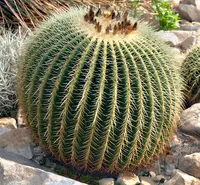
The golden barrel cactus, Kroenleinia grusonii, is a slow-growing desert cactus known for its spherical shape and dense rows of golden spines. Mature plants can form impressive, heavy-bodied clumps over many years.

It is native to arid regions of central Mexico, where it grows in rocky, well-drained soils under strong sun. This origin explains its preference for bright light, low humidity, and sparse watering in cultivation.

Thick skin and water-storing tissue make it very drought tolerant, which usually makes it easier to manage than many leafy houseplants. For those learning how to care for golden barrel cactus, its main needs are strong light and sharply draining, gritty soil.

Main Plant Requirements

Care Difficulty

Easy Care

Light Preference

Full Sun

Water Requirements

Low Water

Temperature Preference

Tropical / Frost Sensitive

Hardiness Zone

9–11

Soil Texture

Sandy, Rocky, Loamy

Soil pH

Slightly acidic (6.5–7.0), Neutral (7.0)

Soil Drainage

Well-drained

Fertilization

Minimal (feed rarely)

Get Personalized Care Plan

Scan your plant to receive care tips personalized for your specific plant

Available on iOS and Android

How to Care for the golden barrel cactus

This cactus thrives in strong light and benefits from ample direct sun once acclimated.

  • Provide 6–10 hours of direct sun daily outdoors; in very hot regions, favor morning sun with light afternoon shade to reduce scorch risk.
  • Young or recently moved golden barrel cactus should be introduced to full sun over 1–2 weeks to avoid bleaching and sunburned ribs.
  • In winter, prioritize the brightest possible spot, as low sun angles and short days can slow growth but usually do not harm established plants.

Kroenleinia grusonii prefers deep, infrequent watering and consistently fast-draining soil.

  • Water only when the top 3–5 cm of soil are completely dry; in sandy, fast-draining ground this often means long intervals between waterings.
  • Apply water slowly until it drains freely away, then allow the root zone to dry fully to reduce risk of root rot and fungal problems.
  • In cool seasons or prolonged cloudy weather, decrease frequency sharply; shriveling ribs suggest underwatering, while soft, yellowing tissue indicates excess moisture.

This desert cactus tolerates heat well but is sensitive to prolonged cold and frost.

  • Aim for active growth in 70–90°F (21–32°C); short hot spells up to about 100°F (38°C) are tolerated if soil is dry and there is some air movement.
  • Protect from frost; brief exposure near 32°F (0°C) may be survived when dry, but tissue damage becomes more likely below 28°F (-2°C).
  • In regions with cold winters, keep the plant cool and very dry around 45–55°F (7–13°C) to support a safe rest period and reduce rot risk.

Humidity is not a significant factor for Kroenleinia grusonii, which thrives in dry indoor air.

  • Target 20–40% relative humidity, similar to typical heated or air-conditioned homes.
  • The golden barrel cactus tolerates very dry air but may show stress as soft, pale tissue if overwatered while humidity is high.
  • Increase air movement rather than humidity if stems stay damp for long periods, using a fan or open window to speed evaporation.

Kroenleinia grusonii needs a very fast-draining, mineral-heavy soil to prevent root rot.

  • Use a cactus mix based on sandy or gritty soil combined with 30–50% extra mineral amendments such as pumice, coarse perlite, or crushed gravel.
  • Aim for slightly acidic to neutral pH around 6.0–7.0 to support nutrient availability without stressing roots.
  • Ensure the mix feels loose and airy; water should pass through in seconds and the surface should dry within 1–2 days in warm conditions.
  • Avoid peat-heavy, compact, or moisture-retentive mixes and skip fine compost that clogs air spaces and slows drainage.

This species is well suited to container growing when the pot prevents water from sitting around the roots.

  • Choose a heavy clay or ceramic pot to stabilize the rounded, spiny body so it does not tip when bumped or in wind.
  • Select a pot only 2–4 cm wider than the plant to keep the root zone compact and easier to dry between waterings.
  • Elevate the pot on feet or a stand so drainage holes stay clear and excess water can escape rapidly from the base.

This cactus needs only light feeding to maintain healthy, compact growth.

  • Use a low-nitrogen balanced cactus fertilizer (for example 5-10-10) or diluted balanced liquid feed at 1/4 strength.
  • Apply once in late spring and once in mid-summer during active growth; avoid feeding outside this period.
  • Do not fertilize in fall and winter when growth is dormant to prevent weak, etiolated tissue.
  • Ensure soil is moist before feeding golden barrel cactus to reduce root burn risk.

Kroenleinia grusonii requires minimal pruning, mainly for health and safety rather than shaping.

  • Carry out any work in late spring or early summer when growth conditions are stable.
  • Remove only dead, diseased, or badly damaged tissue using long-handled tongs and sharp, disinfected tools.
  • Avoid cutting healthy ribs or the crown, as this can cause scarring and increase rot risk.
  • Trim spent flower remains or dried offsets only if they trap debris or encourage pests.

Container-grown plants need infrequent repotting due to slow root growth.

  • Check for roots circling the pot, emerging from drainage holes, or very slow growth as signals to repot every 4–6 years.
  • Repot in late spring, using a slightly larger pot and a very gritty, fast-draining cactus mix.
  • Lift the plant using thick gloves or folded newspaper to avoid spine injury and root tearing.
  • Loosen the outer roots gently, replant at the same depth, and keep soil barely dry for 7–10 days to limit transplant shock.

Propagation of this species is usually done from seed and can be slow but reliable.

  • Sow fresh seeds in late spring in a sterile, very free-draining cactus mix.
  • Press seeds onto the surface, barely cover with fine grit, then keep at 70–80°F with bright, indirect light.
  • Maintain slightly moist, not wet, conditions by using a clear cover for humidity and ventilating daily.
  • Growing golden barrel cactus from seed requires patience, as seedlings may take several years to reach noticeable size.

This cactus is moderately cold tolerant when kept dry but sensitive to prolonged freezing and wet soil.

  • Keep plants at 40–50°F in winter, ideally bright and very dry to avoid root rot.
  • In regions with frost, grow in containers and move indoors or into an unheated greenhouse before temperatures drop below 30°F.
  • For in-ground plants in mild climates, improve drainage and mulch around the root zone with coarse gravel, not organic mulch.

Care Tips

Rotate For Symmetry

Turn the pot 90° every 2–4 weeks so light reaches all sides evenly, which keeps the sphere form balanced and prevents lopsided growth as the plant ages.

Protect From Overhead Rain

If grown outdoors in rainy climates, place the container under a clear overhang or move it during prolonged rain to stop water pooling in the crown, which can trigger rot.

Use Top Dressing

Add a 1–2 cm layer of coarse gravel or decorative rock on the soil surface to keep the neck of the plant dry, reduce algae growth, and stabilize the root zone.

Winter Light Boost

In regions with low winter sun, position the plant in the brightest south-facing window or supplement with a full-spectrum grow light to prevent etiolation, where the stem elongates and loses its compact shape.

Safe Handling Setup

When repotting or repositioning, wrap the body loosely with folded newspaper, thick towels, or foam strips so you can lift and turn the plant without damaging the spines or your hands, which simplifies caring for golden barrel cactus in confined spaces.

Common Pests and Diseases

Mealybugs

This pest feeds on the plant’s sap and hides in the woolly areoles and rib grooves, often appearing as small white cottony clusters. Symptoms include yellowing, slowed growth, and sticky honeydew that can encourage sooty mold.

Solution

Isolate the plant, then dab visible insects with cotton swabs dipped in 70% isopropyl alcohol and repeat weekly until no new clusters appear. Improve light and air movement, and for heavier infestations use a systemic insecticide labeled for cacti, following the product instructions carefully.

Spider mites

These insects thrive in hot, dry indoor conditions and are small enough to be difficult to see, often leaving fine webbing between spines and faint speckling on the epidermis. Symptoms include dull, dusty-looking skin and gradual loss of vigor.

Solution

Rinse the cactus thoroughly with a firm but gentle stream of water, focusing on ribs and areoles, and repeat several times over 1–2 weeks. Increase humidity slightly around the plant without wetting the soil, and if mites persist, use a targeted miticide or insecticidal soap applied carefully to the stem surface while keeping the soil dry.

Scale insects

These insects attach firmly to the cactus surface and can look like small brown or gray bumps along the ribs and at the base of spines. Symptoms include localized yellow patches, weakened growth, and sticky residue on nearby surfaces.

Solution

Manually remove individual scales with a cotton swab or soft brush dipped in 70% isopropyl alcohol, taking care not to damage the epidermis. For larger infestations, repeat alcohol treatments weekly and consider a systemic insecticide suitable for succulents, while maintaining bright light and avoiding excess watering to reduce stress on the plant.

Fungal stem rot

This disease is often triggered by overwatering or cold, wet soil and may start at the base, appearing as soft, discolored, or sunken areas that spread through the tissue. Symptoms include a mushy texture, dark brown or black patches, and a sour or musty smell.

Solution

At the first sign, withhold water completely and keep the plant in a warm, very bright, well-ventilated spot; if rot is localized, cut out all affected tissue with a sterile knife until only firm, healthy tissue remains, then allow the wound to dry and callus before repotting in a fresh, very fast-draining cactus mix. Severely affected plants are often not salvageable, so preventive care with porous soil, a pot with drainage, and careful winter watering is the most reliable strategy.

Corky scab lesions

This disease is associated with minor injuries, sun stress, or past edema and shows as rough, tan to brown, corky patches on the ribs, usually on the side exposed to strongest light. Symptoms include hardened, bark-like areas that are mostly cosmetic but can crack if severe.

Solution

Adjust light gradually when moving the plant to stronger sun and avoid rapid shifts from low light to intense direct sun. Keep watering conservative, ensure excellent drainage, and monitor lesions; if areas crack, keep them dry and clean to prevent secondary infections, since affected tissue does not revert but new growth should remain healthy under stable conditions.

Interesting Facts

Natural habitat rarity

This species is native to central Mexico, but in the wild it now survives in only a few fragmented populations due to habitat loss from dam construction and land use change.

Delayed flowering strategy

It usually needs several decades to reach flowering size, forming a large, nearly spherical stem before producing a crown of yellow flowers at the top in summer.

Spines as sunshades

Its dense, golden spines help shade the green stem from intense sunlight, reducing water loss and preventing tissue damage in its arid habitat.

Botan icon

Did you know?

This cactus was once mass-collected from the wild for ornamental trade, and combined with habitat flooding, this pressure contributed to its listing as Endangered on the IUCN Red List.

FAQs about golden barrel cactus

Flowering usually starts only when this species is mature, often after many years, and when it experiences strong light and a marked temperature difference between day and night. Lack of age, stress, or recent repotting can delay buds.

Grow Healthy Plants with Botan Care

Keep your plants happy and healthy with plant identification, disease detection, and easy care guidance.

Botan plant care app — identify plants on mobile

Explore More Plants