Deep container choice
Use a deep, heavy clay pot with generous drainage holes to support the long taproot and keep the plant stable against accidental knocks or strong airflow.

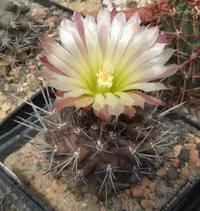
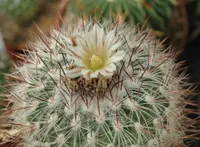
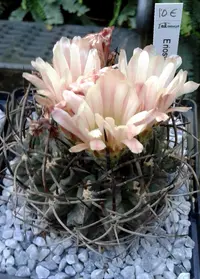
Eriosyce heinrichiana is a small, globular to slightly cylindrical cactus native to arid regions of central Chile. It typically forms a solitary stem with pronounced ribs and strong, curved spines. In good conditions it produces showy, funnel-shaped flowers near the crown, often in shades of red or pink, which contrast with its dark green to brownish body. This species grows slowly and prefers bright light, excellent drainage, and sparse watering, which reflects its desert origin. With attention to avoiding excess moisture and cold, it is not difficult to care for Eriosyce heinrichiana in a home or greenhouse collection.

Care Difficulty
Moderate Care

Light Preference
Full Sun

Water Requirements
Low Water

Temperature Preference
Warm Climate

Hardiness Zone
9–11

Soil Texture
Sandy, Loamy, Rocky

Soil pH
Slightly acidic (6.5–7.0), Neutral (7.0)

Soil Drainage
Well-drained

Fertilization
Minimal (feed rarely)
Scan your plant to receive care tips personalized for your specific plant
Available on iOS and Android
This desert cactus needs strong light but benefits from protection from the harshest sun.
This species prefers thorough but infrequent watering with fast drainage.
This cactus prefers warm, dry conditions and does not tolerate prolonged cold or frost.
This Chilean desert cactus thrives in 20–40% humidity and generally prefers dry air.
This species needs a very fast-draining, mineral-rich substrate that dries quickly after watering.
This cactus is well suited to container growing due to its compact, slow-growing habit.
This desert cactus needs only light feeding to maintain healthy growth in cultivation.
This species requires almost no pruning, since the stem maintains its own compact form.
Container-grown plants benefit from careful, infrequent repotting to refresh the mineral substrate and manage root health.
Most propagation of this cactus is done from seed, which is slow but reliable under controlled conditions.
This cactus prefers cool, very dry winter conditions and is only moderately tolerant of frost.

Plant Health Check
Not sure what's wrong with your plant? Check your plant's health inside the app.
This species is native to the coastal and coastal-influenced zones of central Chile, where it benefits from cool oceanic air and frequent camanchaca fog that helps offset the low rainfall typical of its habitat.
The stem forms pronounced, blocky ribs divided into tubercles, a structural adaptation that allows the plant body to expand after rare rains and contract during long dry periods without tearing the skin.
Populations show noticeable variation in spine length, thickness, and color, ranging from short and bristly to longer, more robust spines, which likely reflects adaptation to different levels of sun exposure and herbivore pressure across its range.

Taxonomically, this species has a complex history and has been placed in several genera, including Neoporteria and Neochilenia, reflecting its intermediate floral and vegetative characteristics within the Chilean Eriosyce group.
This cactus is very slow-growing, often adding only a few millimeters in diameter per year. Seedlings may take several years to form a noticeable globular body, and mature size typically requires a decade or longer.
Keep your plants happy and healthy with plant identification, disease detection, and easy care guidance.