


Deep pot choice
Use a deep, heavy clay pot with ample drainage holes to accommodate the long taproot and keep the plant stable as it ages and produces heavy flower buds.

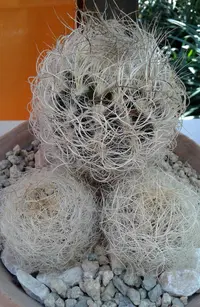
Eriosyce senilis is a small, slow-growing cactus from arid regions of Chile, adapted to intense sun and poor, rocky soils. It usually forms a solitary, rounded to slightly cylindrical stem covered in prominent ribs and very long, bristly spines that give it an aged, shaggy look.
Flowers are typically funnel-shaped, appearing near the crown in warm seasons, and add contrast to the dark, spiny body. Its slow growth, strong taproot, and sensitivity to excess moisture make it a plant that rewards careful, patient growers.
Those who want to learn how to care for Cactus like this should provide strong light, very free-draining soil, and cautious, infrequent watering to mimic its native habitat.

Care Difficulty
Moderate Care

Light Preference
Full Sun

Water Requirements
Low Water

Temperature Preference
Warm Climate

Hardiness Zone
9–11

Soil Texture
Sandy, Loamy, Rocky

Soil pH
Slightly acidic (6.5–7.0), Neutral (7.0)

Soil Drainage
Well-drained

Fertilization
Minimal (feed rarely)
Scan your plant to receive care tips personalized for your specific plant
Available on iOS and Android
Eriosyce senilis prefers bright, strong light that mimics high-altitude sun but needs some protection from extreme exposure.
This cactus needs thorough but infrequent watering, with fast-drying soil to prevent root rot.
This species prefers warm, dry conditions but tolerates a notable range if kept frost-free and dry in cold.
This cactus prefers dry air and does not require extra humidity indoors.
Use a very fast-draining, mineral-rich mix to prevent root rot in Eriosyce senilis.
This species is well suited to container growing due to its compact, slow habit.
This slow-growing cactus needs only light feeding to stay healthy in cultivation.
Eriosyce senilis needs almost no pruning beyond basic sanitation.
This species prefers to stay slightly root-bound and only needs infrequent repotting.
Seed is the primary method used for Eriosyce senilis plant care in collections.
This cactus needs a cool, very dry winter rest to stay healthy and encourage flowering.

Plant Health Check
Not sure what's wrong with your plant? Check your plant's health inside the app.
In its native Chilean habitat, this species often germinates in rock crevices or under nurse shrubs, where shade and trapped moisture help seedlings survive the intense sun and arid conditions of the coastal Andes foothills.
The dense, hooked spines reduce water loss by shading the stem surface and creating a small layer of still air, while also deterring herbivores that might otherwise browse the relatively soft green tissue.
Wild populations commonly occur in low, coastal desert areas that receive very little rainfall but frequent coastal fog, which provides atmospheric moisture that condenses on spines and surrounding surfaces.

Field observations have documented that older individuals can form multi-headed clumps after damage or partial stem death, effectively resprouting from surviving tissue and creating irregular clusters that can persist for many decades under harsh desert conditions.
Lack of flowers usually comes from insufficient light, winter temperatures that are too warm, or heavy, nitrogen‑rich feeding. This species also needs to be several years old before flowering reliably, so younger plants may simply not be mature yet.
Keep your plants happy and healthy with plant identification, disease detection, and easy care guidance.

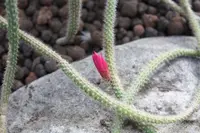
rattail cactus
Aporocactus flagelliformis
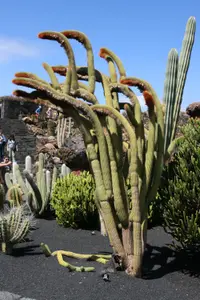
Vatricania
Vatricania guentheri
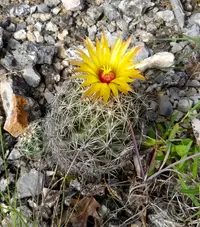
Pineapple Cactus
Coryphantha sulcata
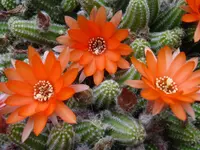
peanut cactus
Chamaecereus silvestrii
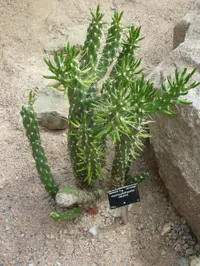
Eve's needle cactus
Austrocylindropuntia subulata

kingcup cactus
Echinocereus triglochidiatus
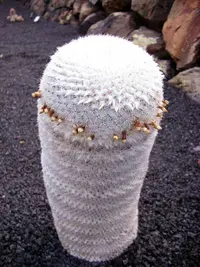
Mammillaria albilanata
Mammillaria albilanata
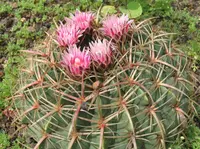
Cactus
Ferocactus macrodiscus