Xiquexique gounellei Care

Xiquexique gounellei

About Xiquexique gounellei

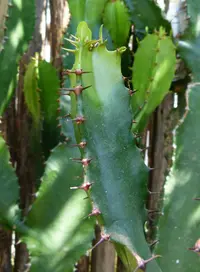
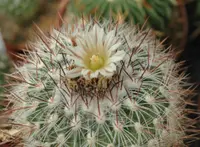
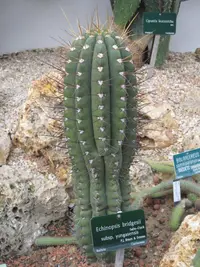
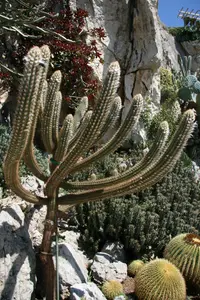
Xiquexique gounellei is a columnar cactus native to the dry caatinga regions of northeastern Brazil. It forms upright, branching stems with strong spines and a clearly segmented, ribbed surface.

This species is adapted to intense sun, high heat, and long dry periods, which makes it relatively low-maintenance when kept dry and bright. It can be slow-growing but long-lived, developing an architectural, sculptural shape that suits minimalist or desert-style plant collections.

In cultivation, it prefers very bright light, sparse watering, and a fast-draining, gritty soil mix. These natural traits guide how to care for Xiquexique gounellei successfully in containers or xeric gardens.

Main Plant Requirements

Care Difficulty

Easy Care

Light Preference

Full Sun

Water Requirements

Low Water

Temperature Preference

Tropical / Frost Sensitive

Hardiness Zone

10–12

Soil Texture

Sandy, Rocky, Loamy

Soil pH

Slightly acidic (6.5–7.0), Neutral (7.0)

Soil Drainage

Well-drained

Fertilization

Minimal (feed rarely)

Get Personalized Care Plan

Scan your plant to receive care tips personalized for your specific plant

Available on iOS and Android

How to Care for the Xiquexique gounellei

This desert cactus thrives in strong light but still needs protection from extreme sun in cultivation.

  • Provide 6–10 hours of direct sun daily, ideally with morning and early afternoon exposure; in very hot regions, give light afternoon shade to prevent epidermis scorching.
  • In mild or coastal climates, full sun all day is acceptable if soil drains fast and air moves freely around Xiquexique gounellei.
  • During summer heat waves, use 30–40% shade cloth; in winter, avoid deep shade or growth will weaken and stems may etiolate.

This species is highly drought-tolerant and prefers infrequent, deep watering in fast-draining soil.

  • In active growth, water only when the top 5–8 cm of soil are completely dry; then soak thoroughly so water runs through, avoiding any standing water around roots.
  • Reduce watering sharply in cooler months, giving just enough to prevent shriveling; in cold, overcast periods, keep soil almost completely dry.
  • Watch for signs: soft, yellowing, or splitting stems suggest overwatering, while slight wrinkling and dull color indicate it is time to water again if soil is dry.

This cactus prefers warm, dry conditions and reacts poorly to frost and prolonged cold.

  • Aim for 70–90°F (21–32°C) during the growing season; brief peaks up to 100°F (38°C) are tolerated if roots are not waterlogged and air circulation is good.
  • Protect from cold below 40°F (4°C); prolonged exposure under 35°F (2°C) or any frost can damage tissue and lead to rot, especially in wet soil.
  • In winter rest, cooler but frost-free conditions around 50–60°F (10–16°C) help maintain compact growth and reduce the risk of cold-related fungal problems.

This cactus prefers dry air and does not need added humidity indoors.

  • Aim for 20–40% relative humidity, similar to a heated or air-conditioned room.
  • It tolerates very dry air; problems usually come from excess moisture around the roots instead of low humidity.
  • Wrinkling combined with soft, pale tissue can signal rot from overly humid, stagnant conditions rather than a lack of humidity.

Provide very fast-draining, mineral-rich soil to prevent root rot in Xiquexique gounellei.

  • Use a gritty mix such as 50–70% inorganic material (pumice, coarse sand, small gravel) with the rest cactus potting mix.
  • Choose a loose, open texture that lets water drain within seconds and leaves air pockets around the roots.
  • Slightly acidic to neutral pH around 6.0–7.0 suits this species and helps root function.
  • Avoid fine peat-heavy or clayey mixes that stay wet, compact, or form a crust on top.

This species grows well in containers if the pot is stable and allows rapid drainage.

  • Select a heavy terracotta or ceramic pot to keep tall, columnar stems from tipping in wind or accidental bumps.
  • Use a deep pot that matches the length of the taproot so the plant anchors firmly without bending or circling roots.
  • Raise the container on feet or spacers so drainage holes stay clear and water does not pool under the base.

This cactus from nutrient-poor habitats needs only light feeding in cultivation.

  • Use a low-dose, balanced NPK cactus fertilizer or very dilute liquid feed at 1/4 strength.
  • Apply once every 4–6 weeks during the warm growing season if growth appears weak.
  • Do not fertilize in winter dormancy, especially for indoor plants in low light.
  • Avoid rich composts or frequent feeding, which cause soft, rot-prone tissue in Xiquexique gounellei.

Pruning needs for Xiquexique gounellei are minimal and mostly corrective.

  • Carry out any pruning in late spring or early summer, when the plant is actively growing.
  • Remove only dead, damaged, or diseased segments with a clean, sharp knife or pruning shears.
  • Cutting back awkward or crossing stems helps maintain stable structure and reduces breakage risk.
  • Allow cut surfaces to dry and callus in a shaded, airy place to lower infection risk.

Container-grown plants of this slow cactus rarely need repotting, so focus on gentle handling when it is required.

  • Plan repotting or transplanting in late spring, just before strong active growth begins.
  • Look for tight roots circling the pot, slow growth, or poor drainage as signs a larger container is needed.
  • Repot only every 3–5 years, moving to a pot 2–3 cm wider with very free-draining cactus mix.
  • Keep roots as intact as possible, let damaged roots dry briefly, then water lightly after 5–7 days to reduce stress.

Propagation of this columnar cactus is possible but slower than many common house cacti.

  • Use stem cuttings taken in late spring or early summer from healthy, firm segments.
  • Allow cut pieces to dry and callus for 1–2 weeks in a shaded, airy place before potting.
  • Set cuttings upright in barely moist, gritty cactus mix and keep warm at 70–80°F with bright, indirect light.
  • Seed propagation is also possible; sow in shallow trays, keep evenly slightly moist, and provide steady warmth.

Xiquexique gounellei is not frost hardy and needs thoughtful winter management in most climates.

  • Keep above 40°F; aim for a cool, bright, dry spot indoors in winter for potted plants.
  • Use a very gritty, free-draining mix and water sparingly to avoid root rot in cold conditions.
  • In mild climates, provide a thick, dry mulch around the root zone and shield stems from prolonged freezing.
  • Ensure good airflow but avoid cold drafts directly on the plant, especially near windows or doors.

Care Tips

Stabilize Tall Stems

As stems elongate, anchor the base slightly deeper in the substrate and use discreet gravel mounds or rock supports so the column stays upright without trapping moisture against the epidermis.

Root-Zone Warmth

In cool homes, place the pot on a wooden board or cork mat rather than directly on cold stone or metal surfaces to keep the root zone slightly warmer and reduce rot risk during winter rest.

Rotate For Symmetry

Turn the pot 90° every 3–4 weeks so new growth receives balanced light, which helps maintain a straight, even column instead of a plant that leans permanently toward one direction.

Dry Handling Technique

When repotting or inspecting roots, handle the plant only when the soil is dry and use folded newspaper or thick gloves so the skin is not damaged and the fine roots are not smeared or compacted.

Prevent Water Pooling

Top-dress the soil with a thin, sloped layer of coarse grit so water runs away from the stem base, which is especially helpful when caring for Xiquexique gounellei in deeper, narrow pots.

Common Pests and Diseases

Mealybugs

This pest attacks the ribs and areoles, hiding in woolly spots and between clustered stems, where it sucks plant sap and weakens growth. Symptoms include cottony white clusters, sticky honeydew, and sooty mold on long-neglected plants.

Solution

Isolate the plant, then dab visible insects with cotton swabs dipped in 70% isopropyl alcohol and repeat weekly until no new clusters appear. Improve light and airflow, and for heavy infestations on outdoor plants use a targeted insecticidal soap or neem oil spray, directed carefully at the areoles and stem joints.

Red spider mites

These insects thrive in hot, very dry indoor air and can cause pale stippling, dull skin, and fine webbing between ribs and spine clusters. This pest often goes unnoticed until the plant looks dusty or slightly bronzed.

Solution

Increase humidity slightly around the plant without wetting the stem continuously, then rinse the cactus under a strong but gentle stream of water to remove mites and webs. For persistent problems, apply a miticide or neem oil labeled for spider mites, ensuring full coverage of the ribs and branch junctions and repeating as directed.

Scale insects

This pest forms hard, dome-shaped bumps along ribs and at the base of spines, where insects feed on sap and cause localized yellowing and slowed growth. Honeydew and sooty mold may appear on severely affected plants kept in still air.

Solution

Lift or scrape off individual scales with a toothpick or soft brush, then wipe stems with 70% isopropyl alcohol to remove remaining juveniles. Maintain the plant in high light with good airflow, and if many insects are present use a horticultural oil spray in warm, dry weather, coating all surfaces but avoiding strong sun until stems dry.

Corky stem spot

This disease produces localized, sunken, tan to brown patches that become corky and dry on older stems, often where minor mechanical injury or intense sun stress occurred. Symptoms include firm, rough, scar-like areas that do not feel soft or wet.

Solution

Remove only if patches are small and clearly localized by cutting back to healthy tissue with a sterile knife, then allowing the wound to callus fully in a dry, bright place. Adjust light exposure gradually to prevent sunburn, avoid overhead watering, and maintain the plant in a very well-drained, mineral-rich substrate to limit further stress, which is central to Xiquexique gounellei care instructions.

Interesting Facts

Caatinga climate specialist

This cactus is native to Brazil’s Caatinga dry forest, where it grows in extremely seasonal conditions with long droughts and brief, irregular rain, making it highly adapted to intense sun and poor, rocky soils.

Segmented column growth

Its stems form tall, upright columns that are clearly segmented into constricted joints, a structure that helps localize damage from herbivores or breakage to just one segment instead of the whole stem.

Nocturnal white flowers

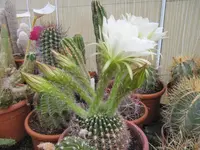
The plant produces large, white, tubular flowers that open mainly at night and are visited by nocturnal pollinators such as bats and moths in its native range, a common pattern in many columnar cacti but documented for this species in northeastern Brazil.

Botan icon

Did you know?

In parts of its native distribution in northeastern Brazil, local communities use the woody, fibrous skeleton of older stems from this cactus as a lightweight construction material or fuel source once the living tissue has decayed or been removed, reflecting its practical value in very resource-limited dry landscapes.

FAQs about Xiquexique gounellei

This cactus is slow-growing, often adding only a few cm in height per year. Growth is faster in warm conditions with strong light and careful watering, but it generally remains compact for many years.

Grow Healthy Plants with Botan Care

Keep your plants happy and healthy with plant identification, disease detection, and easy care guidance.

Botan plant care app — identify plants on mobile

Explore More Plants