Winter dryness
Keep the plant almost completely dry from late fall through winter, as this cool, dry rest period reduces rot risk and encourages tighter, more compact growth the following season.

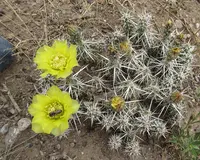
Club cholla, Grusonia clavata, is a low-growing desert cactus with jointed, club-shaped segments covered in dense, sharp spines. It forms small clumps that slowly spread over time, creating a compact, armored mat.
This species is native to arid regions of the southwestern United States and northern Mexico, where it grows in rocky, well-drained soils under intense sun. Its spines and drought tolerance make it tough but also demanding regarding light and drainage.
For most growers, how to care for club cholla centers on providing strong light, very fast-draining soil, and minimal watering. It suits patient owners who can offer bright, dry conditions and avoid excess moisture.

Care Difficulty
Moderate Care

Light Preference
Full Sun

Water Requirements
Low Water

Temperature Preference
Warm Climate

Hardiness Zone
8–11

Soil Texture
Sandy, Rocky, Loamy

Soil pH
Slightly acidic (6.5–7.0), Neutral (7.0)

Soil Drainage
Well-drained

Fertilization
Minimal (feed rarely)
Scan your plant to receive care tips personalized for your specific plant
Available on iOS and Android
This desert cactus needs intense sun to stay compact and healthy.
This species prefers infrequent, deep watering followed by thorough drying.
This cactus is well adapted to heat but has limited frost tolerance.
This desert cactus prefers very dry air and rarely suffers from low humidity indoors.
Use a very fast-draining, mineral-heavy mix to prevent root and stem rot.
This species is suitable for container growing, especially in climates with cold, wet winters.
This desert cactus needs only light feeding, as it is adapted to nutrient-poor soils.
Pruning Grusonia clavata is mainly for safety and health, not shaping.
This cactus prefers infrequent disturbance, so repot or transplant only when clearly needed.
Propagation is commonly done from stem segments rather than seeds for this species.
Mature plants are fairly cold tolerant when kept dry but still benefit from simple winter care.

Plant Health Check
Not sure what's wrong with your plant? Check your plant's health inside the app.
This species forms short, club-shaped stem segments that are distinctly jointed, allowing the plant to detach and disperse segments that can root and form new plants when conditions are suitable.
Grusonia clavata naturally grows in very dry, low-elevation habitats in parts of the southwestern United States and northern Mexico, often in sandy or gravelly soils where many other cacti struggle to survive.
Its stems are armed with both long, stiff spines and tiny barbed glochids, which together provide strong protection from herbivores and help shade the stem surface from intense sun exposure.

In some populations, segments of this cactus can form dense, ground-hugging mats over time, creating small, thorny patches that significantly alter local microhabitats by trapping leaf litter and offering shelter for small desert animals and insects.
Lack of flowers often comes from insufficient light, cool temperatures, or a plant that is still immature. Heavy fertilizing, especially high nitrogen, can also suppress buds. Stable, bright outdoor conditions usually encourage better flowering.
Keep your plants happy and healthy with plant identification, disease detection, and easy care guidance.