Rotate For Symmetry
Turn the pot 90° every 2–3 weeks so all sides receive similar light intensity, which keeps the leaf mounds even and prevents one-sided stretching.

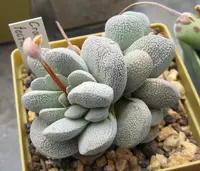
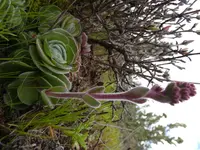
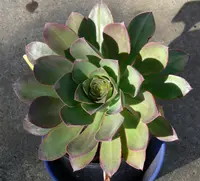
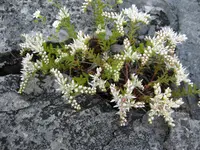
Crassula tecta is a compact, slow-growing succulent from arid regions of South Africa. It forms low cushions of small, thick, overlapping leaves that create a textured, stone-like surface.
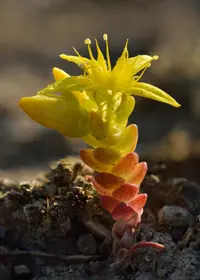
The leaves are usually gray-green to blue-green with a powdery coating that helps protect the plant from intense sun and water loss. Small, starry white flowers may appear above the foliage.
This species stays very small and grows best in containers or rock gardens with excellent drainage. It suits growers who prefer a plant that changes slowly rather than quickly.
Light, well-draining soil and careful watering are important to care for Crassula tecta, especially in indoor collections or small spaces.

Care Difficulty
Easy Care

Light Preference
Full Sun

Water Requirements
Low Water

Temperature Preference
Tropical / Frost Sensitive

Hardiness Zone
10–11

Soil Texture
Sandy, Loamy, Rocky

Soil pH
Slightly acidic (6.5–7.0), Neutral (7.0)

Soil Drainage
Well-drained

Fertilization
Minimal (feed rarely)
Scan your plant to receive care tips personalized for your specific plant
Available on iOS and Android
This compact South African succulent thrives in bright, dry conditions with strong but not scorching sun.
This species stores water in its leaves, so a careful dry-down between waterings is essential.
This plant prefers mild, dry conditions and does best with stable, moderate temperatures.
This species is adapted to dry air and typical indoor humidity of 30–50%.
Use a very fast-draining, gritty mix to prevent root rot in containers.
This compact succulent is very suitable for container growing.
This slow-growing succulent needs only light feeding to maintain compact, healthy growth.
Pruning needs are minimal and mainly focused on maintaining a compact, tidy plant.
This compact succulent prefers to stay slightly root-bound and only needs infrequent repotting.
This species is commonly propagated from cuttings and sometimes seeds under warm, bright conditions.
This succulent is not frost-hardy and needs protection from freezing temperatures in most climates.

Plant Health Check
Not sure what's wrong with your plant? Check your plant's health inside the app.
In the wild, this species is naturally restricted to quartzite and limestone slopes in the Western Cape of South Africa, where its pale, stone-like leaves help it blend into the rocky background and avoid herbivores.
The leaf surface is covered with a dense layer of tiny, whitish waxy outgrowths (papillae) that scatter sunlight, reduce water loss, and give the plant its characteristic frosted, textured appearance.
Crassula tecta is adapted to the Western Cape’s Mediterranean-type climate, growing mainly during the cool winter rainfall season and slowing down or resting through the hot, dry summer months.

In its native habitat, Crassula tecta often grows tightly packed in rocky crevices, forming low, cushion-like mats that can trap moisture and create a more stable microclimate at soil level, which supports survival in an otherwise harsh, arid environment.
Lack of flowering is usually linked to insufficient light, overly rich or constantly moist soil, or no cool, slightly drier winter rest. Mature plants bloom more reliably when seasonal changes mimic a bright, dry winter and warmer spring.
Keep your plants happy and healthy with plant identification, disease detection, and easy care guidance.