Control Spread Edges
Install shallow edging (5–8 cm deep) or place the plant in small masonry gaps or stone crevices to prevent this fast spreader from invading nearby beds or lawn areas.

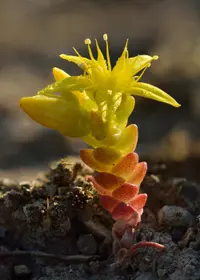
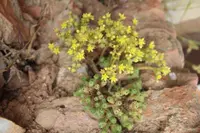
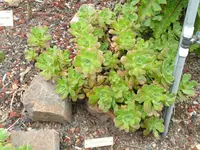
Biting stonecrop (Sedum acre) is a low, mat-forming succulent often used as a groundcover or between paving stones. It forms dense carpets of tiny, fleshy leaves. In summer it produces many small, star-shaped yellow flowers that attract pollinators and brighten dry, sunny spots. The plant spreads quickly but stays very low, which makes it useful for covering poor or shallow soils. Sedum acre comes from dry, rocky habitats in Europe and western Asia and has naturalized in many temperate regions. It tolerates heat, drought, and poor soil, so it suits low-maintenance gardens and green roofs. Understanding how to care for Biting Stonecrop mainly involves providing strong light and well-drained, lean soil.

Care Difficulty
Easy Care

Light Preference
Full Sun

Water Requirements
Low Water

Temperature Preference
Cold Hardy

Hardiness Zone
3–9

Soil Texture
Sandy, Loamy, Rocky

Soil pH
Slightly acidic (6.5–7.0), Slightly alkaline (7.0–7.5)

Soil Drainage
Well-drained

Fertilization
Minimal (feed rarely)
Scan your plant to receive care tips personalized for your specific plant
Available on iOS and Android
This low, mat-forming succulent thrives in strong light and handles tough, exposed sites.
This species is highly drought tolerant and prefers infrequent, light watering.
This hardy groundcover tolerates wide temperature swings once established.
Sedum acre tolerates a wide humidity range and rarely needs special humidity management indoors or outdoors.
Sedum acre prefers very well-drained, lean, mineral-based soil that prevents water from sitting around the roots.
This species is well suited to shallow containers, troughs, and rock-garden pots.
Sedum acre is adapted to poor soils and usually needs little to no fertilizer for healthy growth.
Sedum acre benefits from light pruning to keep mats dense and healthy.
This species is more often transplanted in the ground than repotted, as it forms shallow, spreading mats.
Sedum acre is commonly multiplied to expand groundcover or fill gaps.
Sedum acre is very cold hardy and generally needs no special winter care in the ground.

Plant Health Check
Not sure what's wrong with your plant? Check your plant's health inside the app.
This species is highly adapted to life in shallow rock crevices and thin, nutrient-poor soils, where its shallow, fibrous roots can anchor into tiny cracks and exploit brief moisture pulses.
Its leaves contain acrid, mildly toxic compounds that make the plant unpalatable to most grazing animals, which helps protect dense mats from being eaten in open habitats.
The small, tightly packed, light green leaves and bright yellow star-shaped flowers reflect a significant amount of sunlight, which helps reduce leaf temperature and water loss on exposed rock surfaces.

Sedum acre is considered an archaeophyte in parts of northern and western Europe, meaning it is thought to have been unintentionally spread by humans before 1500 CE, especially around old walls, roofs, and stonework where it still persists as a long-term companion of human settlements.
This species spreads quickly by short stems and self-seeding, forming dense mats. In rock gardens and between pavers it is usually welcome, but in fertile beds it may need edging, lifting, or division to keep it contained.
Keep your plants happy and healthy with plant identification, disease detection, and easy care guidance.