White stonecrop Care (Sedum album)

White stonecrop

About White stonecrop

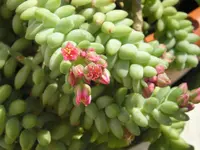
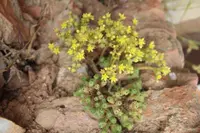
White stonecrop (Sedum album) is a low, mat-forming succulent often used as groundcover or in rock gardens and green roofs. It forms dense carpets of small, fleshy leaves. In summer it produces clusters of tiny white star-shaped flowers that attract pollinators and add a bright, delicate look. Sedum album naturally occurs on rocky slopes and dry, exposed sites in Europe and parts of Asia, so it is adapted to poor soils and drought. Its toughness, compact growth, and low water needs make it an easy plant for beginners. To care for White stonecrop, provide plenty of light, fast-draining soil, and avoid overwatering.

Main Plant Requirements

Care Difficulty

Easy Care

Light Preference

Full Sun

Water Requirements

Low Water

Temperature Preference

Cold Hardy

Hardiness Zone

3–9

Soil Texture

Sandy, Loamy, Rocky

Soil pH

Slightly acidic (6.5–7.0), Slightly alkaline (7.0–7.5)

Soil Drainage

Well-drained

Fertilization

Minimal (feed rarely)

Get Personalized Care Plan

Scan your plant to receive care tips personalized for your specific plant

Available on iOS and Android

How to Care for the White stonecrop

This low-growing succulent thrives in bright, open sites with strong sun exposure.

  • Provide 6–8 hours of direct sun daily; full sun promotes compact growth and strong leaf color in White stonecrop.
  • Tolerates light or dappled shade, especially in hot climates, but too much shade leads to weak, stretched stems and sparse flowering.
  • In very hot summers, protect from intense late-afternoon sun with light shade; snow cover or low winter sun is usually sufficient for outdoor plants.

This drought-tolerant succulent prefers infrequent, deep watering in fast-draining soil.

  • Water only when the top 3–5 cm of soil is completely dry; in many outdoor beds this may mean every 1–3 weeks in warm weather.
  • Use very well-drained, gritty soil to prevent waterlogging; persistently wet soil causes root rot and mushy, yellowing leaves in Sedum album.
  • Reduce watering sharply in cool or dormant seasons, watching for shriveling leaves as a sign to water and swollen, splitting leaves as a sign of excess.

This hardy groundcover handles a wide temperature range but grows best in moderate conditions.

  • Active growth is strongest around 65–80°F (18–27°C); plants stay compact and recover well from minor stress in this range.
  • Mature clumps tolerate cold down to about -20°F (-29°C) with good drainage, though repeated freeze–thaw cycles in wet soil can damage roots.
  • In hot spells above 90°F (32°C), growth slows; provide extra airflow and avoid reflected heat from pavement to limit stress and leaf scorch.

Humidity is not a major factor for Sedum album, which is well adapted to dry air conditions.

Sedum album prefers lean, fast-draining, mineral soils that prevent water from lingering around the roots.

  • Use a gritty mix such as 50–70% mineral material (coarse sand, fine gravel, or perlite) blended with 30–50% low-organic potting soil.
  • Aim for slightly acidic to neutral pH, around 6.0–7.0, which supports nutrient availability without encouraging excess growth.
  • Improve drainage and aeration by avoiding peat-heavy mixes and incorporating coarse particles at least 3–5 mm in size.
  • Avoid compacted, clay-rich, or constantly wet substrates, which quickly lead to root rot and weak growth.

This species is very suitable for container growing.

  • Choose a wide, shallow pot to match its mat-forming habit and allow lateral root spread rather than unnecessary depth.
  • Use heavy or low-profile containers outdoors so the spreading foliage does not make the pot tip in strong wind.
  • Select unglazed clay if faster drying is desired, or glazed/plastic pots where slightly longer moisture retention is helpful in hot climates.

Sedum album needs only light feeding because it is adapted to lean, rocky soils.

  • Use a low-strength balanced NPK liquid fertilizer at 1/4–1/2 label dose during active growth in spring–summer.
  • Apply no more than every 4–6 weeks; overfeeding can cause weak, floppy growth.
  • In very poor soils, a thin top-dressing of compost in spring is sufficient for caring for White stonecrop.
  • Stop feeding in fall and winter when growth slows or stops.

Sedum album benefits from occasional light pruning to keep mats dense and tidy.

  • Best time is late spring or after main flowering flush in summer, when new growth is active.
  • Shear or pinch back leggy, stretched stems to maintain a compact, even groundcover.
  • Remove dead, damaged, or overly crowded sections to reduce rot risk and improve air flow.
  • Use clean scissors or hand pruners and avoid cutting into woody crown tissue.

This species adapts well to shallow containers and rocky ground and only needs infrequent repotting or transplanting.

  • Check for roots circling the pot, slow growth, or soil that dries almost instantly as signs it needs more space.
  • Plan repotting or transplanting in spring or early fall when temperatures are mild.
  • Move clumps every 2–3 years at most, keeping root disturbance minimal and retaining some old soil around roots.
  • Water lightly after moving, then let soil dry between waterings to limit root stress and rot.

Sedum album is commonly multiplied to extend groundcover or refresh older plantings.

  • Stem or leaf cuttings taken in late spring–summer root well in bright, indirect light.
  • Let cut surfaces dry for 1–2 days, then place on gritty, barely moist mix.
  • Division of dense mats in spring is effective; replant small clumps at the same depth.
  • Seeds can be surface-sown on well-drained mix; keep slightly moist until germination.

Sedum album is generally cold hardy and needs little winter care in most temperate climates.

  • Established plants tolerate frost and snow once soils drain freely.
  • Apply a very light gravel or stone mulch to support drainage around the crowns, not as insulation.
  • For containers in very cold regions, move pots to a sheltered, unheated spot to reduce freeze–thaw stress on roots.

Care Tips

Division rejuvenation

Lift and divide congested mats every 3–4 years, replanting only firm, non-woody sections to keep growth dense and prevent die-out in the center of the patch.


Rock crevice planting

Tuck small stem pieces into cracks of rock walls or between paving stones filled with gritty substrate so roots anchor quickly and the plant forms tight, erosion-resistant cushions.

Winter drainage check

Before winter, confirm that planting areas shed water rather than pooling, and if needed top-dress with a 1–2 cm layer of sharp grit around crowns to protect against rot during freeze-thaw cycles.

Propagate from trimmings

After light trimming, press short, non-flowering stem pieces onto the soil surface or into shallow depressions, as they root easily and can be used to fill gaps or start new patches when growing White stonecrop.

Weed suppression strategy

Space plants close enough that the mat closes within 1–2 seasons, then hand-remove any taller weeds early so the low, dense foliage can act as a living mulch and reduce future weeding.

Common Pests and Diseases

Aphids

This pest feeds on succulent new shoots and flower stems, sucking sap and causing distortion, sticky honeydew, and sometimes sooty mold on White stonecrop mats.

Solution

Rinse colonies off with a firm stream of water, then spot-treat remaining insects with insecticidal soap or a neem-based spray, repeating weekly until controlled; in outdoor beds, encourage natural predators like lady beetles and avoid high-nitrogen fertilizer that promotes soft, aphid-prone growth.

Mealybugs

These insects hide in stem joints and among tightly packed leaves, forming white cottony clusters and weakening shoots over time.

Solution

Isolate affected plants, dab visible mealybugs with cotton swabs dipped in 70% isopropyl alcohol, then follow up with 1–2 applications of insecticidal soap or horticultural oil while improving light and airflow to reduce reinfestation risk.

Spider mites

This pest thrives on sun-exposed, water-stressed foliage, causing fine webbing, stippled leaves, and a dull, dusty appearance on the plant carpet.

Solution

Increase humidity around container plants briefly by misting, hose down foliage to dislodge mites, and use repeated applications of insecticidal soap or a labeled miticide, while preventing drought stress through more even but still sparse watering.

Powdery mildew

This disease appears as white, powdery patches on leaves and stems, making the plant look dusty and sometimes causing leaf yellowing or drop in dense mats.

Solution

Remove heavily infected stems to improve air movement, avoid overhead watering, and apply a sulfur or potassium bicarbonate fungicide labeled for ornamentals, ensuring the plant grows in full sun and well-spaced clumps to prevent recurrence.

Crown and stem rot

Symptoms include browning and collapse of stems at the base, often in poorly drained spots or containers kept too wet, with the succulent tissue turning mushy.

Solution

Lift and discard rotted sections, replant healthy cuttings into sharply drained, gritty soil, reduce watering frequency, and if growing White stonecrop in the ground, amend heavy soil with sand or fine gravel and avoid low spots where water collects.

Interesting Facts

Widespread on green roofs

This species is one of the most commonly used succulents on European and North American green roofs because it tolerates very shallow, nutrient-poor substrates and long dry periods while still forming a dense living carpet.

Cold hardy succulent

Unlike many succulents from warmer climates, this plant survives freezing winters in much of Europe and North America, remaining evergreen or semi-evergreen and resuming growth quickly once temperatures rise.

Flowers support pollinators

The small star-shaped white flowers are rich in nectar and attract bees, hoverflies, and other pollinating insects, making it useful in low-maintenance biodiversity plantings and in Sedum album care for pollinator-friendly gardens.

Botan icon

Did you know?

Sedum album is naturally adapted to colonize exposed rock and masonry, and it has been documented growing in old stone walls, roof tiles, and even mortar joints, where its roots exploit tiny cracks and minimal organic matter to anchor and survive.

FAQs about White stonecrop

This species spreads by short stems and self-seeding, forming low mats over time, but it is usually easy to control. In typical gardens, it behaves as a polite ground cover rather than an invasive thug.

Grow Healthy Plants with Botan Care

Keep your plants happy and healthy with plant identification, disease detection, and easy care guidance.

Botan plant care app — identify plants on mobile

Explore More Plants