

Offset management
Gently twist off well-sized offsets with at least a few roots attached in late spring, then replant them slightly above the soil line to maintain a compact, well-ventilated clump and prevent overcrowding rot pockets.

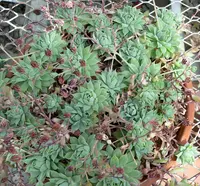
Graptopetalum macdougallii is a small rosette-forming succulent from rocky areas of Mexico. It stays compact and low, often forming tight clusters over time.
Leaves are fleshy, usually gray-green with a powdery surface, and may flush pink or purple in strong light or cooler weather. Short stems can trail slightly, making it suitable for small pots or dish gardens.
This species is valued for its drought tolerance, slow to moderate growth, and ability to handle bright indoor light if kept dry. It is generally straightforward to care for Graptopetalum macdougallii when given sharp-draining soil and protection from prolonged cold or excess moisture.

Care Difficulty
Easy Care

Light Preference
Full Sun

Water Requirements
Low Water

Temperature Preference
Warm Climate

Hardiness Zone
9–11

Soil Texture
Sandy, Loamy, Rocky

Soil pH
Slightly acidic (6.5–7.0), Neutral (7.0)

Soil Drainage
Well-drained

Fertilization
Minimal (feed rarely)
Scan your plant to receive care tips personalized for your specific plant
Available on iOS and Android
This compact succulent needs bright light and some direct sun to keep its rosettes compact and colorful.
This species prefers deep, infrequent watering and fast-drying soil to protect its roots.
Stable, moderate warmth supports compact growth and helps prevent cold or heat stress.
This species tolerates a wide humidity range and rarely needs special humidity management indoors.
This succulent needs a very fast-draining, mineral-heavy mix to prevent root rot.
This species is well suited to container growing when excess moisture is controlled carefully.
This succulent needs only light feeding, as Graptopetalum macdougallii is adapted to lean, rocky soils.
Pruning needs are minimal and mainly focused on maintaining a compact, healthy rosette display on Graptopetalum macdougallii.
This species grows well in slightly tight containers and prefers infrequent repotting to avoid root disturbance.
New plants are commonly produced from cuttings and leaf propagation, making expansion of a Graptopetalum macdougallii collection straightforward.
Cold sensitivity means this succulent benefits from thoughtful winter management, especially in regions with freezing temperatures.

Plant Health Check
Not sure what's wrong with your plant? Check your plant's health inside the app.
This species is native to rocky slopes and cliffs in Oaxaca, Mexico, where it naturally grows in thin, fast-draining mineral soils and crevices exposed to strong light.
It forms tight rosettes that readily produce offsets, creating dense, low cushions that help protect the shallow roots from rapid temperature swings in its native habitat.
Under strong light and mild drought, the normally bluish-green leaves can develop pink to lavender tones, a stress response linked to increased production of protective pigments called anthocyanins.

Graptopetalum macdougallii was described relatively recently in botanical terms, becoming known to science in the mid-20th century through collections from a limited area in southern Mexico, and it remains a geographically localized species compared with many other ornamental succulents.
Lack of flowering is usually due to insufficient light, overly rich or nitrogen-heavy soil, or frequent repotting. Provide bright conditions, avoid heavy feeding, keep the plant slightly root-bound, and allow a cool, dry rest period in winter.
Keep your plants happy and healthy with plant identification, disease detection, and easy care guidance.

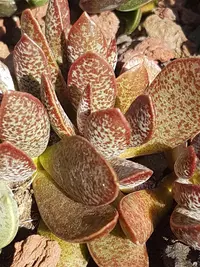
Adromischus trigynus
Adromischus trigynus
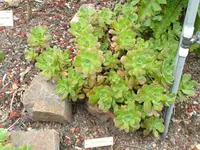
Cape Verde Tree Houseleek
Aeonium gorgoneum
 POPULAR
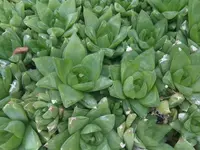
Cathedral Window Haworthia
Haworthia cymbiformis
 POPULAR
Burro's-tail
Sedum morganianum
Eriosyce curvispina
Eriosyce curvispina
 POPULAR
Splitrock Quaggafig
Pleiospilos nelii
Red treasure
Crassula perfoliata
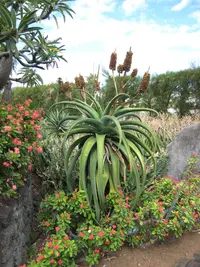
Malagasy Tree Aloe
Aloe vaombe