


Deep container choice
Use a tall, heavy clay pot with large drainage holes so the deep taproot can develop properly and the plant stays stable as the trunk elongates.

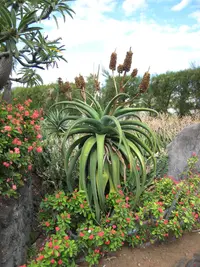
Malagasy tree aloe, Aloe vaombe, is a large succulent tree aloe known for its upright trunk and dense rosette of long, arching, sword-shaped leaves. It develops a striking architectural form, with older plants resembling a small branching tree. Native to dry, rocky areas of Madagascar, it is adapted to strong sun, heat, and periods of drought. The plant produces tall flower stalks with bright red tubular blooms that attract pollinators in warm climates. Its drought tolerance and slow growth make it relatively low-maintenance, but it needs excellent drainage and protection from prolonged cold or excess moisture. Understanding how to care for Malagasy Tree Aloe starts with providing bright light, lean soil, and careful watering.

Care Difficulty
Moderate Care

Light Preference
Full Sun

Water Requirements
Low Water

Temperature Preference
Tropical / Frost Sensitive

Hardiness Zone
10–11

Soil Texture
Sandy, Loamy, Rocky

Soil pH
Slightly acidic (6.5–7.0), Neutral (7.0)

Soil Drainage
Well-drained

Fertilization
Minimal (feed rarely)
Scan your plant to receive care tips personalized for your specific plant
Available on iOS and Android
This sun-loving aloe thrives in bright, open exposures with strong, direct light.
This drought-adapted aloe prefers deep, infrequent watering and fast-drying soil.
This species prefers warm, dry conditions and suffers in prolonged cold or frost.
This species handles dry indoor air easily and rarely needs humidity adjustment.
This aloe requires very fast-draining, mineral-rich soil to prevent root and stem rot.
This species grows well in containers when given a stable, heavy pot and sharp drainage.
Aloe vaombe benefits from light, controlled feeding rather than rich soils.
Aloe vaombe needs only minimal, hygiene-focused pruning to stay healthy and tidy.
This large aloe is usually grown in the ground, with container plants repotted infrequently.
Aloe vaombe is most often propagated by seed or occasional basal offsets.
This species is frost sensitive and needs protection in climates colder than mild subtropical zones.

Plant Health Check
Not sure what's wrong with your plant? Check your plant's health inside the app.
In its native southwestern Madagascar, this species develops a thick, bottle-like trunk with a rounded crown of leaves, giving mature plants a tree-like profile that superficially resembles small baobabs even though they are unrelated.
The species naturally occurs on dry, rocky limestone slopes and coastal cliffs in southwestern Madagascar, where it is adapted to intense sun, high drainage, and often saline winds.
In habitat it produces tall inflorescences with many tubular, bright red flowers that are visited by sunbirds, which act as primary pollinators by feeding on nectar and transferring pollen between plants.

Aloe vaombe is considered endemic to a relatively restricted area of southwestern Madagascar, and habitat loss in this region has led to concern among botanists about the long-term survival of its wild populations.
Lack of flowering usually comes from insufficient maturity, light, or cool-season rest. This species must be several years old, sun‑exposed, and slightly stressed but not starved. Avoid frequent repotting and heavy fertilizing just before its winter bloom period.
Keep your plants happy and healthy with plant identification, disease detection, and easy care guidance.

Grendelion
Dorstenia foetida
Elephant Ear
Alocasia sanderiana 'Nobilis'
Viscid Houseleek
Aeonium glutinosum
 POPULAR
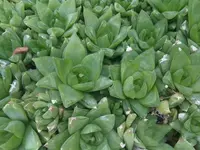
Cathedral Window Haworthia
Haworthia cymbiformis
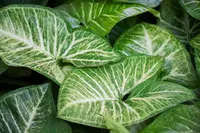
African Mask
Alocasia 'Amazonica'
 POPULAR
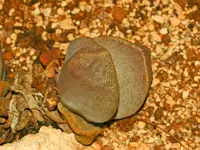
Splitrock Quaggafig
Pleiospilos nelii
 POPULAR
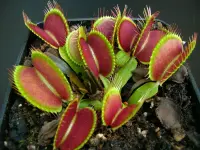
Venus flytrap
Dionaea muscipula
Crassula obovata
Crassula obovata