Rotate For Symmetry
Turn the pot 90° every 1–2 weeks so new leaves orient evenly toward the light, which helps maintain a balanced, upright clump instead of leaning to one side.

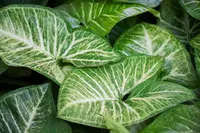
African mask (Alocasia 'Amazonica') is a compact, rhizomatous tropical plant grown mainly for its dramatic foliage. It is commonly used as an ornamental indoor plant. The plant has dark green, shield-shaped leaves with striking pale veins and wavy edges, giving it a sculptural, architectural look. Leaves grow from a central crown rather than along a stem. Although its exact wild origin is unclear, it is derived from tropical Asian Alocasia species that naturally grow in warm, humid forest understories. This background makes it somewhat demanding, especially regarding humidity, root moisture, and temperature. Those who learn how to care for African Mask usually find it rewarding, as long as it receives bright, indirect light, evenly moist but well-drained soil, and stable indoor conditions.

Care Difficulty
Moderate Care

Light Preference
Bright Indirect Light

Water Requirements
Keep Soil Moist

Temperature Preference
Tropical / Frost Sensitive

Hardiness Zone
10–12

Soil Texture
Loamy, Peaty, Organic-rich

Soil pH
Acidic (5.5–6.5), Slightly acidic (6.5–7.0)

Soil Drainage
Moist but well-drained

Fertilization
Moderate (every 2–4 weeks)
Scan your plant to receive care tips personalized for your specific plant
Available on iOS and Android
Alocasia 'Amazonica' prefers bright, filtered light that mimics a tropical understory.
Alocasia 'Amazonica' prefers evenly moist but not saturated soil.
This hybrid performs best in consistently warm, frost-free conditions.
This plant needs consistently high humidity to maintain firm leaves and healthy growth.
Alocasia 'Amazonica' prefers a loose, airy, organic-rich mix that drains quickly yet holds steady moisture.
This species is well suited to container growing when the pot supports its moisture needs and top-heavy form.
Alocasia 'Amazonica' responds well to light, consistent feeding during active growth.
Alocasia 'Amazonica' needs minimal pruning focused on cleanliness and leaf quality rather than shaping.
This plant prefers slightly snug pots and only occasional repotting to limit stress.
Division of the underground tubers or offsets is the most reliable method for multiplying Alocasia 'Amazonica'.
Alocasia 'Amazonica' is frost-sensitive and needs careful indoor winter management in most climates.

Plant Health Check
Not sure what's wrong with your plant? Check your plant's health inside the app.
This plant is a horticultural hybrid, probably between Alocasia longiloba and Alocasia sanderiana, and does not occur naturally in the wild, so it has no native geographic range or natural habitat.
Its dark, shield-shaped leaves show highly contrasting pale primary and secondary veins; this strong venation pattern is a selected trait from its parent species, enhanced through cultivation for ornamental impact.
Although related to large elephant ear alocasias, it stays relatively compact, a result of selective breeding that favors shorter petioles and smaller leaf blades suitable for containers and African Mask indoor care.

The widely used name Alocasia 'Amazonica' is believed to have originated from a Florida nursery called Amazon Nursery, not from any connection to the Amazon rainforest, which often leads to confusion about its supposed tropical origin.
Yellowing leaves usually result from overwatering, poor drainage, or sudden temperature drops. Check that the pot drains freely, empty saucers, and let the top of the mix dry slightly between waterings. Old leaves may yellow naturally before dropping.
Keep your plants happy and healthy with plant identification, disease detection, and easy care guidance.