Pot weight check
Use the weight of the pot as a guide and delay watering until a container that once felt heavy is noticeably lighter, which helps avoid chronic root stress in this moisture-sensitive species.

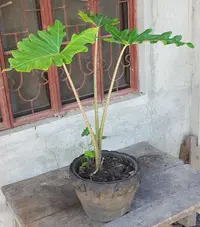
Alocasia portei is a tropical aroid grown mainly as an ornamental foliage plant. It is valued for its large, deeply lobed leaves that create a bold, architectural look. Plants typically form clumps from underground rhizomes and can reach impressive size in warm, humid conditions.
This species is native to tropical regions of Southeast Asia, where it grows in shaded, moist forest habitats. Its need for stable warmth, high humidity, and evenly moist but well-drained soil makes it more suitable for experienced growers.
Understanding how to care for Alocasia portei starts with providing bright, filtered light, consistent moisture, and protection from cold drafts or sudden environmental changes.

Care Difficulty
Hard Care

Light Preference
Bright Indirect Light

Water Requirements
Keep Soil Moist

Temperature Preference
Tropical / Frost Sensitive

Hardiness Zone
10–12

Soil Texture
Loamy, Peaty, Organic-rich

Soil pH
Acidic (5.5–6.5), Slightly acidic (6.5–7.0)

Soil Drainage
Moist but well-drained

Fertilization
Moderate (every 2–4 weeks)
Scan your plant to receive care tips personalized for your specific plant
Available on iOS and Android
This plant prefers bright, indirect light that mimics a lightly shaded tropical understory.
This aroid prefers evenly moist, well-drained soil without staying soggy.
This species grows best in consistently warm, frost-free conditions.
This species needs consistently high humidity to maintain healthy foliage and stable growth.
Alocasia portei prefers a loose, airy, organic-rich mix that drains quickly yet holds steady moisture.
This species is well suited to container growing when the pot supports its fast root growth and tall foliage.
Nutrient-rich soil supports strong leaf and stem growth in Alocasia portei during the warm growing season.
Pruning focuses on hygiene and shape rather than size control for this foliage plant.
Container-grown plants appreciate periodic repotting to refresh soil and give roots space.
Propagation is usually done by division rather than from seed, which is slower and less reliable.
Cool-season care focuses on temperature management and preventing rot in resting plants.

Plant Health Check
Not sure what's wrong with your plant? Check your plant's health inside the app.
This species is considered native to lowland tropical forests of the Philippines, where it grows in warm, humid, shaded habitats under taller vegetation.
Unlike many other Alocasia species with entire leaf blades, this plant develops striking, deeply pinnatifid leaves with narrow lobes, giving the mature foliage a strongly architectural look.
In suitable tropical conditions it can form substantial upright clumps, with long, stout petioles holding the leaves well above the ground, creating a vertical accent rather than a low, spreading form.
Brown, crispy edges are usually caused by low humidity, underwatering, or excess fertilizer salts. Check soil moisture, flush the potting mix occasionally, and increase humidity with a tray or humidifier to improve leaf condition.
Keep your plants happy and healthy with plant identification, disease detection, and easy care guidance.