Asparagus umbellatus Care

Asparagus umbellatus

About Asparagus umbellatus

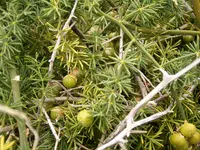
Asparagus umbellatus is a slender, climbing asparagus species grown mainly as an ornamental foliage plant. It forms fine, feathery sprays of soft green cladodes that resemble leaves but are actually modified stems. Stems can twine or scramble over supports, giving it a light, airy look in containers or mixed plantings.

This species is native to parts of southern Africa, where it grows in warm, relatively dry habitats. It is generally moderate in difficulty, as it dislikes waterlogged soil and strong, direct sun but copes well with bright, filtered light and evenly moist, well-drained soil. With a basic understanding of how to care for Asparagus umbellatus, most indoor growers can maintain healthy, attractive plants.

Main Plant Requirements

Care Difficulty

Moderate Care

Light Preference

Partial Shade

Water Requirements

Moderate Water

Temperature Preference

Warm Climate

Hardiness Zone

9–11

Soil Texture

Sandy, Loamy, Organic-rich

Soil pH

Acidic (5.5–6.5), Slightly acidic (6.5–7.0)

Soil Drainage

Well-drained

Fertilization

Light (every 4–6 weeks)

Get Personalized Care Plan

Scan your plant to receive care tips personalized for your specific plant

Available on iOS and Android

How to Care for the Asparagus umbellatus

This species prefers bright, gentle light similar to a lightly shaded woodland edge.

  • Provide 3–5 hours of soft morning sun with bright, filtered light the rest of the day; dappled shade under taller plants suits Asparagus umbellatus outdoors.
  • Avoid harsh midday and afternoon sun, which can scorch foliage, cause yellowing, and dry out soil too quickly, especially in hot, exposed sites.
  • In summer, shift pots or plant under light canopy; in winter, move closer to the brightest window or south-facing exposure to offset short days.

This plant prefers evenly moist but never waterlogged soil around its fine roots and tubers.

  • Water when the top 2–4 cm of soil feels dry, allowing moisture to reach the root zone without leaving the mix soggy.
  • Use a freely draining soil and containers with drainage holes or raised beds; standing water leads to yellowing fronds, root rot, and a sour soil smell.
  • Reduce watering slightly in cooler months when growth slows; crispy, shedding cladodes suggest underwatering, while limp, yellow stems often indicate excess moisture for Asparagus umbellatus.

This species grows best in mild, frost-free conditions.

  • Aim for 65–75°F (18–24°C) for active growth, with stable temperatures and moderate humidity to limit stress on fine foliage.
  • Protect from cold: growth slows below about 55°F (13°C), and light frost near 32°F (0°C) can burn or kill exposed stems and cladodes.
  • In hot weather above 85°F (29°C), give extra shade and airflow; avoid reflected heat from walls or pavement, which can overheat roots and dry the plant rapidly.

This species prefers moderate humidity and copes with most indoor conditions if not kept too dry.

  • Aim for 40–60% humidity, as very dry air can cause fine cladodes to yellow and shed prematurely.
  • Watch for browning tips, crisp fronds, and stalled growth as signs of low-humidity stress.
  • Increase humidity by grouping plants, placing the pot on a pebble tray with water, or running a nearby humidifier.

Asparagus umbellatus grows best in loose, well-draining, organic-rich soil that stays lightly moist but not waterlogged.

  • Use a mix of 40% peat or coco coir, 40% compost, and 20% perlite or coarse sand for structure and drainage.
  • Aim for slightly acidic to neutral pH around 6.0–7.0, which supports balanced nutrient availability.
  • Ensure the mix is crumbly and airy; break up clods so roots can spread and oxygen can reach deeper layers.
  • Avoid heavy clay, compacted, or always-soggy substrates that promote root rot and limit aeration.

This species is well suited to container growing when the pot supports its spreading root system and top growth.

  • Choose a wide, stable container that resists tipping as stems elongate and arch outward.
  • Select a pot material with moderate moisture retention, such as thick plastic or glazed ceramic, to buffer against rapid drying.
  • Elevate the pot slightly on feet or blocks so drainage holes stay clear and excess water leaves the root zone quickly.

Light, consistent feeding supports healthy growth and foliage density in Asparagus umbellatus.

  • Use a balanced liquid fertilizer (around 10-10-10 or 20-20-20) diluted to 1/2 strength for container plants.
  • Feed every 4–6 weeks during spring and summer active growth.
  • Reduce or stop fertilizing in fall and winter when growth slows.
  • For outdoor plants, a thin layer of compost in spring is usually sufficient.

Thoughtful pruning keeps Asparagus umbellatus tidy, encourages new shoots, and prevents tangling.

  • Carry out main pruning in late winter or early spring before vigorous new growth starts.
  • Remove yellowing, dead, or damaged stems at the base with clean, sharp scissors or pruners.
  • Thin out crowded or crossing stems to improve light and air flow through the clump.
  • Light tip trimming can control spread and maintain a compact, arching form.

Repotting or transplanting helps maintain root health and controlled growth for this species.

  • Plan to repot container plants every 2–3 years, or when roots circle the pot or growth slows.
  • Best timing is early spring, just before strong new growth, to allow fast recovery.
  • Choose a pot 2–3 cm wider with free-draining mix, and gently loosen circling roots.
  • Water thoroughly after repotting, then keep in bright, indirect light and slightly drier soil for 1–2 weeks to limit stress.

Asparagus umbellatus is most often propagated by division, with seed used less frequently.

  • Divide established clumps in spring, when new shoots emerge and temperatures are mild.
  • Lift the root mass, then separate into sections, each with healthy roots and several shoots.
  • Plant divisions into fresh, well-drained mix, water in, and keep evenly moist in bright, indirect light.
  • Seeds can be sown in warm (68–75°F), lightly covered trays and kept consistently moist until germination.

In mild climates, this plant needs only modest winter care, but it is sensitive to hard frost.

  • In regions below 25°F, grow in containers and move indoors to a cool, bright, frost-free space.
  • Outdoors, apply a 5–8 cm mulch layer around the root zone in late fall, keeping mulch off stems.
  • If foliage is frost-burned, leave it in place until late winter, then cut back once severe cold has passed.

Care Tips

Support Fine Stems

Install a small trellis or mesh support while the plant is still young so the thin, climbing stems can be gently tied and guided upward instead of bending or tangling on nearby plants.

Rotate For Even Growth

Turn the pot 90° every 2–3 weeks to keep the foliage evenly distributed and prevent one-sided, weak growth that can cause stems to lean and stretch toward the light source.

Root System Monitoring

Check drainage holes every few months for congested roots, and if thick white roots circle the base or push through, plan to repot in a slightly larger container to maintain vigorous, balanced growth.

Clean Foliage Safely

Rinse the feathery cladodes under a gentle, lukewarm shower or use a soft brush to remove dust, which improves light capture and makes early pest detection easier when caring for Asparagus umbellatus.

Prevent Thorn Injuries

Use thin garden gloves and handle stems from below when pruning or repositioning, which protects hands from the small but sharp thorns and reduces the chance of snapping delicate stems at their base.

Common Pests and Diseases

Spider mites

This pest feeds on the fine cladodes, causing yellow stippling, dull foliage, and fine webbing between stems and leaf-like branchlets. Infestations are more common in warm, dry indoor air or in sheltered outdoor spots.

Solution

Rinse the plant thoroughly with a strong, lukewarm water spray, including the undersides of cladodes, then repeat every few days; increase humidity and avoid very dry, hot locations. For persistent problems, apply an insecticidal soap or horticultural oil labeled for spider mites, making sure to cover all green tissue and repeating according to label directions.

Scale insects

These insects appear as small, fixed brown or off-white bumps on stems and cladodes, causing gradual yellowing, sticky honeydew, and sometimes sooty mold on the fine foliage. Heavy infestations can weaken shoots and stunt new growth.

Solution

Physically remove visible scale with a cotton swab dipped in alcohol on thicker stems and then wash the plant with lukewarm water. Follow with a series of treatments using insecticidal soap or light horticultural oil, focusing on stem joints and hidden areas where crawlers hide, and isolate the plant from others until the population is under control.

Aphids

This pest tends to cluster on tender shoot tips and new cladodes, sucking sap and causing distortion, soft growth, and sticky honeydew deposits. Symptoms include curled or twisted new stems and an increase in ants visiting the plant.

Solution

Spray infested areas with a firm stream of water to dislodge colonies, then treat remaining insects with insecticidal soap, ensuring thorough coverage of soft new growth. Remove heavily infested shoot tips and dispose of them, and monitor weekly until no new colonies appear as part of consistent Asparagus umbellatus care instructions.

Fungal needle blight

This disease causes yellowing and browning of the fine cladodes, starting on older inner foliage and sometimes progressing to whole stems that dry and drop. Symptoms include scattered tan or brown patches, often after periods of high humidity and poor air movement.

Solution

Cut off and discard affected stems to reduce spore spread, then improve air circulation by spacing plants and avoiding overhead watering. Allow the surface of the potting mix to dry slightly between waterings, and if the problem persists, apply a general ornamental fungicide labeled for foliar blights, following the instructions carefully.

Root-knot nematodes

These microscopic worms attack the roots, causing galls or swellings, reduced vigor, yellowing foliage, and poor response to normal feeding and watering. Plants may decline gradually even when above-ground care appears correct.

Solution

If symptoms and root galls are present, discard severely affected plants and avoid reusing the same potting mix. For mild cases in outdoor plantings, improve soil health with organic matter, rotate planting areas, and keep the plant well watered but not waterlogged to reduce stress, since stressed roots are more vulnerable to nematode damage.

Interesting Facts

Fine cladode foliage

What look like soft leaves in this species are actually modified stems called cladodes, which are very slender and arranged in delicate sprays that give the plant a fern‑like texture while still functioning as photosynthetic organs.

Umbel-like branch pattern

The name umbellatus refers to the way its branchlets are grouped in umbrella-like clusters, resembling the structure of an umbel in flowering plants such as carrots, even though it belongs to a completely different plant family.

Woody scrambling climber

In suitable climates this species develops a thin woody base and produces long, flexible stems that can scramble through shrubs or along supports, allowing the plant to occupy vertical space without being a true twining vine.

FAQs about Asparagus umbellatus

This species adapts to both, but usually grows stronger and fuller outdoors in mild, frost-free climates. Indoors, growth is slower and finer. Good light, stable temperatures, and adequate humidity are key for successful Asparagus umbellatus indoor care.

Grow Healthy Plants with Botan Care

Keep your plants happy and healthy with plant identification, disease detection, and easy care guidance.

Botan plant care app — identify plants on mobile

Explore More Plants