Tank water hygiene
Rinse and refill the central rosette cup with fresh, chlorine-free water every 1–2 weeks to prevent bacterial buildup and mosquito larvae, then tip the plant gently to drain any stagnant water before refilling.

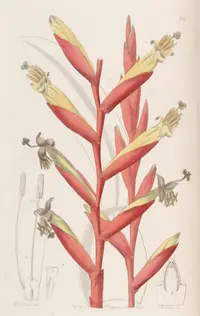
Vriesea psittacina is a tropical bromeliad grown mainly for its colorful, long-lasting flower spikes and neat rosette of arching leaves. It is often called parrot bromeliad because of its bright red and yellow bracts.
This species is native to Brazil, where it grows as an epiphyte on trees or on well-drained rocky slopes. Its compact size and slow, clumping habit make it suitable for containers and indoor displays.
Tolerant of typical indoor humidity and indirect light, it is considered a relatively easy bromeliad for beginners who want to care for Vriesea psittacina, provided it is kept in airy, free-draining media and not overwatered.

Care Difficulty
Moderate Care

Light Preference
Bright Indirect Light

Water Requirements
Keep Soil Moist

Temperature Preference
Tropical / Frost Sensitive

Hardiness Zone
11–12

Soil Texture
Loamy, Peaty, Organic-rich

Soil pH
Acidic (5.5–6.5)

Soil Drainage
Moist but well-drained

Fertilization
Light (every 4–6 weeks)
Scan your plant to receive care tips personalized for your specific plant
Available on iOS and Android
This bromeliad prefers bright, filtered light that mimics dappled forest conditions.
This epiphytic bromeliad needs a lightly moist root zone and a clean, filled central cup, without staying soggy.
This tropical species grows best in consistently warm, stable temperatures without sudden swings.
This bromeliad prefers consistently moist air and reacts quickly to very dry conditions.
Vriesea psittacina grows best in a light, airy, fast-draining mix that still holds some moisture.
This species is well suited to container culture for both indoor and sheltered outdoor positions.
This bromeliad benefits from modest feeding to support foliage color and flowering without overloading its roots.
Pruning is light and mainly focused on hygiene and directing new growth in this bromeliad.
This species grows slowly and usually needs repotting only occasionally to refresh mix and manage offsets.
Propagation of this bromeliad is most reliable by offsets rather than seeds for home growers.
This tender bromeliad is not frost hardy and needs mild conditions during winter in most climates.

Plant Health Check
Not sure what's wrong with your plant? Check your plant's health inside the app.
The species produces a flattened, brightly banded flower spike whose red and yellow bracts resemble the plumage of a parrot, which is the origin of its common name parrot bromeliad.
Its arching leaves form a central water-holding tank that collects rain, leaf litter, and small invertebrates, creating a tiny aquatic habitat that supports micro-ecosystems in its native Atlantic Forest.
In the wild it usually grows as an epiphyte on tree branches in Brazil’s Atlantic Forest, anchoring to bark rather than rooting in soil, while still performing normal photosynthesis in its leaves.

Vriesea psittacina has been used as a parent in the development of numerous ornamental bromeliad hybrids, with breeders selecting for its distinctive parrot-like bract colors and compact rosette form to create showy indoor and landscape cultivars.
This species usually blooms once when mature, then the flowering rosette slowly declines. Lack of bloom often comes from immaturity, stress, or recent repotting. Stable warmth, consistent moisture, and time are the main requirements for flowering.
Keep your plants happy and healthy with plant identification, disease detection, and easy care guidance.


%20-%20Copy-200x143.webp)