Handle Sap Safely
Wear disposable gloves and avoid touching your face when pruning or repotting, because the milky latex sap is irritating to skin and eyes and should be rinsed off immediately with plenty of water if contact occurs.

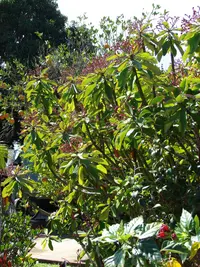
Euphorbia bicompacta is a succulent shrub from eastern Africa, valued for its compact, branching form and thick, jointed stems. It resembles a small, architectural shrub rather than a leafy houseplant.
The plant carries small leaves and inconspicuous flowers, so its main appeal is the sculptural stem structure. It suits growers who enjoy unusual, low-foliage plants.
This species prefers bright light, a very well-drained, gritty soil mix, and careful watering that avoids long, soggy conditions. Once its basic needs are understood, it is relatively straightforward to care for Euphorbia bicompacta, especially in indoor or greenhouse settings.

Care Difficulty
Moderate Care

Light Preference
Bright Indirect Light

Water Requirements
Low Water

Temperature Preference
Tropical / Frost Sensitive

Hardiness Zone
10–11

Soil Texture
Sandy, Loamy, Rocky

Soil pH
Slightly acidic (6.5–7.0), Neutral (7.0)

Soil Drainage
Well-drained

Fertilization
Minimal (feed rarely)
Scan your plant to receive care tips personalized for your specific plant
Available on iOS and Android
This succulent shrub prefers bright, indirect light with some direct sun while avoiding harsh extremes.
This species stores water in its stems and needs infrequent, careful watering to prevent rot.
This plant prefers warm, dry conditions and is sensitive to frost and prolonged cold.
This species tolerates typical indoor humidity and prefers a dry environment around 30–50% without extra misting.
This succulent needs a very fast-draining, mineral-based soil that dries quickly between waterings.
This species is well suited to container growing due to its compact, drought-tolerant root system.
This plant benefits from light, controlled feeding during the active growing season.
Pruning is mainly used to control size and maintain a clean, compact form.
This species prefers slightly tight conditions and only needs repotting when clearly rootbound.
Propagation is usually done from stem cuttings under warm, bright, and dry-leaning conditions.
This species is frost-sensitive and needs protection in regions with cold winters.

Plant Health Check
Not sure what's wrong with your plant? Check your plant's health inside the app.
This shrub often forms tight clusters of short, jointed, almost cylindrical stems with leaves mostly near the tips, giving it a compact, broom-like outline compared with many other shrubby Euphorbia species.
Like its relatives, it produces a white, latex sap, but in this species the latex tends to exude readily from even small cuts in the green stems, which helps seal wounds and deter many herbivores.
It is native to dry, rocky habitats in parts of East Africa, where it endures strong sun and seasonal drought, a background that explains much of modern Euphorbia bicompacta care instructions for home growers.
Lack of flowering usually comes from insufficient light, cool temperatures, or using high-nitrogen fertilizer that promotes stems instead of flowers. A short, slightly cooler, drier rest period can also help trigger buds on mature plants.
Keep your plants happy and healthy with plant identification, disease detection, and easy care guidance.