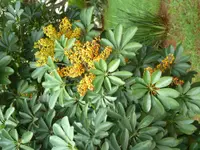
Agapetes serpens Care

Agapetes serpens

About Agapetes serpens

Agapetes serpens is an evergreen shrub in the heath family, valued for its arching stems and tubular, pendant flowers that resemble tiny lanterns. It often grows as an epiphyte, perched on trees or rocks in cool, moist mountain forests.

This species is native to the eastern Himalayas, where it experiences bright but filtered light, steady moisture, and mild temperatures. These conditions shape how to care for Agapetes serpens in cultivation.

The plant can be moderately challenging, mainly because it dislikes heat, drought, and heavy, compacted soil. It responds best to airy, well-drained mixes, regular but gentle moisture, and protection from harsh midday sun.

Main Plant Requirements

Care Difficulty

Moderate Care

Light Preference

Partial Shade

Water Requirements

Keep Soil Moist

Temperature Preference

Warm Climate

Hardiness Zone

9–11

Soil Texture

Loamy, Peaty, Organic-rich

Soil pH

Strongly acidic (4.5–5.5), Acidic (5.5–6.5)

Soil Drainage

Moist but well-drained

Fertilization

Light (every 4–6 weeks)

Get Personalized Care Plan

Scan your plant to receive care tips personalized for your specific plant

Available on iOS and Android

How to Care for the Agapetes serpens

This shrub prefers bright, gentle light similar to a cool, lightly shaded woodland edge.

  • Provide 3–5 hours of soft morning sun with dappled or filtered light for the rest of the day to protect the fine foliage and flowers from scorch.
  • Allow light partial shade, especially in hot climates; strong afternoon sun in summer can burn leaves and dry the soil too quickly.
  • If stems stretch, leaves pale, or flowering drops, the plant is too shaded; in winter, shift slightly closer to brighter, indirect light.

Moist but well-drained soil supports healthy roots and flowering.

  • Water when the top 2–3 cm of soil feel dry, aiming for consistently moist but never saturated soil around the root zone.
  • Use well-draining, organic-rich soil on a slight slope or raised area so excess water can run off, reducing the risk of root rot.
  • Reduce watering in cool seasons when growth slows; wilting with dry soil suggests underwatering, while yellowing leaves and a sour smell indicate overwatering.

Cool, mild conditions suit this species best throughout the year.

  • Ideal growing temperatures are 55–70°F (13–21°C), with slightly cooler nights encouraging compact growth and better flowering.
  • Protect from frost; brief dips to 32°F (0°C) may damage young growth, and prolonged exposure below 28°F (-2°C) can kill stems or the whole plant.
  • In hot summers above 80–85°F (27–29°C), provide extra shade and moisture, as heat stress can cause leaf scorch, reduced blooms, and slowed growth in Agapetes serpens.

This shrub prefers moderately moist air and reacts quickly to very dry conditions.

  • Aim for 50–70% humidity to support healthy foliage and flowering.
  • It tolerates brief dips to 35–40%, but prolonged dry indoor air causes leaf edge browning and bud drop in Agapetes serpens.
  • Increase humidity with a nearby humidifier, grouped plants, or a pebble tray, rather than misting directly onto flowers.

Use a loose, humus-rich mix that drains rapidly but stays lightly moist.

  • Choose a fine bark-based, loamy substrate with plenty of organic matter to mimic cool, woodland soils.
  • Ensure sharp drainage with 30–40% perlite or pumice so water moves through quickly yet roots do not dry out instantly.
  • Keep pH slightly acidic, around 5.5–6.5, which supports nutrient uptake and reduces chlorosis risk in Agapetes serpens.
  • Avoid heavy clay, peat-only mixes, or compacted soil that stays waterlogged, as this encourages root rot and weak growth.

This species adapts well to container culture when the pot supports its shrubby, arching habit.

  • Select a pot slightly deeper than wide to give the woody root system room to anchor and reduce wobbling in wind.
  • Use a relatively heavy container material, such as ceramic, to stabilize arching stems and prevent tipping as the plant matures.
  • Raise the pot on feet or pot risers so drainage holes stay clear and runoff water does not reabsorb into the root zone.

Light, balanced feeding supports steady growth and flowering in Agapetes serpens without forcing soft, weak shoots.

  • Use a balanced, slow-release fertilizer or dilute liquid feed at 1/4–1/2 strength during active growth in spring–summer.
  • Apply every 4–6 weeks while the plant is producing new shoots and buds.
  • Supplement with a thin layer of compost on the soil surface to improve structure and microbial life.
  • Reduce or stop feeding in fall–winter when growth slows to avoid salt buildup and leggy growth.

Thoughtful pruning keeps Agapetes serpens compact, flowering well, and easy to manage in containers or small gardens.

  • Carry out light pruning after main flowering flushes in late spring or summer.
  • Remove dead, damaged, or crossing stems first to improve air flow and reduce disease risk.
  • Shorten overly long, straggly shoots to maintain an arching but tidy framework.
  • Use clean, sharp pruning shears and make cuts just above a leaf node to encourage bushier regrowth.

Container-grown Agapetes serpens benefits from occasional repotting or transplanting to maintain root health and steady growth.

  • Check for roots circling the pot base, pushing through drainage holes, or noticeably slower growth as signs it needs more space.
  • Plan to move the plant to a container 1–2 in wider every 2–3 years, ideally in early spring before strong new growth.
  • Slide the rootball out gently, loosen circling roots lightly, and trim only damaged roots to limit stress.
  • Replant into a free-draining, acidic mix, water thoroughly, then keep in bright, sheltered conditions for 1–2 weeks while it reestablishes.

New plants of Agapetes serpens are most often produced from semi-ripe cuttings taken during the warmer months.

  • Take 7–10 cm semi-ripe stem cuttings in late spring–summer, removing lower leaves.
  • Dip the cut end in rooting hormone to improve root initiation and reduce rot risk.
  • Insert cuttings into a moist, free-draining mix and keep at 65–75°F with high humidity and bright, indirect light.
  • Seed propagation is possible but slow; sow fresh seed on the surface of acidic mix and maintain steady moisture.

This shrub is moderately frost-tender, so winter care focuses on preventing root and stem damage in cold climates.

  • In regions below about 25°F, grow in containers that can be moved into a cool, bright, frost-free space for winter.
  • Outdoors in mild areas, apply 5–8 cm of organic mulch around the root zone, keeping it slightly away from the stems.
  • Shelter plants from cold drying winds, which increase desiccation of evergreen foliage during freezes.

Care Tips

Use sturdy supports

Provide a rigid support such as a small trellis, hoop, or branchy twig for the arching stems, tying them loosely with soft ties so the brittle wood does not snap under the weight of flowers and foliage.

Cool-root placement

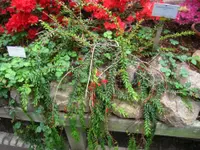
Keep the root zone shaded and cool by placing the pot inside a cachepot or surrounding it with other plants, which reduces temperature swings that can cause bud drop.

Acid-stable irrigation

If tap water is hard, alternate with rainwater or distilled water and monitor substrate pH twice a year so the ericaceous mix remains moderately acidic and micronutrient uptake stays reliable.

Gentle repot technique

When repotting, keep the fine surface roots intact by sliding the root ball out in one piece and only teasing the outer 0.5–1 in, as aggressive root disturbance can set growth back for an entire season.

Seasonal bud protection

In late winter and early spring, protect forming buds from late cold drafts or sudden heat from radiators by shifting the plant slightly farther from windows or heat sources, which stabilizes flowering when growing Agapetes serpens.

Common Pests and Diseases

Azalea lace bug

This pest feeds from the underside of leaves, causing pale stippling on the upper surface and a dirty, speckled appearance below. Symptoms include leaf yellowing, reduced vigor, and fine dark spots of excrement on the lower leaf surface.

Solution

Inspect leaf undersides regularly and hose them down with a strong stream of water to dislodge nymphs and adults. For persistent infestations on Agapetes serpens care instructions often include using a horticultural oil or insecticidal soap directed to the undersides of leaves and improving shade and watering so the plant can better tolerate feeding damage.

Leaf spot

This disease causes small water-soaked or dark brown spots on leaves that may enlarge, coalesce, and cause premature leaf drop. Symptoms include irregular lesions often with a yellow halo, especially in periods of high humidity and poor air circulation.

Solution

Remove and discard affected leaves, including any fallen material, and avoid overhead watering that leaves foliage wet for long periods. Improve airflow around the plant and, if spots continue to spread, use a labeled copper or other broad-spectrum fungicide, applying only to clean, dry foliage according to product directions.

Powdery mildew

This disease appears as a white to gray powdery coating on leaves, young stems, and sometimes flower buds. Symptoms include distorted new growth, reduced flowering, and a dull, unhealthy look to the foliage in crowded or shaded, humid sites.

Solution

Increase air circulation by thinning nearby vegetation and avoid excessive nitrogen fertilization that promotes soft, susceptible growth. Remove heavily affected shoots and, if needed, apply a sulfur or potassium bicarbonate fungicide early in the infection, making sure leaves dry quickly after treatment.

Scale insects

These insects attach firmly to stems and leaf midribs, appearing as small, flat or domed bumps that excrete sticky honeydew. Symptoms include yellowing leaves, stunted growth, and sooty mold growing on the sugary deposits.

Solution

Gently scrape or wipe individual scales from stems with a cotton swab dipped in alcohol, then wash the plant with lukewarm water to remove honeydew. For larger populations, apply horticultural oil thoroughly to stems and leaf undersides during mild weather, repeating as needed to catch newly hatched crawlers.

Spider mites

These pests are tiny and often go unnoticed until fine webbing appears on leaf undersides and between stems. Symptoms include dull, stippled foliage that may bronze or dry at the edges, especially in hot, dry conditions or indoors with low humidity.

Solution

Rinse foliage thoroughly with a firm but gentle spray of water, paying special attention to leaf undersides, and repeat several times over 1–2 weeks to disrupt the life cycle. Increase ambient humidity, keep the plant well watered but not waterlogged, and if mites persist, use insecticidal soap or horticultural oil labeled for mites, ensuring full coverage of affected areas.

Interesting Facts

Himalayan epiphyte shrub

This species is native to the eastern Himalayan region, where it often grows as an epiphyte on mossy tree trunks and branches in cool, moist montane forests.

Nectar-filled tubular flowers

The plant produces pendulous, red to orange tubular flowers that are rich in nectar and adapted for pollination by birds and long-tongued insects.

Swollen woody caudex

Older plants can develop a swollen, woody base that serves as a storage organ, helping the shrub survive periods of reduced moisture in its native cloud forest habitat.

Botan icon

Did you know?

In its native Himalayan range, this species is often found growing in association with mosses, ferns, and orchids on the same host trees, forming miniature suspended forest communities that share moisture and create their own cool, humid microclimate.

FAQs about Agapetes serpens

Lack of blooms usually comes from insufficient light, heavy pruning at the wrong time, or low nutrients. Use a balanced, low-phosphorus fertilizer, avoid cutting flowering wood, and maintain a cool, bright rest period in winter.

Grow Healthy Plants with Botan Care

Keep your plants happy and healthy with plant identification, disease detection, and easy care guidance.

Botan plant care app — identify plants on mobile

Explore More Plants