Slender Lady Palm Care (Rhapis humilis)

Slender Lady Palm

About Slender Lady Palm

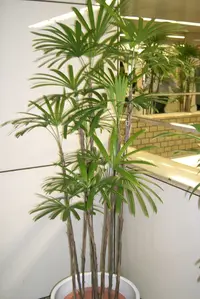
Rhapis humilis, commonly called slender lady palm, is a compact clumping palm grown mainly as an indoor ornamental. It forms thin, upright canes topped with narrow, fan-shaped leaves that give a fine, elegant texture. Mature clumps stay relatively narrow, so the plant suits small rooms and offices. In nature, it occurs in shaded, humid forest understories in parts of East Asia. This background explains its preference for bright, indirect light, steady moisture, and a well-draining, airy potting mix. Overall, it is considered a slow-growing but reliable palm once established, and many growers find it straightforward to care for Slender Lady Palm when its basic needs are understood.

Main Plant Requirements

Care Difficulty

Moderate Care

Light Preference

Partial Shade

Water Requirements

Moderate Water

Temperature Preference

Warm Climate

Hardiness Zone

9–11

Soil Texture

Loamy, Sandy, Organic-rich

Soil pH

Acidic (5.5–6.5), Slightly acidic (6.5–7.0)

Soil Drainage

Moist but well-drained

Fertilization

Light (every 4–6 weeks)

Get Personalized Care Plan

Scan your plant to receive care tips personalized for your specific plant

Available on iOS and Android

How to Care for the Slender Lady Palm

Rhapis humilis prefers bright, indirect light with some shade during the hottest hours.

  • Provide 4–6 hours of bright, filtered light daily, such as light through sheer curtains or dappled shade under taller plants, which suits Slender Lady Palm well.
  • Allow gentle morning sun in east-facing exposures but protect from strong midday and afternoon sun to prevent leaf scorch and pale, bleached fronds.
  • In low-light locations, growth becomes slow and sparse; move the plant gradually to a brighter spot, especially in winter when natural light is weaker.

This palm prefers evenly moist but never waterlogged soil and responds best to measured, observation-based watering.

  • Water when the top 3–5 cm of soil feels dry, ensuring excess water drains freely so roots receive both moisture and air.
  • Reduce watering in winter when growth slows, letting the top 5–7 cm dry; in warm active growth, expect the top layer to dry faster and check more often.
  • Signs of overwatering include yellowing, soft leaf bases, and sour-smelling soil, while crisp brown tips and very light pots suggest underwatering in Rhapis humilis.

This species favors mild, stable temperatures and tolerates short cool spells better than many tropical palms.

  • Aim for 65–80°F (18–27°C) for steady growth, with good air movement but no direct blasts from heaters or air conditioners.
  • The plant tolerates brief drops to about 35–40°F (2–4°C), but foliage damage increases near freezing, so protect from frost and cold winds.
  • In hot weather above 90°F (32°C), provide afternoon shade, extra humidity, and slightly more frequent watering to prevent heat stress and leaf scorch.

This palm prefers moderate, stable humidity but accepts a range in typical homes.

  • Aim for 40–60% humidity; Slender Lady Palm tolerates brief drops near 30% but grows slower.
  • Crisp leaflet tips and brown edges, despite correct watering, indicate air that is too dry.
  • Group plants, place trays with water and pebbles nearby, or run a room humidifier in very dry rooms.

Rhapis humilis grows best in a loose, moisture-retentive yet free-draining potting medium.

  • Use a mix of 2 parts peat- or coir-based potting mix, 1 part compost, and 1 part perlite or fine bark for structure and drainage.
  • Target a slightly acidic to neutral pH of about 6.0–7.0, avoiding strongly alkaline or saline substrates.
  • Ensure the mix feels springy and crumbly, not sticky; add extra perlite or bark if water pools on the surface after watering.
  • Avoid heavy garden soil, pure clay, or mixes high in unamended sand that compact or leave roots waterlogged.

This species is well suited to long-term container growing.

  • Choose a container wider than it is deep to accommodate the clumping, multi-stem root system without crowding.
  • Use a heavy, stable pot material such as ceramic or concrete to prevent tipping as canes become tall and top-heavy.
  • Select pots with several drainage holes so excess water exits quickly, preventing soggy lower layers that suffocate roots.

Rhapis humilis grows slowly and needs modest, consistent feeding for healthy foliage, especially as a Slender Lady Palm indoor care specimen.

  • Use a balanced liquid fertilizer (such as 10-10-10 or 20-20-20) diluted to 1/4–1/2 strength.
  • Feed every 4–6 weeks during spring and summer when growth is most active.
  • Reduce to 1 light feeding in fall and skip feeding in winter dormancy.
  • Avoid heavy applications; flush the pot with plain water occasionally to prevent salt buildup.

Rhapis humilis benefits from light, targeted pruning to maintain a clean, upright clump.

  • Best time is late winter to early spring before active growth starts.
  • Remove dead, yellowing, or damaged fronds at the base with clean, sharp pruners.
  • Thin out weak or crowded stems to improve airflow and maintain a balanced shape.
  • Avoid cutting green, healthy fronds from the tops, which can stress the palm and slow growth.

This palm prefers to stay slightly root-bound and only needs infrequent repotting or transplanting.

  • Look for roots circling the pot, reduced growth, or frequent drying as signs it is time to move up.
  • Plan repotting for spring, about every 3–5 years, using a container only 2–5 cm wider.
  • Use a well-draining mix and keep the root ball as intact as possible to limit shock.
  • Water thoroughly after repotting, then keep soil evenly moist and light levels stable for several weeks.

Rhapis humilis is usually propagated by division rather than from seed in home settings.

  • Divide mature clumps in spring when new growth starts and temperatures are mild.
  • Gently separate offshoots with at least a few stems and an intact root section.
  • Plant divisions in a small pot with a well-draining, slightly rich mix and firm gently.
  • Maintain high humidity, bright indirect light, and evenly moist soil until new growth appears.

This palm is moderately cold tolerant but still benefits from basic winter care in cooler climates.

  • In-ground plants handle brief drops near 25–28°F, but prolonged freezes can damage fronds.
  • Apply a 5–8 cm mulch layer around the root zone, keeping it slightly away from stems.
  • For container plants, move indoors or into a sheltered, frost-free space before hard frost.
  • Provide bright indirect light indoors and reduce watering while keeping soil slightly moist.

Care Tips

Segmented repotting

When an established clump becomes crowded, gently divide off only a few outer canes with intact roots and pot them separately, leaving the main plant mostly undisturbed to reduce transplant shock and maintain overall vigor.

Root-zone aeration

Every 6–12 months, use a thin stake or chopstick to gently poke a few holes around the root ball surface, then top up with fresh mix to improve air flow to the roots and reduce the risk of compaction in long-term container culture.

Controlled cane thinning

Once a year, remove only the weakest, thinnest, or most shaded interior canes at the base with clean, sharp pruners to open the clump for better light penetration and air movement without sacrificing the plant’s dense appearance.

Gradual light adaptation

Before moving the plant to a brighter room, shift it 1–2 m closer to the light source every 7–10 days so the leaf tissue can adapt, which helps prevent bleaching or sudden frond drop when growing Slender Lady Palm.

Stable container anchoring

For tall or top-heavy specimens, choose a wide, heavy pot and, if needed, add a layer of gravel at the bottom (outside the root zone) to lower the center of gravity and keep the clump stable against accidental knocks or drafts.

Common Pests and Diseases

Scale insects

This pest attaches to the stems and leaf midribs and sucks sap, leading to yellowing fronds, sticky honeydew, and sooty mold growth.

Solution

Remove heavily infested fronds and gently scrape or wipe visible scale with a cotton pad dipped in 70% isopropyl alcohol, then wash the foliage with lukewarm soapy water; repeat every 7–10 days until no new scale appears and keep the plant slightly isolated to monitor reinfestation.

Spider mites

These insects thrive on Rhapis in dry indoor air, causing fine webbing between leaf segments, tiny pale stippling, and an overall dull, dusty appearance of the fronds.

Solution

Rinse the plant thoroughly with a strong but gentle stream of lukewarm water, then increase humidity and regularly mist or shower the foliage; for persistent problems, use insecticidal soap or a horticultural oil spray, ensuring full coverage on both sides of the leaves.

Mealybugs

This pest appears as white, cottony clusters in leaf bases and along stems, weakening the palm and causing distorted or yellowing foliage.

Solution

Inspect leaf bases closely, remove infested tissue if localized, and dab visible mealybugs with alcohol on a cotton swab, followed by a thorough wash with insecticidal soap; repeat treatments weekly until no new cottony clusters form and discard any heavily infested debris from the pot surface.

Fusarium leaf blight

This disease causes tan to reddish-brown streaks or patches along leaf tips and margins that gradually expand, giving fronds a scorched, uneven look.

Solution

Prune and discard affected fronds, avoid overhead watering that keeps foliage wet, and improve air circulation around clumps; keep the soil slightly moist but never waterlogged and, if spread continues, repot into fresh, well-draining mix and sterilize cutting tools between plants as part of Rhapis humilis care.

Leaf spot

Symptoms include small brown or dark purplish spots on leaf segments that can merge into irregular blotches under humid, crowded conditions.

Solution

Remove and bin the most affected leaves, water at soil level instead of over the foliage, and space plants to allow air movement; if spots keep appearing, apply a copper-based or other labeled ornamental palm fungicide according to directions and avoid splashing water between plants.

Interesting Facts

Naturally slender habit

Among fan palms, this species has an unusually narrow, upright crown, with leaves forming a more columnar shape than the broader, umbrella-like canopy of the closely related Rhapis excelsa.

Distinctive narrow leaflets

Its leaf segments are notably narrower and more numerous than those of most other Rhapis species, giving the foliage a fine-textured, almost bamboo-like appearance despite being a true palm.

Clumping multi-stem growth

The plant forms dense clumps from underground rhizomes, producing many thin, cane-like stems that can eventually create a living screen or thicket in suitable outdoor climates.

Botan icon

Did you know?

In mature clumps grown under ideal outdoor conditions, this species can reach around 3–4 m tall yet still maintain its characteristically thin, reed-like stems, which has made it a favored choice in traditional Asian courtyard gardens where vertical space is limited but a tall palm silhouette is desired.

FAQs about Slender Lady Palm

Yellowing leaves usually come from chronic overwatering, poor drainage, or compacted soil reducing oxygen to the roots. Older fronds naturally yellow with age as well. Remove only fully yellow fronds and check the root zone for soggy conditions.

Grow Healthy Plants with Botan Care

Keep your plants happy and healthy with plant identification, disease detection, and easy care guidance.

Botan plant care app — identify plants on mobile

Explore More Plants