fourleaf peperomia Care (Peperomia quadrifolia)

fourleaf peperomia

About fourleaf peperomia

Fourleaf peperomia (Peperomia quadrifolia) is a compact, creeping epiphyte that often grows on trees or rocks in its native tropical Central and South America. It is commonly grown as a small trailing houseplant.

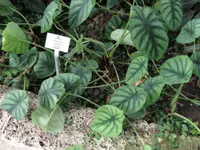
The plant has tiny, rounded leaves arranged in pairs that give a neat, beaded look along thin stems, making it suitable for hanging pots or terrariums. Its modest size and slow growth keep it manageable indoors.

This species is generally considered easy to grow if kept in bright, indirect light, moderate warmth, and a loose, airy potting mix. Those conditions form the basic foundation of how to care for fourleaf peperomia without stress or complex routines.

Main Plant Requirements

Care Difficulty

Easy Care

Light Preference

Bright Indirect Light

Water Requirements

Moderate Water

Temperature Preference

Tropical / Frost Sensitive

Hardiness Zone

11–12

Soil Texture

Loamy, Peaty, Organic-rich

Soil pH

Acidic (5.5–6.5), Slightly acidic (6.5–7.0)

Soil Drainage

Well-drained

Fertilization

Light (every 4–6 weeks)

Get Personalized Care Plan

Scan your plant to receive care tips personalized for your specific plant

Available on iOS and Android

How to Care for the fourleaf peperomia

This species prefers soft, filtered light that mimics a bright forest understory.

  • Provide 6–8 hours of bright, indirect light each day, such as near an east- or north-facing window or under light shade outdoors.
  • Morning sun is usually tolerated, but protect fourleaf peperomia from strong midday or afternoon sun to prevent leaf scorch and washed-out color.
  • In lower light or during short winter days, move the plant closer to a bright window or supplement with grow lights to prevent leggy, stretched stems.

Peperomia quadrifolia prefers a light, even moisture regime rather than frequent heavy soakings.

  • Water only when the top 2–4 cm of soil feels dry, using enough water to moisten the root zone, then let excess drain away completely.
  • Reduce watering in cooler months when growth slows, but never let the root ball stay bone-dry for long periods, which causes wilting and leaf curl.
  • Watch for yellowing, mushy leaves as a sign of overwatering and dry, crispy edges or drooping thin leaves as signs that the plant needs water sooner.

Stable, moderate warmth keeps this plant compact and healthy.

  • Aim for 65–80°F (18–27°C) as the main growing range, where photosynthesis and root activity remain steady.
  • Avoid temperatures below 55°F (13°C); brief dips may stunt growth, and any exposure near 40°F (4°C) risks cold damage or leaf drop.
  • Protect from hot, stagnant air above 85°F (29°C) by increasing airflow and shade, and never expose the plant to frost or cold drafts from open windows or doors.

This species prefers moderate household humidity but benefits from slightly elevated levels in very dry homes.

  • Aim for 40–60% humidity to keep leaves firm and avoid edge crinkling.
  • Fourleaf peperomia tolerates occasional dry air, but prolonged levels below 30% can cause leaf tip browning and slower growth.
  • Increase humidity with a nearby open tray of water and stones or by grouping plants; avoid misting directly onto foliage in cool rooms.

This plant needs a loose, airy, fast-draining mix that still holds some moisture.

  • Use a peat- or coco-based potting mix amended with 30–40% perlite or pumice plus a small amount of fine bark for structure.
  • Ensure the mix drains freely within seconds after watering; water should not pool on the surface or linger in the saucer.
  • A slightly acidic to neutral pH around 6.0–7.0 suits Peperomia quadrifolia and helps nutrient availability without extra adjustments.
  • Avoid heavy garden soil, pure compost, or mixes dominated by fine sand, which compact easily and suffocate roots.

This species grows very well in small to medium containers, including hanging pots and shallow planters.

  • Choose a pot only 2–4 cm wider than the root mass so the mix dries evenly instead of staying wet in unused soil.
  • Use a sturdy, well-balanced hanging basket if trailing stems become long, so the container does not tip as the plant cascades.
  • Select terracotta when faster drying is needed in cool, dim rooms, and plastic when slower drying is preferred in warm, bright spots.

This compact epiphyte benefits from light, consistent feeding during its active season.

  • Use a balanced liquid fertilizer (around 10-10-10 or 20-20-20) diluted to 1/4–1/2 strength for fourleaf peperomia.
  • Feed every 4–6 weeks in spring and summer, after watering, to avoid root burn.
  • Skip compost-heavy mixes; choose a salt-low, houseplant formula suited to airy potting media.
  • Stop feeding in fall and winter when growth slows, resuming only as new growth appears.

Pruning Peperomia quadrifolia helps maintain a compact, trailing form and removes weak growth.

  • Best time is late winter to early spring, just before or as new growth starts.
  • Use clean, sharp scissors or small pruners to remove dead, yellowing, or damaged stems and leaves.
  • Shorten overly long, straggly vines above a node to encourage branching and denser foliage.
  • Pinch soft tips occasionally to refine shape and keep the plant from becoming sparse in the center.

This species prefers slightly tight pots and infrequent repotting to avoid excess moisture around the roots.

  • Check for roots circling the pot, growing from drainage holes, or unexplained slow growth as signs it needs repotting.
  • Repot every 2–3 years in spring, moving to a container only 2–3 cm wider with fresh, airy potting mix.
  • Gently loosen the root ball with fingers, removing old, compacted soil without tearing healthy roots.
  • Water lightly after repotting, then keep in bright, indirect light and slightly drier soil for 1–2 weeks to limit stress.

Peperomia quadrifolia is commonly propagated from stem cuttings taken during the growing season.

  • Take 5–8 cm stem cuttings in spring or early summer, each with several leaves and nodes.
  • Remove lower leaves and place the cuttings in moist, well-drained mix or water, keeping nodes buried or submerged.
  • Maintain bright, indirect light, high humidity, and temperatures around 70–80°F for reliable rooting.
  • After roots reach about 2–3 cm, pot into a small container and keep evenly slightly moist until established.

This tropical houseplant is frost-sensitive and needs stable indoor conditions in winter.

  • Keep plants above 60°F, ideally 65–75°F, avoiding cold drafts from windows or doors.
  • Position away from single-pane glass where foliage could be chilled during freezing nights.
  • Allow the top of the mix to dry a bit more between waterings, as growth slows in low light.
  • Provide bright, indirect light and avoid repotting or heavy feeding during the winter period.

Care Tips

Regular tip propagation

Every 6–12 months, pinch off 5–8 cm healthy stem tips and root them in fresh mix to replace any leggy or bare sections, keeping the plant dense and youthful over time.

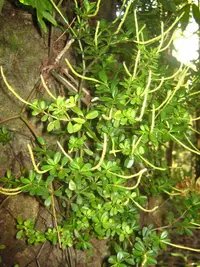
Gentle trailing support

Guide young trailing stems over the lip of a pot or along a horizontal mini-trellis or mesh, which prevents tangling and broken shoots while creating an even cascade of growth.

Targeted pest scouting

Inspect the undersides of leaves and internodes with a hand lens every 2–3 weeks, focusing on tight leaf clusters where mealybugs and spider mites tend to settle first, so treatments can start at an early stage.

Controlled pot size

Select a shallow, only slightly wider pot to keep the root zone compact, which helps prevent waterlogging and encourages the plant to invest in foliage rather than weak, overly long stems when growing fourleaf peperomia.

Seasonal light adjustment

Rotate and, if needed, move the plant slightly farther from windows in summer and a bit closer in winter, which reduces uneven, stretched growth and scorch from sudden seasonal light shifts.

Common Pests and Diseases

Mealybugs

This pest feeds on sap and often hides in stem joints and under leaves, leaving white cottony clusters and sticky honeydew. Symptoms include stunted growth, leaf yellowing, and distorted new shoots.

Solution

Isolate the plant, then dab visible mealybugs with cotton swabs dipped in 70% isopropyl alcohol and wipe leaf surfaces thoroughly. Repeat weekly and, for heavier infestations, follow with several applications of an insecticidal soap or neem oil spray, making sure to reach the undersides of the small paired leaves and the nodes along the trailing stems.

Spider mites

These insects are tiny sap-feeders that thrive in warm, dry indoor air, causing pale stippling on leaves and very fine webbing between stems and foliage. Symptoms include dull, dusty-looking foliage and gradual leaf drop along the delicate vines.

Solution

Rinse the plant gently but thoroughly under a lukewarm shower or sink sprayer to wash off mites and webbing, shielding the potting mix if possible. Increase humidity around the plant, then apply insecticidal soap or neem oil to both leaf surfaces every 5–7 days for several cycles, paying close attention to hidden undersides where mites cluster on this small-leaved species.

Fungus gnat larvae

This pest develops in consistently moist potting mix and the larvae feed on fine roots, which can cause wilting and slow growth in this shallow-rooted species. Symptoms include small black flies hovering around the pot and a soggy, algae-coated soil surface.

Solution

Allow the top 2–3 cm of the mix to dry between waterings, remove any decaying leaf litter, and improve drainage by checking for compacted or overly peat-heavy soil. Use yellow sticky traps to catch adults and, if larvae are persistent, apply a biological control such as Bacillus thuringiensis israelensis (BTI) or mosquito dunks diluted in water to target larvae without harming the plant.

Oedema

This disorder occurs when roots take up water faster than leaves can transpire it, often in cool, very moist conditions, leading to corky, blister-like spots on the fleshy leaves. Symptoms include rough, raised lesions that may turn tan or brown but usually do not spread between plants.

Solution

Reduce watering frequency so the top layer of the mix dries slightly, and avoid keeping the pot in cool, low-light locations where transpiration is slow. Improve light to bright, indirect levels, provide good air movement, and ensure the pot has free drainage so the roots are not sitting in water.

Bacterial leaf spot

This disease causes small, water-soaked, translucent spots on the leaves that may enlarge, turn dark, and sometimes develop yellow halos, which are more visible on the thin foliage. Symptoms include irregular spotting along the stems where moisture lingers, especially after overhead watering in low airflow conditions.

Solution

Remove and discard affected leaves, sterilizing scissors between cuts, and avoid splashing water on the foliage by watering at the soil level. Increase airflow, reduce crowding with other plants, and if spread continues, apply a copper-based bactericide labeled for houseplants, following label rates and allowing leaves to dry quickly after treatment.

Interesting Facts

Four-leaved growth pattern

This species naturally produces its tiny succulent leaves in opposite pairs that visually group into sets of four, which is the origin of its common name fourleaf peperomia. Each leaf pair sits closely on the stem, creating a bead-like pattern along its trailing shoots.

Miniature epiphyte lifestyle

In the wild, this plant often grows as an epiphyte on tree bark or within mossy pockets rather than rooting in deep soil. Its compact roots and fleshy leaves are adapted to capturing brief pulses of moisture and nutrients from decomposing organic matter.

Distinct bicolored foliage

The small round leaves typically show a dark olive to green upper surface with a lighter, sometimes slightly translucent underside. This subtle bicoloration, combined with a fine central vein, gives dense mats of stems a textured, mosaic look when grown in hanging or mounted displays.

FAQs about fourleaf peperomia

Brown leaf edges usually come from low humidity, underwatering, or salt buildup from fertilizer. Brown, mushy spots indicate rot from excess moisture. Trim damaged leaves, adjust watering, improve airflow, and flush the potting mix occasionally.

Grow Healthy Plants with Botan Care

Keep your plants happy and healthy with plant identification, disease detection, and easy care guidance.

Botan plant care app — identify plants on mobile

Explore More Plants