Byfield fern Care (Bowenia serrulata)

Also known as: Butchers Fern
Byfield fern

About Byfield fern

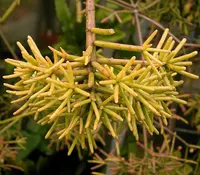
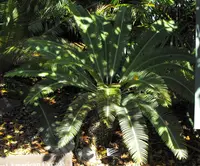
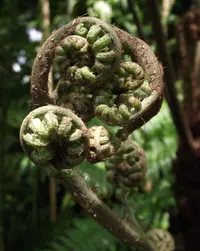
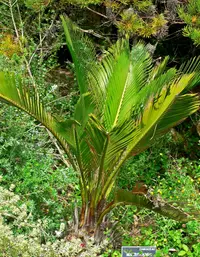
Byfield fern, Bowenia serrulata, is not a true fern but a primitive cycad with a fern-like look. It forms a low, rounded clump of glossy, divided leaves emerging from an underground caudex (swollen stem).

This species is native to subtropical rainforests of eastern Queensland, Australia, where it grows on shaded forest floors with filtered light and consistent moisture.

Its slow growth, sensitivity to root disturbance, and preference for stable conditions make it more challenging than common houseplants, but it can adapt indoors with careful attention. A focus on how to care for Byfield fern should include sheltered light, free-draining soil, and evenly moist, never waterlogged, roots.

Main Plant Requirements

Care Difficulty

Moderate Care

Light Preference

Partial Shade

Water Requirements

Moderate Water

Temperature Preference

Tropical / Frost Sensitive

Hardiness Zone

10–11

Soil Texture

Sandy, Loamy, Organic-rich

Soil pH

Acidic (5.5–6.5), Slightly acidic (6.5–7.0)

Soil Drainage

Moist but well-drained

Fertilization

Minimal (feed rarely)

Get Personalized Care Plan

Scan your plant to receive care tips personalized for your specific plant

Available on iOS and Android

How to Care for the Byfield fern

This ancient cycad prefers bright, filtered light that mimics dappled forest shade.

  • Provide 2–4 hours of gentle morning sun with bright, indirect light for the rest of the day; avoid harsh midday and afternoon sun.
  • Site Byfield fern under high tree canopy, shade cloth, or on the east side of buildings to give consistent partial shade.
  • Watch foliage: pale or scorched fronds indicate too much direct sun, while sparse, stretched growth signals insufficient light, especially in winter.

This plant prefers evenly moist but not waterlogged soil, with slight drying between waterings.

  • Water when the top 3–5 cm of soil feels dry; use deep, thorough watering so moisture reaches the root zone, then allow excess to drain away.
  • Ensure free-draining, gritty soil to prevent root and caudex rot, especially important for Bowenia serrulata in higher rainfall areas.
  • Reduce watering in cooler months when growth slows; limp, dull fronds suggest thirst, while yellowing, mushy bases indicate overwatering.

This species comes from warm subtropical habitats and dislikes both frost and extreme heat.

  • Aim for 65–80°F (18–27°C) during active growth for steady, healthy frond development.
  • Protect from temperatures below 40°F (4°C); light frost can damage foliage, and repeated freezes may kill the growing crown.
  • In hot spells above 90°F (32°C), increase shade and soil moisture, and use mulch to buffer temperature swings around the root zone.

This cycad prefers moderately humid air but tolerates typical indoor levels if not extremely dry.

  • Aim for 40–60% humidity to reduce leaflet browning and tip dieback in Byfield fern.
  • In very dry air, watch for crisping leaflet edges and slowed new frond growth as signs of humidity stress.
  • Increase humidity with a nearby humidifier, grouped plants, or a wide pebble tray, rather than misting directly onto the foliage.

This species needs a loose, fast-draining, slightly acidic to neutral mix that mimics a sandy, organic forest floor.

  • Use a sandy loam base with 30–40% coarse materials such as perlite, pumice, or fine bark to keep the root zone airy.
  • Incorporate modest amounts of well-decomposed compost or leaf mold to provide organic matter without making the mix heavy or waterlogged.
  • Aim for pH 6.0–7.0; avoid strongly alkaline mixes that can limit nutrient availability for Bowenia serrulata.
  • Avoid dense clay, peat-heavy, or compacted media that hold water around the tuber, which greatly increases the risk of rot.

This species is well suited to container growing when the pot is stable and the mix drains rapidly.

  • Choose a wide, relatively shallow container to accommodate the underground tuber and spreading roots without forcing them into a tight vertical column.
  • Select a heavier material such as ceramic if the fronds become tall, to prevent the pot from tipping in wind or accidental knocks.
  • Ensure generous drainage holes and use a low saucer, emptying it promptly so the tuber never sits in standing water.

Bowenia serrulata is a slow-growing cycad that benefits from light, infrequent feeding in active growth.

  • Use a balanced slow-release fertilizer (around 10-10-10) or dilute liquid feed at 1/2–1/4 strength during spring–summer.
  • Apply fertilizer every 6–8 weeks in the growing season for container or nutrient-poor plantings.
  • Avoid fertilizing in winter or dormancy; excess nutrients can damage the sensitive roots of Byfield fern.
  • Water before and after feeding to reduce root burn and help distribute nutrients evenly.

Bowenia serrulata needs minimal pruning, focused mainly on hygiene rather than shaping.

  • Carry out light pruning in late winter or early spring before new fronds emerge.
  • Remove only dead, yellowing, or damaged fronds at the base with clean, sharp pruners.
  • Avoid cutting healthy fronds, as this reduces photosynthesis and can slow overall growth.
  • Discard diseased material in household trash rather than composting to limit pathogen spread.

This cycad resents frequent disturbance, so repot or transplant Bowenia serrulata only when clearly necessary.

  • Look for roots circling the pot, pushing through drainage holes, or persistent slow growth as cues for repotting.
  • Plan moves for late spring to early summer when soil is warm and recovery is faster, usually every 4–6 years.
  • Slide the plant out gently, keep the root ball largely intact, and avoid washing off all original soil.
  • Replant at the same depth in a free-draining mix, water thoroughly, then keep shaded and evenly moist for several weeks.

Bowenia serrulata is slow and somewhat challenging to propagate, usually done by specialists.

  • Seed propagation is most common; sow fresh seed in warm conditions around 75–80°F with a free-draining, sandy mix.
  • Provide bright, indirect light and consistently lightly moist substrate; germination may take many months.
  • Division of offsets or subterranean stems is rarely used and should be attempted only on large, established plants.
  • Use sterile tools and containers to limit fungal problems in the long germination period.

This subtropical species is frost-sensitive and needs protection in climates with cold winters.

  • Keep outdoor plants in regions with mild winters above about 30–32°F; prolonged freezing damages foliage and stems.
  • Mulch the root zone with 5–8 cm of coarse organic material to moderate soil temperature and moisture.
  • Move container plants indoors or to a frost-free greenhouse, providing bright, indirect light and slightly reduced watering.

Care Tips

Container depth choice

Use a wide, relatively shallow pot instead of a tall one so the caudex and shallow roots stay stable and do not sit in a deep column of wet substrate, which reduces rot risk during long indoor spells.


Dormancy monitoring

If fronds yellow and die back in cooler months, reduce watering sharply and leave the caudex undisturbed in the pot, as this species can enter a semi-dormant rest period rather than showing active disease.

Frond protection

Place the plant where emerging fronds are protected from foot traffic and brushing, since young cycads bruise and snap easily, and rotate the pot only when new flushes have fully hardened.

Long-term root management

Repot only every 4–6 years or when roots clearly circle the pot, and shift just 2–3 cm wider each time to avoid excess unused soil volume that can stay wet and stress the caudex.

Preventive pest checks

Inspect the undersides of leaflets and the frond bases monthly for scale or mealybugs, and if found, isolate the plant and treat early with a horticultural oil spray labeled for cycads to keep growing Byfield fern healthy over the long term.

Common Pests and Diseases

Scale insects

This pest feeds on the fronds and rachis, causing yellowing, reduced vigor, and sticky honeydew that can lead to sooty mold. Infestations are often tucked along the midrib or sheltered parts of the leaflets, making them easy to overlook.

Solution

Wipe or gently scrub affected fronds with a soft cloth or cotton pad dipped in diluted insecticidal soap or horticultural oil, repeating every 7–10 days until no new insects appear. Improve air circulation around the plant and isolate heavily infested specimens; for severe cases in Bowenia serrulata plant care, combine manual removal with a systemic insecticide labeled safe for cycads.

Mealybugs

These insects hide in leaflet bases, along the rachis, and in crown crevices, where they suck sap and excrete cottony white masses and sticky honeydew. Symptoms include stunted new growth and general decline over time.

Solution

Remove visible mealybugs with a cotton swab dipped in isopropyl alcohol, then wash the foliage and crown area with insecticidal soap, ensuring solution reaches crevices. Repeat treatments weekly until the population is eliminated and avoid overfertilizing, which can encourage rapid soft growth that mealybugs prefer.

Cycad blue butterfly larvae

This pest is the caterpillar stage that feeds on cycad foliage, sometimes skeletonizing leaflets or creating ragged edges. Damage may be localized to a few fronds but can be disfiguring on a slow-growing plant.

Solution

Inspect fronds regularly and hand-pick caterpillars, disposing of them away from the plant. Prune and discard heavily damaged fronds if needed, and use a biological control such as Bacillus thuringiensis (Bt) sprayed on the leaflets according to label directions when young larvae are present.

Crown rot

This disease affects the central growing point, where symptoms include wilting, yellowing, or collapse of new flushes plus browning at the crown. Infection is favored by waterlogged media and poor drainage in containers or garden beds.

Solution

Remove and discard all soft, foul-smelling crown tissue with sterile tools, then allow the crown area to dry and avoid overhead watering. Improve drainage by adjusting the potting mix to a more open, gritty blend, reduce watering frequency, and apply a fungicide labeled for crown and collar rots if caught early.

Sooty mold

This disease grows on the honeydew excreted by pests like scale and mealybugs, coating leaflets in black, powdery growth that blocks light. Symptoms include dull, dirty-looking foliage and reduced photosynthesis rather than direct tissue damage.

Solution

First control the underlying sap-sucking insects, then gently wash the fronds with lukewarm water and a small amount of mild soap to remove mold deposits. Improve light and airflow so leaves dry quickly after watering, which reduces the chance of heavy mold buildup on the sticky surfaces.

Interesting Facts

Ancient cycad lineage

Bowenia serrulata is a cycad, part of a very old group of seed plants that arose long before flowering plants and has changed relatively little in basic structure over tens of millions of years.

Underground storage caudex

This species has a swollen, partly underground stem structure called a caudex that stores water and nutrients, allowing it to survive periods of drought in its native Australian habitats.

Native to Queensland rainforests

The plant occurs naturally in subtropical and tropical rainforests of eastern Queensland, Australia, often growing in shaded understory conditions on well-drained, humus-rich soils.

Botan icon

Did you know?

Bowenia serrulata produces separate male and female cones on different plants, and its cones are pollinated by specialized insects, a reproductive strategy typical of cycads that evolved long before bees and other modern pollinators.

FAQs about Byfield fern

Yellowing foliage often results from overwatering, poor drainage, or prolonged direct sun. Check that the pot drains well, allow the top layer of mix to dry slightly between waterings, and avoid harsh midday light exposure.

Grow Healthy Plants with Botan Care

Keep your plants happy and healthy with plant identification, disease detection, and easy care guidance.

Botan plant care app — identify plants on mobile

Explore More Plants